
Planting
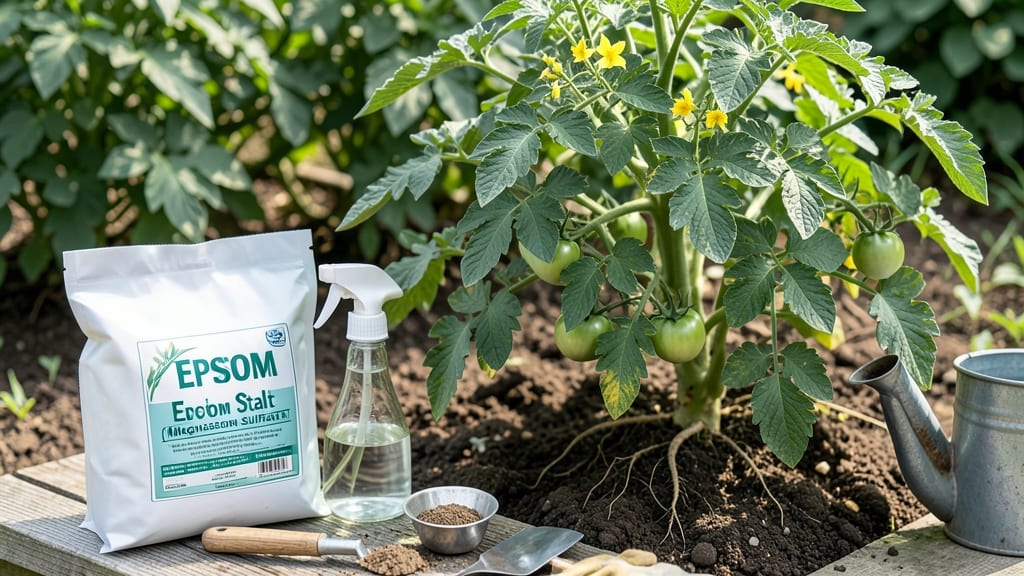
Magnesium for plant growth supports photosynthesis, energy transfer, and nutrient activation, with deficiency causing yellowing between leaf veins (interveinal chlorosis). Fix it fast with Epsom salt (magnesium sulfate) or organic amendments like dolomitic lime or composted manure, applied directly to soil or foliarly as a spray.
Magnesium acts as the backbone of chlorophyll, the green pigment that captures sunlight for photosynthesis. 🌱 When plants lack this mineral, their ability to convert light into energy weakens, leading to those classic yellow patches between veins.
I've seen this most often in heavy-feeding plants like tomatoes or peppers—once you spot the telltale chlorosis, it's time to act before the whole plant starts struggling. The good news?
Most gardeners can resolve it within days using simple soil drenches or foliar sprays, depending on how severe the deficiency is.
For container plants, I recommend mixing 1 tablespoon of Epsom salt per gallon of water and applying it directly to the soil. If you're dealing with larger garden beds, spread 2-3 pounds of dolomitic lime per 100 square feet and work it into the top 6 inches of soil.
The key is consistency—magnesium deficiencies don't fix themselves overnight, but with the right approach, you'll see new growth within a couple of weeks.
💡 In This Article
- How Magnesium Boosts Plant Health and Chlorophyll
- Fast Fixes for Magnesium Deficiency in Different Plants
How magnesium boosts plant health and chlorophyll
Magnesium isn't just another nutrient—it's the central atom in chlorophyll, the molecule that gives plants their green color and powers photosynthesis. 🔥 Without magnesium, plants can't efficiently capture sunlight, which directly impacts their ability to produce energy.
This mineral also activates over 300 enzymes involved in nutrient uptake and energy transfer, making it critical for overall plant metabolism. When magnesium levels drop, photosynthesis slows, leading to that classic yellowing between leaf veins—a sign your plants are struggling to convert light into food.
The biochemical process starts at the molecular level: magnesium sits at the heart of chlorophyll, stabilizing its structure and allowing it to absorb light efficiently. Without enough magnesium, chlorophyll breaks down, and plants produce less energy.
This deficiency also disrupts the production of ATP (adenosine triphosphate), the energy currency of cells. 💫 The result? Stunted growth, weak stems, and leaves that curl or develop necrotic edges. In severe cases, plants may even drop leaves prematurely, as they prioritize energy to essential functions over non-critical growth.
What makes magnesium unique is its dual role in both structural and functional plant biology.
It's not just about green leaves—magnesium helps plants transport nutrients like phosphorus and nitrogen, which are essential for root development and flowering. 🌱 For example, tomatoes and peppers, which are heavy feeders, often show magnesium deficiency when soil pH is too high (above 7.0) or when potassium levels are excessive.
The yellowing typically starts on older leaves because magnesium is mobile within the plant, and it gets "recycled" from older to newer growth when supplies are limited.
Here's the science behind the symptoms: interveinal chlorosis (yellowing between veins) occurs because magnesium is crucial for maintaining the stability of chlorophyll molecules.
When magnesium is scarce, chlorophyll degrades faster, and the green pigment fades first in areas between the veins, where it's least protected. 🌿 The veins remain green because they contain more protective compounds.
This pattern is your first warning sign that magnesium levels need attention before the entire leaf turns yellow and dies.
Interestingly, magnesium also plays a role in plant stress responses. Studies show that magnesium-deficient plants are more susceptible to diseases and pests because their weakened cell walls can't defend as effectively. For instance, magnesium-deficient citrus trees are more prone to citrus greening disease.
The mineral helps regulate calcium uptake, which strengthens cell walls and improves disease resistance. This is why a magnesium boost isn't just about fixing yellow leaves—it's about improving overall plant resilience.
To put this into perspective, consider how magnesium works in your own body: it's essential for muscle function and energy production, much like how it powers photosynthesis in plants. 💪 The difference is that plants can't move to find more magnesium—they rely entirely on what's available in their growing medium.
That's why understanding magnesium's role helps you diagnose problems early and take corrective action before the plant's health declines irreversibly.