
Planting
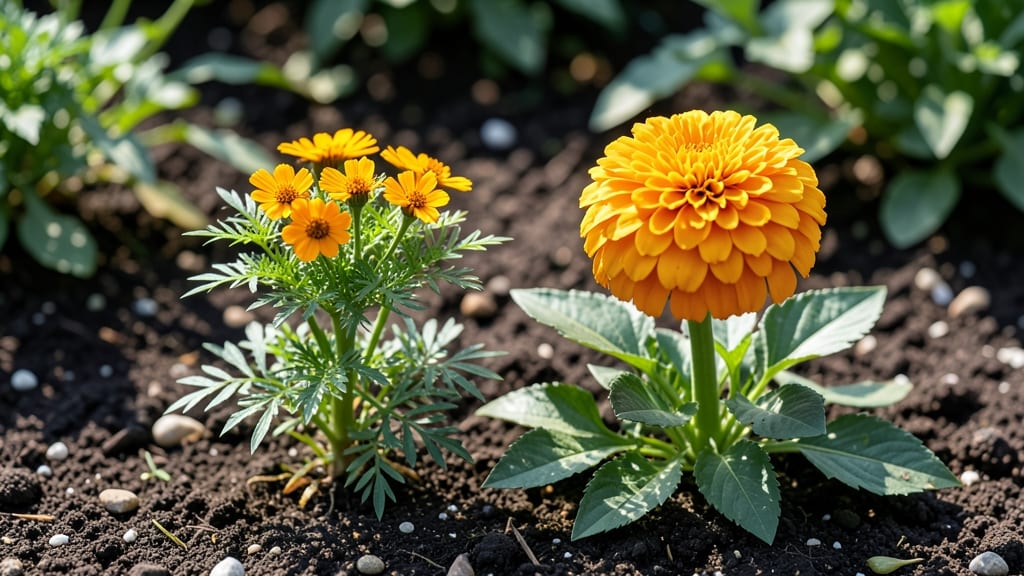
Marigold plant size varies wildly from 6-inch dwarfs to 3-foot giants, and picking the wrong variety for your space can mean crowded blooms or wasted sunlight.
Picture this: a Tangerine Gem marigold spilling over a window box, barely reaching your wrist, while a Jumbo Yellow towers over your tomato plants like a sunflower on steroids.
That’s the beauty—and the challenge—of marigolds: they’re the chameleons of the flower bed, adapting to your garden’s needs if you know how to read their growth habits.
But size isn’t just about aesthetics. Planting marigolds too close stifles their growth, while giving them too much room can leave gaps in your borders.
Below, I’ll break down the height and spread of every major variety, how to space them for maximum impact, and the simple pruning tricks that keep even the tallest types from toppling over.
Whether you’re cramming marigolds into a container garden or lining a sunny border, you’ll leave with a spacing plan that guarantees blooms—not just leaves—and a few surprises about how light and soil can turn a 12-inch marigold into a 36-inch monster.

Marigold plant size guide: compact vs. giant varieties explained
Choosing marigolds isn’t just about color—it’s about space planning. Some varieties stay as small as 6 inches, perfect for window boxes, while others reach 3 feet tall, dominating garden beds.
The right size ensures healthy blooms and prevents overcrowding. Let’s break down the key categories so you can pick the perfect fit for your garden design.
Marigolds generally fall into three size groups: dwarf, standard, and giant. Each has distinct growth habits and ideal uses. Dwarf varieties like 'Tangerine Gem' (12 inches) thrive in containers, while giants like 'Jumbo Yellow' (36+ inches) make bold centerpieces.
Understanding these differences helps you avoid root competition and maximize your garden’s potential.
Height and spread vary even within categories. For example, French marigolds typically stay under 2 feet, while African marigolds can tower over 3 feet. Spread also matters—some varieties sprawl 18 inches wide, while others remain compact. Always check the mature size on seed packets to plan spacing correctly.
Here’s how marigold sizes compare in real-world scenarios:
| Variety Type | Height | Spread | Ideal Use | Example Varieties |
|---|---|---|---|---|
| Dwarf | 6–12 in | 6–12 in | Containers, borders, edging | 'Tangerine Gem', 'Bonanza Gold' |
| Standard | 12–24 in | 12–18 in | Bed fillers, mixed borders | 'French Vanilla', 'Sundance' |
| Giant | 24–36+ in | 18–24 in | Centerpieces, tall borders | 'Jumbo Yellow', 'African Queen' |
Dwarf marigolds are my go-to for small-space gardening. Their compact size (6–12 inches) makes them perfect for window boxes, hanging baskets, or edging garden paths. Varieties like 'Tangerine Gem' produce abundant blooms without taking up much room, making them ideal for urban gardens or balcony containers.
Standard marigolds strike a balance, reaching 12–24 inches tall with a 12–18 inch spread. These are my workhorse varieties for garden beds, where they fill gaps between taller plants. 'French Vanilla' is a favorite—its buttery petals contrast beautifully with purple basil or green lettuce in mixed planters.
Giant marigolds demand prime real estate but reward you with dramatic blooms. Varieties like 'Jumbo Yellow' can reach 3 feet tall and 2 feet wide, making them perfect for centerpiece displays or back-of-bed anchors. Their large flower heads also attract pollinators, boosting your garden’s biodiversity.
Size affects more than just aesthetics—it impacts growth habits. Taller marigolds often need staking or support to stay upright, especially in windy areas. Dwarf varieties, however, rarely need support but may flop if overcrowded. Always prune leggy stems to encourage bushier growth and more blooms.
For container gardening, stick to dwarf or standard varieties. A 5-gallon pot can comfortably hold 3–5 dwarf marigolds, while a 10-gallon pot can accommodate 1–2 standard varieties. Giant marigolds need large containers (15+ gallons) or in-ground planting to thrive.
Pro tip: Mix sizes for visual interest. Pair tall giants with low-spreading dwarfs to create dynamic layers in your garden. This technique also hides soil and extends the blooming season by staggering maturity times.
If you’re unsure which size to choose, start with a mix of dwarf and standard varieties. They’re low-maintenance, disease-resistant, and adaptable to most garden conditions. Once you see how they perform, you can experiment with giant varieties for next season’s showstopping displays.
Proper spacing for marigolds: how far apart to plant by size
Getting the spacing right for marigolds isn’t just about looks—it’s about giving each plant room to thrive. Crowded marigolds compete for sunlight and nutrients, leading to leggy stems and fewer blooms. The key is balancing airflow to prevent fungal diseases while allowing roots to spread without smothering neighbors.
Marigold varieties range from 6-inch dwarfs to 36-inch giants, so spacing needs vary dramatically. For example, a 'Tangerine Gem' (dwarf) needs just 6 inches between plants, while a 'Jumbo Yellow' (giant) requires 18 inches. Container gardening? Halve those distances—but only if your pots are at least 12 inches wide.
| Variety Type | Mature Height | Spacing (In-Ground) | Spacing (Containers) | Best For |
|---|---|---|---|---|
| Dwarf (e.g., 'Tangerine Gem') | 6–12 inches | 6 inches apart | 3–4 plants per 12" pot | Borders, edging, containers |
| Semi-Dwarf (e.g., 'Bonanza') | 12–18 inches | 9–12 inches apart | 1 plant per 10" pot | Mass plantings, window boxes |
| Standard (e.g., 'French Marigold') | 18–24 inches | 12–15 inches apart | 1 plant per 12" pot | Cut flowers, garden beds |
| Giant (e.g., 'Jumbo Yellow') | 24–36+ inches | 18–24 inches apart | 1 plant per 18" pot | Centerpieces, focal points |
Why does spacing matter so much? Airflow reduction increases humidity around leaves, creating perfect conditions for powdery mildew. I’ve seen marigold patches turn from vibrant orange to sad, white-blotched messes because they were packed too tightly. Root competition also steals nutrients—especially nitrogen—from neighboring plants, stunting growth.
For container gardening, reduce spacing by 30–50% but ensure pots have drainage holes. Mix marigolds with companion plants like basil or lettuce to maximize space efficiency. Just avoid planting near tomatoes or peppers, which can compete aggressively for resources.
Pro tip: If you’re unsure about spacing, err on the side of more room. Marigolds are forgiving—they’ll fill in gaps over time, but you can’t fix overcrowding once it’s done. Prune leggy stems to encourage bushier growth, but never remove more than 1/3 of the plant at once.
Remember, full sun (6+ hours daily) and well-draining soil are non-negotiable for proper spacing to work. Even with perfect spacing, marigolds in shade or soggy soil will grow weak and sprawling—no amount of elbow room can fix that.