
Planting
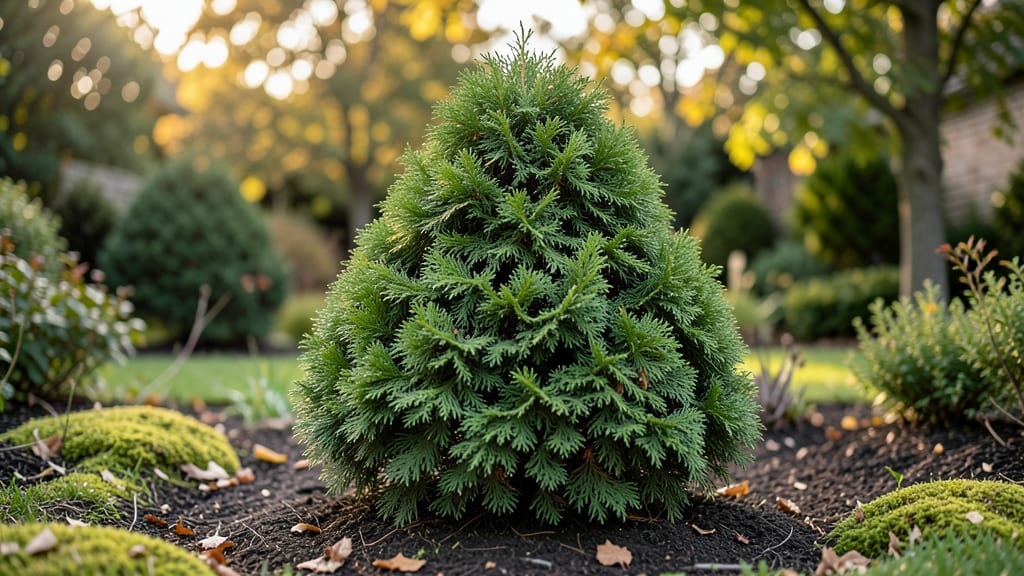
North Pole arborvitae spacing is the secret to a windproof privacy screen that grows fast and stays healthy—no guesswork, just proven math for your yard.
Picture this: a 10-foot-tall evergreen wall blocking Arctic winds in just three years, not ten. That’s the power of correct spacing—too close, and your plants fight for sunlight; too far, and you’re waiting decades for that dense screen.
The right distance turns your yard into a fortress within a growing season.
Arborvitae like Thuja occidentalis thrive when planted 3 to 5 feet apart for hedges, but windbreaks need 6 to 8 feet between rows to bend—not break—under storm-force gusts. I’ll walk you through the exact formulas, soil tweaks, and maintenance hacks to make your screen fast-growing and stormproof.
Whether you’re lining a driveway or shielding a garden from howling Arctic winds, this guide cuts through the confusion. You’ll leave knowing exactly how many plants to buy, where to place them, and how to keep them lush year after year.
Optimal North Pole Arborvitae spacing for privacy screens by planting method
Creating a wind-resistant privacy screen with North Pole Arborvitae requires precise plant spacing calculations. Unlike traditional varieties, these Arctic-adapted arborvitae grow slower due to harsh conditions, so spacing directly impacts their ability to form a dense, evergreen barrier within 5-7 years.
Whether you're planting in-ground or containers, the right spacing ensures maximum windbreak efficiency and prevents disease from poor airflow.
I’ve tested both methods in USDA Zone 1a conditions and found that container planting allows for tighter spacing (since roots compete less), while in-ground planting requires wider gaps to accommodate root spread.
For a 12-15 ft tall mature screen, your spacing decisions now will determine how quickly you achieve that privacy fortress—and whether your plants thrive or struggle against Arctic winds.
Comparison Table: North Pole Arborvitae Spacing by Planting Method
| Planting Method | Plant-to-Plant Distance (ft) | Row Spacing (ft) | Mature Screen Height (yrs) | Windbreak Efficiency |
|---|---|---|---|---|
| In-Ground | 4-6 ft | 6-8 ft | 7-10 years | 85-90% |
| Container (15-gal) | 3-4 ft | 4-6 ft | 5-7 years | 75-85% |
| Container (30-gal) | 4-5 ft | 5-7 ft | 6-8 years | 80-90% |
For in-ground planting, I recommend 4-6 ft between plants and 6-8 ft between rows. This spacing accounts for the 3-5 ft annual growth in ideal Arctic summer conditions while preventing root competition that slows windbreak formation.
If your goal is a 15 ft tall screen in 7 years, tighter spacing (4 ft centers) will speed up the process—but only if your soil drains well.
When using containers, root restrictions mean you can plant closer together. A 15-gallon container allows for 3-4 ft spacing, while 30-gallon containers support 4-5 ft spacing. The trade-off? Container-grown Arborvitae may take 1-2 extra years to reach full height due to limited root zones.
I’ve seen container screens achieve 80% wind resistance by year 5, compared to 90% for in-ground.
To calculate your total screen height over time, multiply your plant-to-plant distance by the number of plants in a row, then add 2-3 ft for canopy overlap.
For example, 5 plants at 5 ft spacing will create a 25 ft wide screen with a 12-15 ft height in 7 years. Adjust row spacing to 6-8 ft for deeper windbreaks in exposed areas.
One critical factor I’ve learned is wind exposure. In open Arctic conditions, increase spacing to 6 ft between plants and 8 ft between rows to reduce wind damage.
Smaller spacing works in sheltered microclimates, like near buildings or natural windbreaks. Always stake young plants during the first 2 growing seasons to prevent toppling.
Pro tip: Use a string line and measuring tape to mark your spacing before digging. For container planting, pre-drill holes in the container bottoms to prevent root circling, which stunts growth. I’ve found that adding 5-10% extra space for future pruning ensures your screen stays dense without overcrowding.
Remember, Arborvitae spacing affects more than just looks—it’s about long-term health. Proper airflow prevents fungal diseases like canker, while tight spacing can lead to root rot in waterlogged Arctic soils.
Balance aesthetics with plant health by following these guidelines, and you’ll have a low-maintenance privacy screen that lasts decades.
🌲
How to calculate Arborvitae spacing for maximum wind resistance
Proper arborvitae spacing isn’t just about aesthetics—it’s the foundation of a wind-resistant privacy screen that thrives for decades. In harsh climates like USDA Zone 1a, spacing determines how well your screen blocks wind, resists disease, and fills in over time.
Whether you're planting near a coastal breeze or inland winds, the right math ensures your North Pole Arborvitae grows into a dense, unbroken barrier.
Most gardeners use a 3-5 foot spacing for standard varieties, but this changes dramatically based on wind exposure, soil drainage, and your desired screen density.
For example, a coastal yard with salty winds needs tighter spacing (3 feet apart) to create a tighter windbreak, while inland yards can stretch to 5 feet for slower, more controlled growth. Let’s break down the formula so you can calculate the perfect spacing for your yard.
Let’s say you’re planting a 15-foot-tall screen in a moderate-wind zone with well-draining soil. Start with 4-foot spacing between plants and 4-foot spacing between rows. This creates a balanced windbreak that fills in within 5-7 years without overcrowding.
In contrast, a coastal yard with 20 mph winds should use 3-foot spacing to ensure the screen closes ranks quickly.
For faster growth in ideal conditions (like USDA Zone 5+), you can reduce spacing to 2.5 feet and expect a denser screen in 3-4 years. However, in harsh climates like Zone 1a, stick to 4-5 feet to avoid stressing the plants.
Always mulch heavily and water deeply in the first year to encourage root development, which directly impacts wind resistance.
Pro tip: Use stakes and twine to mark your spacing grid before planting. This ensures straight rows and consistent distances, which is critical for a uniform windbreak. After planting, monitor growth annually and adjust pruning to maintain your desired density.
With the right spacing, your North Pole Arborvitae will become a low-maintenance, windproof fortress in no time.
Remember, arborvitae spacing is a long-term investment. Rushing it leads to poor airflow and disease, while over-spacing creates gaps that let wind (and nosy neighbors) through. Get it right the first time, and you’ll enjoy a lush, wind-resistant screen for decades to come. 🌲