
Planting
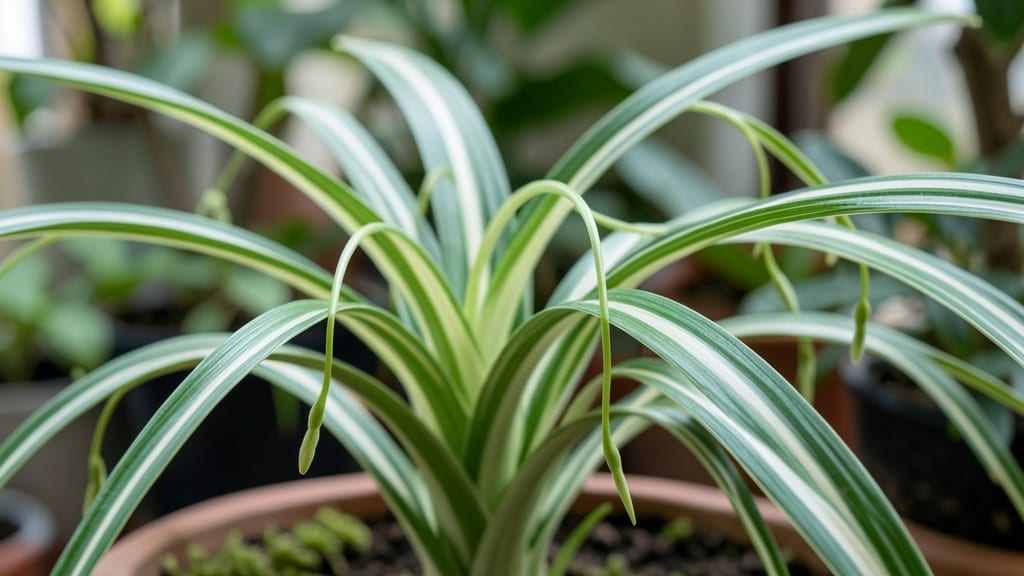
Other names for spider plant include Chlorophytum comosum botanically, plus nicknames like airplane plant, ribbon plant, and St. Bernard’s lily for its variegated varieties. These names highlight its resilience and unique foliage.
This popular houseplant has earned its many monikers for good reason. 🌿 The name Chlorophytum comosum comes from its botanical classification, where "chloro" refers to its green leaves and "phyllum" describes its leaf structure.
Meanwhile, the nickname airplane plant stems from NASA studies showing it removes toxins from indoor air, while ribbon plant reflects its long, striped leaves that resemble ribbons. Variegated varieties with white or yellow stripes are sometimes called St. Bernard’s lily due to their flower-like blooms.
These names aren't just decorative—they reveal why this plant has been a gardening staple for decades.
The plant's adaptability plays a huge role in its popularity. Whether you're drawn to its scientific name or its charming nicknames, each reflects a different aspect of what makes spider plants so beloved. For example, the airplane plant nickname highlights its air-purifying benefits, while ribbon plant emphasizes its decorative appeal.
This dual functionality is why you'll find spider plants in everything from modern apartments to traditional gardens.
💡 In This Article
- Botanical and Scientific Names for Chlorophytum
- Why Spider Plants Earned Their Nicknames
Botanical and scientific names for Chlorophytum
The scientific name Chlorophytum comosum breaks down into key botanical clues. "Chlorophytum" combines "chloro" (Greek for green) and "phyllum" (leaf), perfectly describing its vibrant foliage. Meanwhile, "comosum" refers to the tufted, hair-like appearance of its flower stalks, which resemble a brush or plume.
This genus belongs to the Asparagaceae family, placing it alongside asparagus and lilies, though its growth habits and leaf structure set it apart.
What makes this classification fascinating is how it reflects the plant's evolutionary traits. Spider plants thrive in USDA hardiness zones 9-11 but are often grown as houseplants in cooler climates due to their adaptability.
The species has several cultivated varieties, with Chlorophytum comosum 'Variegatum' being the most popular—its white-striped leaves result from a genetic mutation that reduces chlorophyll production in specific leaf cells.
This variegation isn't just decorative; it affects the plant's light requirements, as the white areas need more intense light to maintain energy production.
The naming conventions follow strict botanical rules established by Carl Linnaeus in the 18th century. The genus name must be capitalized and italicized, while the species name follows in lowercase. This standardization helps scientists and gardeners worldwide identify plants accurately.
For instance, Chlorophytum comosum 'Bonnie' refers to a specific cultivar with particularly long, arching leaves, while 'Vittatum' highlights its striped pattern. These distinctions matter when selecting plants for specific growing conditions or aesthetic preferences.
Interestingly, the genus Chlorophytum includes over 200 species, but only about 20 are commonly cultivated. This limited selection reflects their adaptability to indoor environments, where they've become beloved for their low-maintenance nature. The scientific name serves as a global identifier, ensuring clarity even when local nicknames vary.
For example, in South Africa, it's sometimes called "henbessie" (Dutch for "chicken's foot"), referencing its leaf shape, while in Australia, it might be called "airplane plant" for its ability to thrive in low-light conditions—similar to how NASA's studies popularized this nickname globally.
Understanding these botanical terms helps gardeners appreciate the plant's complexity. The scientific name isn't arbitrary; it encodes information about the plant's structure, origins, and even its cultural significance. For instance, the species epithet "comosum" wasn't chosen randomly—it directly describes one of the plant's most striking features, its flower stalks.
This attention to detail in naming reflects the precision of botanical science and why Chlorophytum comosum remains the most widely recognized scientific name for this beloved houseplant. 🌱