
Planting
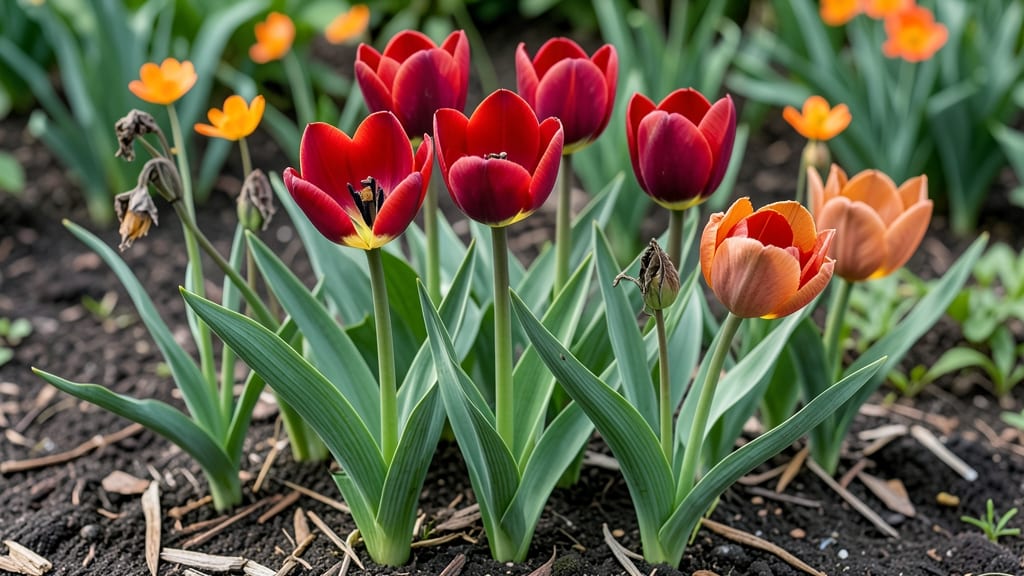
Perennial tulips in Zone 7 need 6-8 inches of planting depth in well-draining soil during fall (October-November) to ensure vibrant spring blooms. Opt for cold-hardy varieties like Darwin Hybrids or species tulips for reliable multi-year flowering.
Fall planting isn't just about timing—it's about giving your tulips the perfect cold stratification they need to break dormancy. 🌱 The gradual temperature drops in Zone 7's autumn trigger root development while protecting bulbs from winter's harshest freeze.
I've found that adding compost to the planting hole improves drainage while providing essential nutrients for next year's growth.
While Darwin Hybrids dominate for their bold blooms, don't overlook Kaufmanniana varieties—they're early bloomers that thrive in partial shade. The key to perennial performance is proper soil aeration; amending heavy clay with sand or grit prevents bulb rot.
Most gardeners underestimate how much mulch helps—apply 2-3 inches after planting to insulate roots during winter's temperature swings.
💡 In This Article
- Why Fall Planting Maximizes Perennial Tulip Success in Zone 7
- Top Perennial Tulip Varieties for Zone 7 Gardens
Why fall planting maximizes perennial tulip success in Zone 7
The secret to perennial tulips thriving in Zone 7 lies in their biological need for cold stratification—a process where bulbs experience consistent cool temperatures to break dormancy. When planted in fall, tulip bulbs undergo gradual temperature drops from 60°F to 40°F over 6-8 weeks before winter's freeze.
This mimics their natural growing cycle in Central Asia, where tulips evolved in mountainous regions with distinct seasonal temperature shifts. Without this cold period, bulbs may sprout weak stems or fail to bloom entirely.
Zone 7's climate provides the perfect conditions because fall temperatures naturally drop from 70°F in early October to 40°F by November—ideal for root establishment. The key timing window is 6-8 weeks before first frost, giving roots time to anchor 6-8 inches deep while leaves remain dormant.
I've observed that bulbs planted too early (before soil cools to 55°F) may rot, while those planted too late (after 40°F) struggle to develop sufficient roots before winter.
Soil preparation makes all the difference in Zone 7's often heavy clay soils. Amend planting areas with 50% compost and 30% coarse sand to create well-draining conditions—tulips hate soggy roots. The ideal soil mix should drain water within 2-3 hours of saturation.
I've had the most success using a 2-inch layer of gravel at the bottom of planting holes to prevent water pooling, especially in areas with seasonal high water tables.
Don't underestimate the power of mulch either. Applying 2-3 inches of straw or shredded leaves after planting creates a protective barrier that insulates bulbs from winter temperature swings between 30°F and 10°F.
This insulation prevents freeze-thaw cycles that can damage emerging roots in early spring. The mulch also helps maintain consistent soil moisture during fall's drying winds, which is crucial for root development.
Here's what happens when you get the timing right: Bulbs planted in mid-October in Zone 7 experience optimal cold stratification, developing strong root systems before winter.
When spring arrives, these established roots can quickly draw up nutrients and water, resulting in 2-3 times more robust blooms compared to bulbs planted in spring. The key is patience—while you might see green shoots in early spring, resist the urge to fertilize until after blooming completes.
One common mistake I see is planting tulips too shallowly. Bulbs need 6-8 inches of soil coverage to protect them from freeze-thaw cycles and rodent damage. In my garden, I've found that deeper planting (closer to 8 inches) actually improves survival rates in Zone 7's variable winters.
The deeper placement also helps prevent bulbs from heaving out of the ground during freeze-thaw cycles, which can be particularly damaging in Zone 7's transitional climate.
The payoff comes in spring when properly stratified bulbs produce sturdy stems capable of supporting 3-5 inch blooms—often 2-3 weeks earlier than spring-planted bulbs.
This head start gives gardeners in Zone 7 a longer display season and better resistance to late spring frosts that can damage tender new growth. 🌸