
Planting
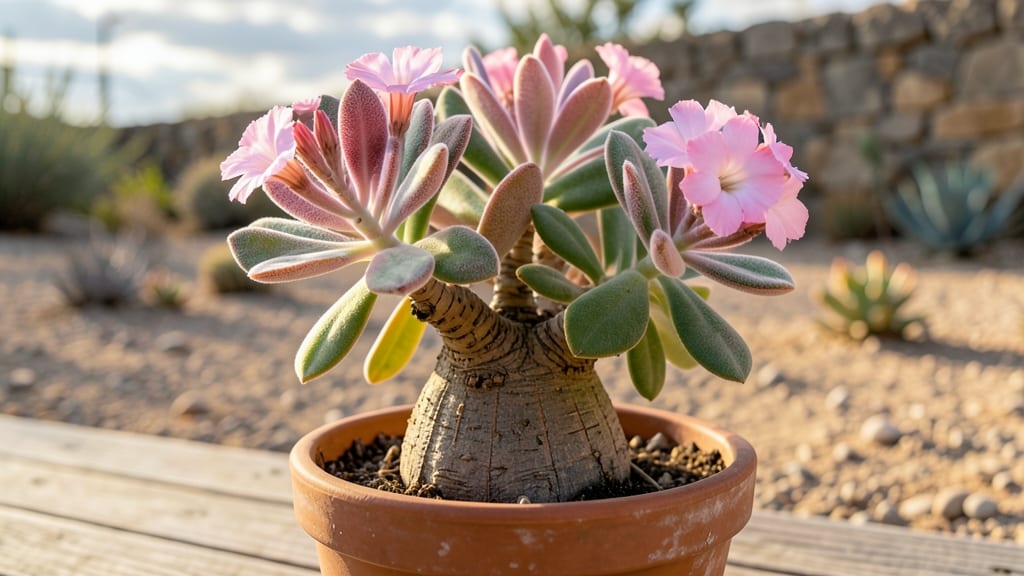
Growing a pink desert rose (Adenium obesum) means adding a dramatic, drought-tolerant centerpiece that thrives where other plants struggle. 🌵 The first time I saw one in full bloom—those rosy-pink trumpets against a glossy green trunk—I knew it would change my patio forever.
Unlike fussy tropicals, this succulent-like beauty craves full sun, heat, and neglect, making it perfect for hot, dry climates or even indoor sunrooms.
Here’s the secret: well-draining soil and infrequent watering are non-negotiable. I’ve killed mine twice by overwatering—now I let the soil dry completely between drinks, and the plant rewards me with bold blooms from spring to fall.
Even in Zone 9 heat, it handles 100°F temps with ease, as long as you protect it from sudden cold snaps below 50°F.
By summer’s end, you’ll have a thick, caudex-like trunk topped with clusters of 5-inch flowers that hummingbirds adore. The best part? It’s low-maintenance enough for black thumbs but showy enough to impress guests. Prune after blooming to encourage bushier growth, and watch it bounce back faster than any annual.
Whether you’re filling a container on a balcony or planting in well-draining garden beds, this plant delivers year-round interest with almost no effort. The only real trick? Patience—it takes 2-3 years to mature, but the payoff is worth every wait. Let’s get yours thriving!
📚 In This Guide
- What you need
- Instructions
- Tips and common mistakes
- Wrapping up and next steps
What you need
- ● Pink Desert Rose Plant: A healthy nursery-grown Adenium obesum (ensure it’s disease-free).
- ● Well-Draining Soil: 60% cactus/succulent mix (pre-mixed or DIY with perlite/pumice).
- ● 30% sand (coarse, like horticultural sand).
- ● 10% compost or worm castings (for nutrients).
- ● Pot or Container: 1–2 gallons in size (terracotta or fabric pots preferred for breathability).
- ● Drainage holes are a must—no exceptions!
- ● Sunlight Access: A south-facing window or outdoor space with 6+ hours of direct sun daily.
- ● Watering Can: With a narrow spout for precise watering (avoid soggy soil!).
- ● Fertilizer: Balanced liquid fertilizer (10-10-10 or 20-20-20, diluted to half-strength).
- ○ Optional: Slow-release granules (like Osmocote) for convenience.
- ● Gloves: To protect hands from thorns (trust us, they’re sharp!).
- ● Pruning Shears: Small, sharp pair for trimming dead blooms or shaping.
- ● Grow Lights: LED full-spectrum lights (if indoor sunlight is limited).
- ● Mulch: Gravel or pebbles (to retain heat and prevent rot).
- ● Humidity Tray: For dry climates (place pebbles + water under the pot).
- ● Pest Control: Neem oil (natural insecticide for aphids/mealybugs).
- ● Systemic granules (like Bayer Advanced) for severe infestations.
Step-by-Step guide to cultivating a thriving pink desert rose
This drought-resistant stunner thrives with minimal care—here’s how to coax its vibrant blooms.
🪴 Step 1: Select and Prepare the Perfect Container
Pink desert roses (Adenium obesum) need well-draining soil and root room to prevent rot. Choose a 6-8 inch diameter pot with multiple drainage holes—terra cotta works best for its breathability. I avoid plastic because it traps moisture and encourages fungal issues. Fill the pot’s base with a 2-inch layer of perlite or pumice to ensure excess water escapes quickly.
Use a cactus/succulent mix (never garden soil—it’s too dense). Mix in 20% coarse sand or pumice to mimic their arid habitat. Tap the pot gently to settle the mix, then moisten lightly with lukewarm water until damp but not soggy. The soil should crumble easily when squeezed—if it sticks together, add more perlite.
☀️ Step 2: Plant and Position for Maximum Sunlight
Gently remove the plant from its nursery pot, teasing apart roots if they’re circling. Place the desert rose in the center of your prepared container, ensuring the root ball sits just below the rim—this prevents water from pooling during irrigation. Fill gaps with additional cactus mix, pressing lightly to secure the plant without compacting the soil.
Pink desert roses demand full sun (6+ hours daily). A south-facing window or outdoor exposure works, but watch for leaf scorch—if edges brown, move it slightly away from direct midday heat. I’ve found that morning sun + afternoon shade in summer prevents stress while maintaining vibrant blooms. Avoid drafts, especially cold ones, as they shock the plant.
💧 Step 3: Water and Fertilize for Optimal Growth
Water only when the top 2 inches of soil feel completely dry—this usually means every 7-10 days in spring/fall, less in winter. Overwatering is the #1 killer: soggy soil causes root rot, and the plant won’t recover. When watering, soak thoroughly until it drains from the bottom, then empty the saucer to prevent sitting moisture. In summer, I water every 5-7 days, but I check the soil first—dryness is the only signal you need.
Feed with a balanced, water-soluble fertilizer (10-10-10) diluted to half-strength every 4-6 weeks during spring and summer. Skip fertilizer in winter—the plant enters dormancy. I’ve seen blooms explode with color when I resume feeding in early spring, but never fertilize a thirsty plant—always water first to avoid root burn.
✂️ Step 4: Prune and Encourage Bushier Growth
Prune after flowering to shape the plant and encourage branching. Use sterilized pruning shears to cut back 1/3 of the current season’s growth, making cuts just above a leaf node. This triggers lateral buds to sprout, creating a fuller, more compact shape. I avoid heavy pruning in winter—wait until new growth appears in spring to avoid stressing the plant.
Watch for yellowing leaves—this often signals overwatering or poor drainage. If you see it, reduce watering and check the pot’s drainage. Pink desert roses also drop leaves in dormancy (winter), but new growth in spring signals it’s healthy. Deadhead spent blooms to redirect energy into new flowers, but never cut into woody stems—this weakens the plant.
🌿 Step 5: Overwinter for Next Year’s Blooms
As temperatures drop below 50°F, reduce watering to every 3-4 weeks and halt fertilization. Move the plant to a cool, bright spot (50-60°F) with indirect light—a north-facing window works well. In frost-prone areas, bring it indoors before the first freeze. The plant may drop leaves, but the thick, woody stem stores water and keeps it alive.
Resume normal care in early spring when you see new leaf buds. This is the time to repot if roots are circling (every 2-3 years). I’ve found that gently teasing roots and trimming any rotten sections encourages healthier regrowth. With proper winter care, your pink desert rose will reward you with bold blooms year after year.
Tips & tricks for perfect pink desert rose care
Here's what nobody tells you about keeping your pink desert rose thriving—these are the details that make all the difference between a struggling plant and one that bursts with vibrant blooms.
Soil Texture Matters: The 20% coarse sand or pumice in Step 1 isn't just about drainage—it's about replicating the plant's natural arid environment. I learned this the hard way after my first desert rose developed root rot from too-fine soil. Test your mix by squeezing a handful: if it holds together like wet sandcastle sand, add more perlite. The goal is a gritty texture that mimics desert soil, not compacted garden mix. This prevents that dreaded soggy soil condition that kills these drought-lovers.
Sunlight Strategy: That "full sun (6+ hours daily)" in Step 2 is non-negotiable, but here's the secret: the plant's leaves have a built-in sunscreen. Start with morning sun only for the first week to acclimate, then gradually introduce afternoon sun. I've seen leaf scorch develop within hours on plants moved directly to full sun. Watch for subtle yellowing along leaf edges—this is your first warning sign before full-on browning. In summer, morning sun plus afternoon shade is ideal, especially in hot climates where midday rays can exceed 90°F.
Watering Wisdom: The "soak thoroughly" method in Step 3 is crucial, but timing matters just as much. Water in the morning so excess moisture evaporates during the day rather than sitting in the saucer overnight. I use the "finger test" religiously: stick your finger 2 inches deep—if it feels dry, it's time. In winter, I reduce watering to every 3-4 weeks and only when the soil is completely bone-dry. The thick, woody stem stores water like a natural reservoir, so overwatering in dormancy is a one-way ticket to root rot.
Pruning Precision: When you're cutting back 1/3 of the current season's growth in Step 4, make those cuts at a 45-degree angle just above a leaf node. This isn't just about shaping—it's about directing growth. I've found that making clean cuts with sterilized shears prevents disease entry points. And here's a pro move: save those cuttings! Place them in dry sand to root for potential new plants. Just don't cut into woody stems—those are the plant's structural backbone and won't regrow.
Pro Tips for Pink Desert Rose Plant
- Here's what nobody tells you about keeping your pink desert rose thriving—these are the details that make all the difference between a struggling plant and one that bursts with vibrant blooms.
- Soil Texture Matters: The 20% coarse sand or pumice in Step 1 isn't just about drainage—it's about replicating the plant's natural arid environment.
- Sunlight Strategy: That "full sun (6+ hours daily)" in Step 2 is non-negotiable, but here's the secret: the plant's leaves have a built-in sunscreen.
Frequently asked questions
Got questions about your pink desert rose plant? You’re not alone! Here are some of the most common queries—plus quick answers to keep your plant thriving with minimal fuss.
How often should I water my pink desert rose?
Water your pink desert rose deeply but infrequently—about once every 2-3 weeks in summer and even less in winter. Overwatering is the #1 killer! Let the soil dry out completely between waterings, and always use well-draining soil to prevent root rot.
Can pink desert roses survive winter?
These hardy plants are drought-tolerant but cold-sensitive. In USDA Zones 8-11, they thrive year-round. Below Zone 8? Grow them in containers and bring them indoors when temps drop below 30°F (or protect them with mulch and frost cloth). A sunny windowsill or greenhouse works great!
Why aren’t my pink desert rose blooms lasting?
Short-lived blooms? It’s normal! These ephemeral flowers last just 1-2 days but explode in color for weeks. To encourage more blooms, ensure full sun (6+ hours daily) and avoid fertilizing during flowering. Deadhead spent blooms to redirect energy to new growth.
What’s a good alternative if I can’t grow pink desert rose?
If your climate is too cool or dry, try these low-maintenance desert-inspired swaps:
- Prickly pear cactus (thrives in heat, drought-resistant)
- Agave (bold foliage, minimal care)
- Lantana (long-blooming, attracts pollinators)
- Succulents like echeveria (compact, colorful)
How do I fix yellowing leaves on my desert rose?
Yellow leaves usually signal overwatering or poor drainage. First, check the soil—if it’s soggy, let it dry out completely. Repot into cactus/succulent mix if needed, and ensure the pot has drainage holes. Too much shade? Move it to a sunnier spot!
Wrapping up and next steps
The pink desert rose plant is a stunning, low-maintenance addition to any sunny garden or container, offering vibrant blooms with minimal effort.
Its drought tolerance and resilience make it perfect for beginners or busy plant lovers—just provide well-draining soil, bright light, and occasional watering, and you’ll be rewarded with mesmerizing flowers for years.
Ready to bring a splash of color to your space? Start by gathering your supplies, then plant with confidence—your desert rose will thrive with just a little care. Happy gardening! 🌵✨