
Planting
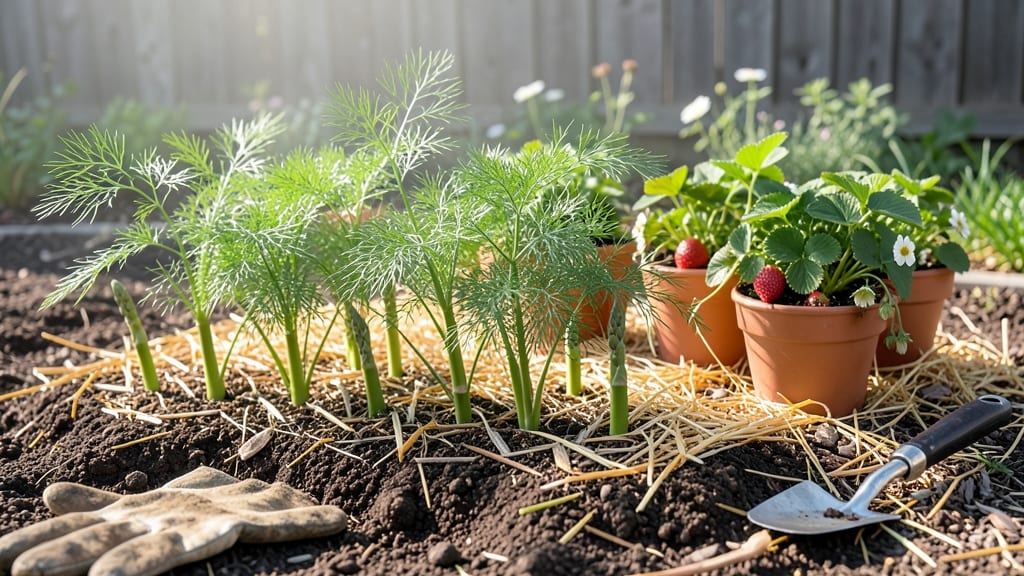
Planting asparagus and strawberries together isn’t just clever—it’s a year-round productivity hack that saves space and boosts harvests. 🌱 The deep roots of asparagus break up compacted soil while their fern-like fronds shade the ground, keeping strawberry runners cool and moist.
This combo works especially well in small gardens or raised beds where every inch counts.
Start by planting asparagus crowns in a 3-foot-wide trench, spacing them 12 inches apart. Fill the trench halfway with soil, lay the crowns flat, then cover with 2-3 inches of dirt. After a year, the asparagus will establish, and you can tuck strawberry plants between the rows.
The asparagus acts like a living mulch, suppressing weeds while the strawberries thrive in the dappled shade.
By summer, you’ll harvest sweet, early strawberries while the asparagus beds lie dormant—then in spring, the cycle repeats. The asparagus crowns even deter voles, a common strawberry pest. Just keep the area well-mulched to retain moisture and watch your two crops support each other effortlessly.
This pairing works in full sun to partial shade, making it adaptable for urban gardens, backyard plots, or even container setups with dwarf varieties. The key is patience—asperagus takes 2-3 years to establish, but once it does, you’ve got a low-maintenance, high-reward system for decades.
📚 In This Guide
- What you need
- Instructions
- Tips and common mistakes
- Wrapping up and next steps
What you need
- ● Asparagus Crowns: 1-year-old crowns (1-2 per person in your household, spaced 12–18 inches apart).
- ● Strawberry Plants: June-bearing: 2–3 plants per 12-inch section (spaced 12–18 inches apart).
- ● Ever-bearing/Everbearing: 3–4 plants per 12-inch section (spaced 12–18 inches apart).
- ● Well-draining Soil: Amend with compost (2–3 inches mixed into the top 12 inches of soil) for fertility.
- ● Organic Mulch: Straw (3–4 inches thick) or shredded leaves to retain moisture and suppress weeds.
- ● Garden Tools: Trowel or hand shovel (for planting crowns).
- ● Garden fork (to loosen soil).
- ● Measuring tape or ruler (for spacing).
- ○ Gloves (optional but recommended!).
- ● Fertilizer: Balanced fertilizer (10-10-10): 1–2 tablespoons per planting hole for asparagus.
- ○ Low-nitrogen fertilizer (5-10-10): For strawberries after fruiting (optional).
- ● Watering Can or Hose: With a gentle spray nozzle for hydration.
- ○ Drip Irrigation System (Optional): For consistent moisture, especially in dry climates.
- ● Sunlight: Full sun (6–8 hours daily).
- ● pH Level: Slightly acidic soil (6.0–7.0). Test with a soil kit if unsure.
- ● Spacious Bed: Minimum 3 feet wide x 6 feet long (or larger for bigger harvests).
- ● Patience: Asparagus takes 2–3 years to establish before full harvest!
How to plant asparagus and strawberries together for a productive garden
This dynamic duo thrives when planted side by side—here's how to make their partnership work beautifully.
🌱 Step 1: Plan the Layout for Optimal Growth
Asparagus crowns need 12-18 inches of space between plants and 3 feet between rows, while strawberries prefer 18-24 inches apart. I plant asparagus crowns in a wide band along the north side of the bed to avoid shading strawberries, which demand full sun. The shallow strawberry roots won't compete with asparagus's deep taproots.
Mark planting zones with stakes—place asparagus crowns in trenches 6 inches deep and strawberry plants 12 inches apart in the remaining space. This creates a natural microclimate where strawberries benefit from asparagus's shade during peak afternoon sun while still getting morning light.
🌱 Step 2: Prepare the Soil for Both Plants
Asparagus thrives in well-drained soil with a 6.5-7.0 pH, while strawberries prefer slightly acidic 5.5-6.5 pH. I blend 2 inches of compost into the top 12 inches of soil for asparagus trenches and add 1 inch of peat moss to the strawberry areas to lower pH naturally. Both plants need loose soil—break up clods larger than 2 inches with a broadfork.
Test soil moisture by squeezing a handful—it should hold together but not feel sticky. If your soil drains poorly, mix in 1 part perlite to 3 parts soil in asparagus trenches. Strawberries tolerate slightly wetter conditions, so no amendments are needed unless your area floods.
☀️ Step 3: Plant Asparagus Crowns First
Soak asparagus crowns for 2 hours before planting to encourage root growth. Place each crown horizontally in the trench with roots spread out and tips pointing north. Cover with 2 inches of soil—this protects crowns from frost while allowing roots to establish. I label each trench with the planting date since asparagus takes 2-3 years to produce spears.
Water immediately after planting to settle soil around roots. Keep the area moist but not soggy for 4 weeks—you'll know moisture is right when the soil surface looks slightly damp but not glistening. Avoid stepping near the trenches, as compacted soil smothers new roots.
🌿 Step 4: Add Strawberry Plants After Asparagus Settles
Wait 4-6 weeks after planting asparagus before adding strawberries, giving roots time to establish. Dig holes 1 inch deeper than the root ball and place plants so the crown sits ½ inch above soil level—this prevents rot. Space rows 3 feet apart to allow airflow and easy maintenance.
Mulch strawberries with 2 inches of straw (not hay—it contains weed seeds) to retain moisture and suppress weeds. The mulch also protects berries from soil-borne diseases. Water deeply after planting, then maintain 1 inch of water weekly during dry spells—you'll see new leaves emerge within 7-10 days.
✂️ Step 5: Maintain the Pairing Through the Seasons
Asparagus needs 3 years of no harvest to build roots—resist picking spears until then. In spring, add 1 inch of compost around strawberry plants and trim runners to encourage larger berries. By summer, strawberries will shade asparagus crowns naturally, reducing water needs during heatwaves.
In fall, cut back asparagus ferns to 2 inches above ground and add 3 inches of mulch to insulate crowns. Strawberries benefit from a light frost protection of straw if temperatures drop below 25°F. This winter care ensures both plants return stronger each spring.
Tips & tricks for perfect companion planting of asparagus and strawberries
These practical insights will help you maximize the benefits of this natural garden partnership.
Soil Prep Precision: When amending soil for asparagus trenches, focus on breaking up clods larger than 2 inches—this creates ideal root pathways. For strawberries, I've found that adding 1 inch of peat moss to lower the pH works best when mixed into the top 6 inches of soil, not just sprinkled on top. The key is creating a loose, aerated environment that mimics their natural growing conditions.
Planting Sequence Strategy: The 4-6 week waiting period between planting asparagus and strawberries is crucial—it allows asparagus roots to establish without competing with strawberry roots. I've learned to mark planting dates on stakes right after asparagus goes in, so I remember when to add strawberries. This timing also prevents overcrowding that could stress both plants.
Mulching Mastery: That 2 inches of straw mulch around strawberries serves multiple purposes: retaining moisture, suppressing weeds, and protecting berries from soil-borne diseases. For asparagus, I use a thicker 3-inch layer in fall, which doubles as winter insulation. The difference in mulch thickness reflects each plant's different needs—strawberries need airflow, while asparagus benefits from deeper protection.
Seasonal Care Calendar: Remember that asparagus's 3-year establishment period is non-negotiable—this is when roots build the energy reserves needed for future harvests. In spring, I always add that 1 inch of compost around strawberries after the first flush of growth, which gives them a nutrient boost without competing with asparagus's deep root system. The summer shading effect from strawberries actually reduces asparagus's water needs during heatwaves.
Pro Tips for Plant Asparagus And Strawberries Together
- These practical insights will help you maximize the benefits of this natural garden partnership.
- Soil Prep Precision: When amending soil for asparagus trenches, focus on breaking up clods larger than 2 inches—this creates ideal root pathways.
- Planting Sequence Strategy: The 4-6 week waiting period between planting asparagus and strawberries is crucial—it allows asparagus roots to establish without competing with strawberry roots.
Frequently asked questions
Got questions about growing asparagus and strawberries together? You’re not alone! Here are answers to the most common queries to help you nail this dynamic duo in your garden.
Can asparagus and strawberries really thrive side by side?
Asparagus and strawberries are fantastic companions. Asparagus grows tall and shades the soil, keeping strawberry roots cool and moist, while strawberries deter pests like asparagus beetles with their strong scent. Just ensure they’re planted in separate beds or rows for easy maintenance.
When is the best time to plant them together?
Plant asparagus crowns in early spring (3–4 weeks before the last frost) and strawberries in late spring or early summer (after the soil warms). If starting strawberries from runners, wait until the asparagus ferns have died back in fall—this prevents competition for nutrients.
Will they compete for nutrients or space?
Not if you plan ahead! Asparagus needs deep, well-drained soil, while strawberries prefer slightly acidic, loose beds. Space asparagus crowns 12–18 inches apart and strawberries 18–24 inches apart. Use mulch (like straw) to retain moisture and reduce competition.
How do I keep pests away from both plants?
Strawberries repel asparagus beetles, but you might still spot slugs or birds. Use organic deterrents like diatomaceous earth around strawberries and row covers for young asparagus. Interplanting with chives or thyme can also boost pest resistance naturally.
What if I don’t have enough space for both?
No problem! Try vertical gardening—grow strawberries in hanging baskets or containers near the asparagus bed. Alternatively, plant strawberries in a separate raised bed and use the asparagus bed’s shade to grow other companions like lettuce or spinach underneath.
Wrapping up and next steps
Growing asparagus and strawberries together isn’t just clever—it’s a game-changer for small gardens or urban plots! 🌱 Their companion benefits—like pest control, space efficiency, and extended harvests—make this duo a win-win.
Whether you’re a seasoned gardener or just starting, this pairing proves that teamwork in the soil leads to bigger, happier yields.
Ready to dig in? Start small—try a patch this season and watch your garden thrive. Next up: Grab your gloves, sketch a layout, and let nature do the rest! 🌟