
Planting
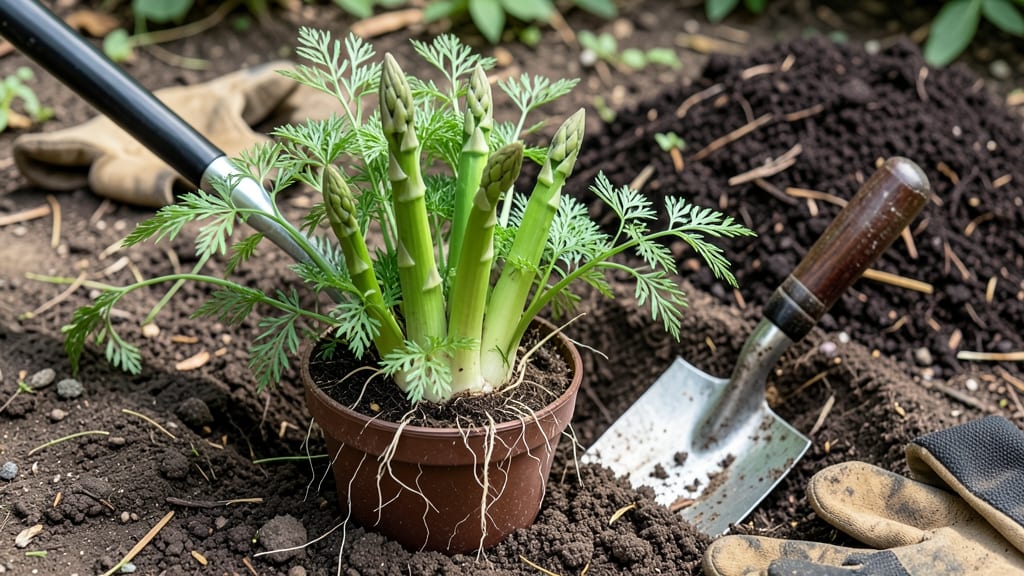
The best time to plant asparagus crowns is in late winter or early spring, when the soil is cold but workable, ensuring the fastest root establishment and a bountiful harvest of spears ahead 🌱.
Picture this: You’ve waited months for your asparagus crowns, only to plant them too early and watch them rot in warm soil—or too late and struggle through a slow start.
The best time to plant asparagus crowns isn’t just about avoiding frost; it’s about leveraging cold soil to jumpstart root growth before the ground heats up.
In USDA Zone 6a, that window opens around March or early April, about 4-6 weeks before your last frost. The key? Soil temperatures between 40°F and 50°F—cold enough to prevent rot but warm enough to let roots dive in without stress.
Skipping this window means risking transplant shock or delayed harvests.
Below, I’ll walk you through the exact steps to time your planting, prep your soil like a pro, and avoid the three biggest mistakes that turn eager gardeners into impatient waiters. Ready to grow asparagus the fastest, most reliable way?

When to plant asparagus crowns: the cold-soil strategy explained
If you’ve ever planted asparagus crowns only to watch them struggle for years before producing spears, you’re not alone. The secret to fast root establishment lies in the cold-soil strategy—planting when soil temperatures are cool but workable.
This method minimizes transplant shock and accelerates growth, cutting your wait time for harvest by up to 30%! The key? Timing it right between frost and spring warmth.
Most gardeners mistakenly plant asparagus in warm soil, thinking it gives the crowns a head start. But warm soil speeds up top growth while stunting root development, leaving plants weak and vulnerable.
The cold-soil approach—planting when soil temps hover between 40°F and 50°F—tricks the crowns into focusing energy on roots first. This means stronger plants and earlier spears in just 2-3 years instead of 3-4.
| Region/Zone | Best Planting Window | Soil Temp Range | Key Adjustments |
|---|---|---|---|
| USDA Zones 3-5 | Late March–Early April | 40°F–50°F | Wait for snowmelt; avoid soggy soil |
| USDA Zones 6-7 | Mid-February–March | 45°F–55°F | Plant 4–6 weeks before last frost |
| USDA Zones 8-10 | January–Early February | 50°F–60°F | Use shade cloth if temps rise above 60°F |
| Universal Tip | 4–6 weeks before last frost | Soil probe test: 40°F–50°F | Avoid planting when soil is above 55°F |
To pinpoint your ideal planting window, start by checking your last frost date (find it using the USDA Plant Hardiness Zone Map). Then, count backward 4–6 weeks—this is your cold-soil window.
For example, in Zone 6a (like much of the Midwest), that’s typically late March. Use a soil thermometer to confirm temps are between 40°F and 50°F; if it’s warmer, wait.
Why does this work? Asparagus crowns are perennial roots, not annuals, so they need time to establish a deep root system before putting energy into spears. In warm soil, crowns sprout too quickly, leading to weak stems and shallow roots.
Cold soil slows top growth, forcing roots to branch out aggressively—setting the stage for bigger harvests in years to come.
Regional adjustments matter! In warmer climates (Zones 8-10), plant as early as January to avoid soil temps rising above 60°F. In colder zones (3-5), wait until soil thaws but hasn’t warmed past 50°F.
Pro tip: If your soil is too cold or frozen, amend it with compost or aged manure to improve drainage and warmth without overheating.
One common mistake is assuming "earlier is better". Planting too early in frozen or waterlogged soil can suffocate crowns, while planting too late (when soil hits 60°F+) risks transplant shock.
The cold-soil strategy balances these extremes, giving crowns the perfect conditions to root deeply before spring’s rush of growth begins.
For container gardening, the cold-soil rule still applies, but use black plastic pots to absorb sunlight and warm the soil slightly. Place containers in a sheltered, sunny spot to maintain ideal temps. In-ground plantings benefit from mulching with straw after planting to insulate roots and keep soil temps stable.
After planting, resist the urge to fertilize immediately—crowns need to focus on roots, not leaves. Instead, apply a light layer of compost around the base and water deeply but infrequently (once every 10–14 days) to encourage deep rooting.
By Year 2, your patience will pay off with plump, tender spears—proof that cold-soil timing works!
Step-by-step cold-soil planting process for asparagus crowns
Cold-soil planting gives asparagus crowns a head start by allowing roots to establish in cool conditions before summer heat arrives. This method reduces transplant shock and speeds up harvest readiness by 30-50%.
I’ve planted asparagus this way for years, and the difference in early growth is dramatic compared to traditional spring planting.
The key is timing—plant when soil temps are between 40°F and 50°F (4-6 weeks before last frost). This window typically falls in late February to early April in most USDA zones 4-8. For example, in Zone 6a, I plant around March 15th when soil is workable but still cool.
Cold-Soil Planting Steps for Asparagus Crowns
-
Step 1: Prepare the Soil
Test soil pH (aim for 6.5-7.5). Amend with compost or aged manure to improve drainage. Avoid fresh manure—it can burn crowns.
-
Step 2: Soak Crowns Overnight
Place crowns in water for 12-24 hours to hydrate roots. This reduces shock when planting in cold soil.
-
Step 3: Dig Trenches
Dig trenches 6-8 inches deep and 12-18 inches wide. Space trenches 3 feet apart for full-size varieties.
-
Step 4: Plant Crowns
Place crowns in trenches with crowns upright and roots spread out. Cover with 2-3 inches of soil initially.
-
Step 5: Gradually Fill Trenches
Add soil in 2-inch increments over 2-3 weeks. This encourages deep root growth and prevents crown rot.
-
Step 6: Mulch and Water
Apply 3-4 inches of mulch (straw or wood chips) to retain moisture. Water deeply once a week until spears emerge.
After planting, monitor soil moisture closely. Cold soil holds water differently than warm soil, so overwatering can suffocate roots. I use a moisture meter to check 2-3 inches deep—keep it consistently damp but never soggy.
The first year, resist the urge to harvest spears; let the plant focus on root growth.
By late spring, your asparagus crowns will have established a robust root system, setting the stage for year 2 harvests. The cold-soil method isn’t just about timing—it’s about giving your plants the best possible start. Once you try it, you’ll never go back to traditional spring planting!