
Planting
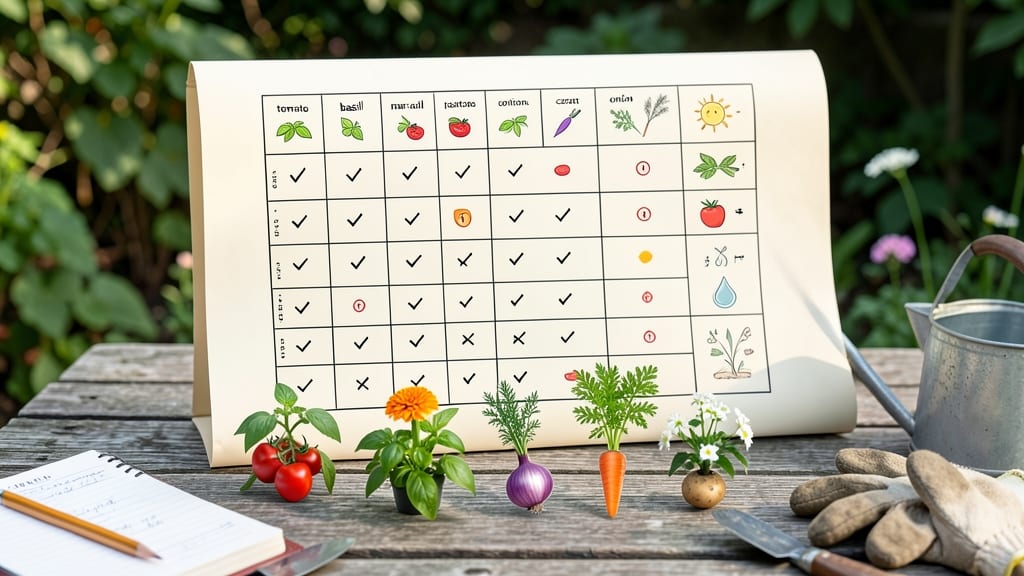
My first garden disaster taught me the hard way: a plant compatibility chart isn’t just about looks—it’s about survival. 🌱 That year, my basil wilted next to peppers, my carrots split from poor soil, and my marigolds failed to repel pests.
The fix? Pairing plants that share sunlight needs, soil preferences, and growth habits—like tomatoes with basil (both love full sun and regular water) or lettuce with radishes (one grows fast, the other slow).
The science behind it is simple: compatible plants support each other. Herbs like dill and parsley deter pests from carrots, while perennials like lavender calm the soil for annuals like zinnias. Even spacing matters—tall sunflowers behind bush beans prevent shading struggles.
You’ll end up with a garden that thrives without constant intervention, and the bonus? Stunning visual contrasts that make neighbors stop and stare.
Start with your sunniest spot and group plants by their light needs: full sun (tomatoes, peppers), part shade (kale, cilantro), or full shade (hostas, ferns). Mix heights for airflow and aesthetics—tall snapdragons behind low-growing thyme create drama while preventing disease.
The payoff? Less work, more blooms, and a garden that feels like it’s running itself.
This works for containers, raised beds, or in-ground plots. Even small spaces can pack in compatible pairs—like mint with strawberries (both love shade) or nasturtiums with cucumbers (pests hate them both). Let’s build a plant compatibility chart that makes your garden work with you, not against you.
📚 In This Guide
- What you need
- Instructions
- Tips and common mistakes
- Wrapping up and next steps
What you need
- ● Paper or digital tool: Sketchbook or graph paper (for hand-drawn charts)
- ● Spreadsheet software (Excel, Google Sheets) or design tools (Canva, Adobe Illustrator) for digital versions
- ● Plant research materials: Printed or digital plant compatibility guides (e.g., from university extensions or gardening books)
- ● List of plants you’re working with (include species, sunlight needs, and soil preferences)
- ● Basic supplies: Pencils, colored markers, or digital stylus (for visuals)
- ● Ruler (for neat grids or scales)
- ● Plant tags or labels (to reference real-life pairings)
- ● Printer (to print a physical copy for your garden)
- ● Plant photos (for a visually engaging chart)
- ● Sticky notes (to jot down quick compatibility notes)
How to design a thriving garden using science-backed plant pairings
Here’s how to create a garden where plants support each other’s growth naturally.
🌱 Step 1: Group Plants by Sunlight and Water Needs
Start by organizing your garden into zones based on sun exposure and water requirements. Plants that thrive in full sun (6+ hours daily) should stay together, while shade-lovers (4+ hours of dappled light) get their own spot. I always check each plant’s tag for sunlight needs—mixing sun and shade plants leads to weak, stressed growth.
For water, group drought-tolerant plants like lavender and rosemary together, and keep moisture-loving herbs like parsley and chives near each other. This ensures you’re not overwatering sun-lovers or underwatering thirsty plants. A simple way to remember: if one plant wilts easily, it won’t survive next to a drought-resistant neighbor.
🌿 Step 2: Pair Beneficial Plant Combinations
Some plants naturally boost each other’s health. Pair tomatoes with basil to deter pests and improve flavor—basil’s scent masks tomato odors that attract hornworms. I also plant marigolds around vegetables because their roots release compounds that repel nematodes and aphids. These pairings reduce the need for chemical sprays and keep your garden resilient.
For flowers, combine nasturtiums with cucumbers or squash—nasturtiums act as trap crops, luring pests away from your main harvest. Avoid planting beans near onions or garlic, though; they compete for nutrients and stunt each other’s growth. A quick rule: if two plants share similar nutrient needs, keep them apart.
✂️ Step 3: Plan for Height and Spacing
Tall plants like sunflowers or hollyhocks should go in the back of beds, while low growers like thyme or lettuce fill the front. This prevents shading issues and makes harvesting easier. I measure each plant’s mature height and space them accordingly—crowding leads to disease, while too much space wastes garden real estate.
Leave 12-18 inches between medium-height plants (like peppers or bush beans) and 24+ inches for large plants (tomatoes, corn). If you’re short on space, try vertical gardening with trellises for vining plants like cucumbers or pole beans. This also improves airflow, reducing fungal risks like powdery mildew.
💧 Step 4: Test Soil and Adjust for Compatibility
Before planting, check your soil’s pH and nutrient levels—some plants thrive in acidic soil (pH 5.5-6.5) (like blueberries or azaleas), while others prefer alkaline (pH 7.0+) (like lavender or lilacs). I use a simple soil test kit to avoid guesswork. If your soil is too heavy, amend it with compost; if it’s too sandy, mix in peat moss or coconut coir.
Adjust mulch types based on plant needs: straw or wood chips retain moisture for thirsty plants, while gravel or pine needles work for drought-tolerant species. Avoid mulching too close to stems—keep it 2-3 inches away to prevent rot. A well-prepared bed means fewer adjustments later.
☀️ Step 5: Monitor and Adjust Over Time
Watch for signs of stress: yellowing leaves often mean overwatering or nutrient deficiency, while stunted growth could signal poor sunlight or root competition. If pests target one plant, check its neighbors—sometimes the issue spreads. I keep a small notebook to track which pairings thrive and which don’t in my garden.
Rotate crops annually to prevent soil depletion and disease buildup. For example, don’t plant tomatoes in the same spot two years in a row—they’re heavy feeders and attract specific pests. If you’re stuck with limited space, interplant fast growers (like radishes) with slow ones (like carrots) to maximize yield without overcrowding.
Tips & tricks for perfect plant pairings in your garden
These simple strategies will help you create a harmonious garden where every plant thrives together.
Sunlight and Water Zoning: I can’t stress enough how important it is to group plants by their sunlight needs. Check the plant tags for their specific requirements—most will tell you if they need full sun, partial shade, or full shade. For water, I’ve found that grouping plants with similar moisture needs saves time and prevents overwatering. For example, keep your drought-tolerant rosemary and thyme together in one section, while your moisture-loving parsley and cilantro get their own spot. This simple organization makes maintenance a breeze and prevents stress on your plants.
Beneficial Pairings Secret: The key to reducing pests naturally is planting companion plants that work together. I always include marigolds around my vegetable beds—they’re like little pest-repelling superheroes! Another trick is planting basil near your tomatoes. The basil’s strong scent confuses pests and actually enhances the tomato flavor. For flowers, nasturtiums are my go-to trap crops—they lure pests away from my squash and cucumbers. Remember, if two plants compete for the same nutrients, like beans and onions, keep them apart.
Height and Spacing Strategy: When planning your garden layout, think vertically first. Tall plants like sunflowers or hollyhocks belong in the back, while low growers like thyme or lettuce go in front. This prevents shading problems and makes harvesting easier. For spacing, I measure mature plant heights and leave 12-18 inches between medium plants and 24+ inches for large ones. If space is tight, use trellises for vining plants like cucumbers—they’ll save space and improve airflow, reducing fungal diseases. Trust me, proper spacing makes all the difference in a healthy garden.
Soil Testing Tip: Before you plant anything, test your soil’s pH and nutrient levels. I use a simple soil test kit to check if my soil is acidic (pH 5.5-6.5) or alkaline (pH 7.0+). Acid-loving plants like blueberries need that lower pH, while lavender thrives in alkaline conditions. If your soil is too heavy, mix in compost; if it’s too sandy, add peat moss or coconut coir. And here’s a pro move: adjust your mulch type based on plant needs—straw retains moisture for thirsty plants, while pine needles work great for drought-tolerant species. Always keep mulch 2-3 inches away from stems to prevent rot.
Pro Tips for Plant Compatibility Chart
- These simple strategies will help you create a harmonious garden where every plant thrives together.
- Sunlight and Water Zoning: I can’t stress enough how important it is to group plants by their sunlight needs.
- Beneficial Pairings Secret: The key to reducing pests naturally is planting companion plants that work together.
Frequently asked questions
Got questions about pairing plants like a pro? Here are some of the most common ones—and the answers you need to keep your garden thriving!
What’s the best way to use a plant compatibility chart?
A plant compatibility chart helps you group plants that share similar sunlight, water, and soil needs. Place companion plants (like basil with tomatoes) near each other to boost growth, deter pests, and improve flavor. For incompatible pairs (e.g., onions near beans), keep them separated to avoid stunted growth or disease.
Can I plant incompatible plants together if I adjust their care?
While some adjustments (like extra mulch or spacing) can help, true incompatibility—like competing for nutrients or spreading disease—often can’t be fixed. Always check a chart for hard conflicts (e.g., brassicas and alliums) before planting. When in doubt, consult a local nursery for regional advice!
What are some easy plant pairings for beginners?
Start with foolproof combos:
- Marigolds + Tomatoes: Repel pests and improve tomato flavor.
- Basil + Peppers: Basil’s scent deters aphids, and peppers thrive in its shade.
- Carrots + Leeks: Leeks confuse carrot flies, and carrots loosen soil for leeks.
Why is my plant struggling even though I followed the compatibility chart?
Check these first:
- Soil quality: Test pH and nutrients—some plants need amendments (e.g., compost for heavy feeders like corn).
- Pests/disease: Insects or fungi can override compatibility. Use neem oil or row covers if needed.
- Overcrowding: Even compatible plants need space. Thin seedlings or prune foliage to improve airflow.
Do plant compatibility rules apply to container gardens?
Yes! Containers have limited space and drainage, so prioritize:
- Plants with similar water needs (e.g., thyme + rosemary).
- Deep-rooted plants (like basil) in larger pots to avoid competition.
- Dwarf or bush varieties (e.g., Cherry Tomatoes) to save space.
Wrapping up and next steps
Mastering a plant compatibility chart isn’t just about aesthetics—it’s about creating a thriving, low-maintenance garden where every plant supports its neighbors. 🌱 From pollinator-friendly pairings to pest-deterring combos, science-backed pairings simplify your gardening journey and boost yields. Ready to put your newfound knowledge into action?
🌿 Your Next Step: Start Small, Grow Bold
Begin with one section of your garden—try pairing basil with tomatoes or marigolds with veggies—and observe the magic unfold. Over time, expand your pairings, experiment with new combos, and watch your garden flourish like never before! Happy planting! 🌟