
Planting
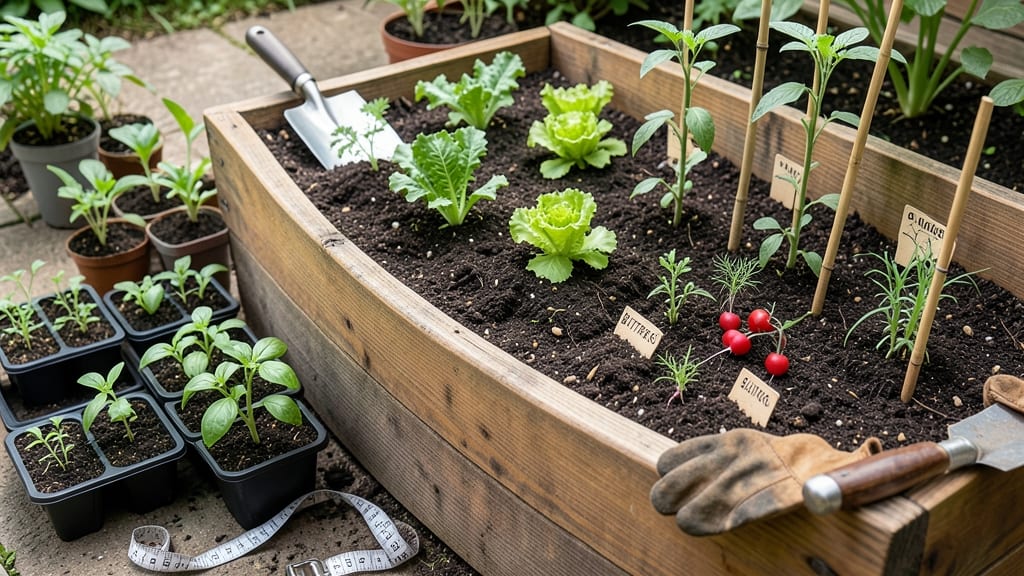
Proper spacing for vegetables in raised beds turns a chaotic mess into a thriving garden. ✨ I learned the hard way—crowded plants compete for sunlight, stifle airflow, and invite pests, while perfect spacing maximizes yield and makes harvesting easier.
The right layout isn’t just about fitting more plants; it’s about creating an ecosystem where each vegetable thrives.
Start by grouping plants with similar needs together—tall tomatoes and peppers need 18-24 inches of space, while leafy greens like lettuce can share 6-12 inches in rows. Root crops like carrots need 2-3 inches between seeds but 4-6 inches when thinned to prevent overcrowding.
Think of it like a puzzle: bigger plants go in the back, smaller ones in front, and fast growers near the edges.
When done right, you’ll harvest 30-50% more produce with fewer weeds and pests. The airflow keeps leaves dry, reducing fungal diseases, and you’ll spend less time fighting tangled vines or broken stems.
Plus, your garden will look like a well-designed landscape instead of a jungle—because it is one, but the good kind.
This works for any raised bed size, from 4x8-foot classic beds to narrow 2x6-foot containers. The same principles apply whether you’re growing heirlooms or hybrids, so you’ll get consistent results every season. Let’s get those plants spaced just right!
📚 In This Guide
- What you need
- Instructions
- Tips and common mistakes
- Wrapping up and next steps
What you need
- ● Raised bed frames: Wood (cedar or redwood), composite lumber, or metal (galvanized steel). Size: 4’ x 8’ or 4’ x 12’ (standard for easy reach).
- ● Garden soil: High-quality mix of 60% topsoil, 30% compost, and 10% perlite/sand (1–2 cubic yards per 4’ x 8’ bed).
- ● Organic mulch: Straw, shredded leaves, or wood chips (2–3 inches to retain moisture).
- ● Drip irrigation or soaker hoses: ¼-inch tubing with emitters (adjustable flow rates).
- ● Measuring tape & stakes: 10–15 feet of tape + wooden stakes (for marking spacing).
- ● Hand trowel & pruners: For transplanting and trimming.
- ● Plant labels: Waterproof tags or sticks (to track varieties).
- ● Row markers: Color-coded flags or painted stones to visualize spacing.
- ● Companion planting guide: Printable chart for interplanting-friendly combos (e.g., basil + tomatoes).
- ● Thermometer/hygrometer: To monitor ideal soil temps (60–75°F) for germination.
- ● Knee pad or stool: For comfort during long planting sessions!
Step-by-step guide for science-backed vegetable spacing in raised beds
Here's how I design raised beds for maximum yield—using plant biology to eliminate wasteful space.
🌱 Step 1: Group Plants by Family and Growth Habits
Vegetables from the same family compete for identical nutrients and attract shared pests. I divide my 4-foot-wide raised beds into three zones: tall plants (like tomatoes) in the north, mid-height (peppers, bush beans) in the center, and low growers (lettuce, radishes) along the south edge. This vertical layering maximizes sunlight exposure for all plants.
For example, place tomato plants 18-24 inches apart in the back row—this gives their vines room to sprawl without shading shorter companions. I always check seed packets for mature plant size; a 3-foot-tall variety needs more space than a compact 18-inch cultivar. Real talk: cramming plants too close leads to crowded foliage, which traps moisture and invites fungal diseases.
🌿 Step 2: Calculate Spacing Based on Plant Type
Root vegetables like carrots and beets need 2-3 inches between seeds to develop properly, while leafy greens such as kale can tolerate 6-12 inches apart. I use a simple formula: multiply the plant's mature width by 1.5 to determine spacing. For instance, a zucchini plant that grows 3 feet wide gets 4.5 feet between plants—I round down to 4 feet for practicality.
Watch for the plant's natural growth patterns. If you notice leaves touching at maturity, you've spaced them too closely. The goal is air circulation—this prevents mildew and makes harvesting easier. I always sketch a rough layout before planting, using graph paper where each square represents 6 inches. This visual helps me spot potential issues before they happen.
✂️ Step 3: Implement Companion Planting for Natural Pest Control
strategic pairing reduces pests and improves growth. I plant basil near tomatoes to repel thrips and carrots with onions to deter carrot flies. The key is understanding which plants benefit mutually—marigolds, for example, deter nematodes while adding vibrant color to the bed.
For 4-foot-wide beds, I use a 3:1 ratio of main crops to companion plants. For instance, if I plant 4 tomato plants (spaced 2 feet apart), I add 1 marigold plant between each pair. This balance ensures the primary vegetables get priority space without sacrificing pest protection. I always rotate companion plants yearly to prevent soil depletion and pest adaptation.
💧 Step 4: Adjust for Soil Depth and Root Spread
Raised beds with 12-inch depth allow deeper-rooted plants like potatoes and carrots to thrive, while shallow-rooted herbs need only 6 inches. I plant potatoes 12 inches apart in rows 3 feet apart to give their tubers room to expand horizontally. For shallow-rooted lettuce, I space seeds 4 inches apart in tight clusters to maximize leaf production.
Pay attention to how plants interact with their neighbors. If you notice one plant's roots encroaching on another's space, it's a sign you need wider spacing. I use a trowel to gently loosen soil around roots when transplanting, which helps establish plants faster and reduces competition for nutrients. Here's the thing—healthy soil means plants can better tolerate closer spacing, but it's always better to err on the side of extra room.
☀️ Step 5: Monitor and Adjust as Plants Mature
Check spacing every 2-3 weeks during the growing season. If you see leaves touching or stems leaning toward each other, it's time to thin or prune. I use pruning shears to trim excess foliage rather than removing whole plants—this reduces shock and maintains bed density.
For vining plants like cucumbers, I provide trellises to grow vertically, freeing up ground space for other crops. This technique lets me fit two rows of cucumbers in a 4-foot bed instead of one. The trick is to train vines upward as soon as they reach 6 inches tall—this encourages stronger stems and better air circulation. Don't skip this step; leggy, sprawling vines waste valuable growing space and attract pests.
Tips & tricks for perfect raised bed vegetable layouts
These science-backed strategies will help you optimize your garden's potential without wasting precious space.
Plant Height Strategy: When arranging your 4-foot-wide beds, remember that taller plants like tomatoes should face north to avoid shading shorter plants. I learned this the hard way—after planting tomatoes on the south side, they blocked sunlight from my peppers for hours each day. The north-facing position creates a natural staircase of sunlight exposure, maximizing growth for all plants. This vertical layering isn't just about aesthetics; it's about photosynthesis efficiency.
Growth Pattern Visualization: Before planting, sketch your layout using graph paper where each square represents 6 inches. This simple technique helps me visualize potential issues before they happen. For example, when planning my zucchini plants (which need 4 feet between them), I can immediately see how they'll interact with neighboring crops. The visual aid prevents that "oh no" moment when you realize you've crowded plants too closely after they've already sprouted.
Companion Planting Ratio: I've found that maintaining a 3:1 ratio of main crops to companion plants works perfectly in my 4-foot beds. For instance, with 4 tomato plants spaced 2 feet apart, I add 1 marigold between each pair. This ratio gives your primary vegetables the space they need while still providing pest protection. The key is selecting companions that won't compete for nutrients—like pairing basil with tomatoes rather than competing herbs.
Soil Depth Considerations: The 12-inch depth of raised beds is perfect for potatoes but overkill for herbs. I use the extra depth for root vegetables while keeping shallow-rooted plants like lettuce in the top 6 inches. This vertical separation prevents root competition while maximizing the bed's volume. For transplanting, I always loosen soil around roots with a trowel—this helps establish plants faster and reduces shock, which is especially important when dealing with delicate seedlings.
Pro Tips for Spacing For Vegetables In Raised Beds
- These science-backed strategies will help you optimize your garden's potential without wasting precious space.
- Plant Height Strategy: When arranging your 4-foot-wide beds, remember that taller plants like tomatoes should face north to avoid shading shorter plants.
- Growth Pattern Visualization: Before planting, sketch your layout using graph paper where each square represents 6 inches.
Frequently asked questions
Got questions about spacing your veggies in raised beds? You’re not alone! Here are answers to the most common ones to help you grow like a pro.
Why does spacing matter in raised beds?
Proper spacing is key for airflow, root growth, and pest control. Crowded plants compete for nutrients, leading to disease or stunted harvests. Raised beds make spacing easier—just follow seed packet guidelines or adjust for larger varieties!
How do I adjust spacing for different veggie types?
Leafy greens (like lettuce) need 6–12 inches apart, while root crops (carrots) require 2–4 inches. Vining plants (cucumbers) need 12–24 inches or trellises. Use a spacing chart as your guide!
When’s the best time to thin seedlings?
Thin seedlings when they’re 2–3 inches tall and have their first true leaves. Early thinning prevents overcrowding and helps weaker plants give way to stronger ones. Use sharp scissors to avoid disturbing roots!
What if my raised bed is too small for proper spacing?
Try succession planting—harvest early crops (like radishes) to free space for later ones (like tomatoes). Or use interplanting: pair fast growers (lettuce) with slow ones (broccoli) to maximize space!
My plants are still struggling despite proper spacing. What’s wrong?
Check for overwatering (root rot) or underwatering (wilting). Too much shade? Thin to improve airflow. If pests are the issue, try companion planting (e.g., basil with tomatoes) or organic sprays. Adjust as you grow!
Wrapping up and next steps
Mastering spacing for vegetables in raised beds is your secret weapon for a thriving garden! 🌱 By following science-backed guidelines—whether it’s the 12-inch rule for leafy greens or 24-inch spacing for tomatoes—you’ll maximize airflow, sunlight, and yield.
Every plant deserves room to grow, and your effort will pay off in bountiful, healthy harvests.
Ready to put your newfound knowledge into action? Start small—pick one or two crops, sketch a layout, and plant with confidence. Happy gardening, and may your raised beds overflow with fresh, homegrown goodness! 🌿