
Planting
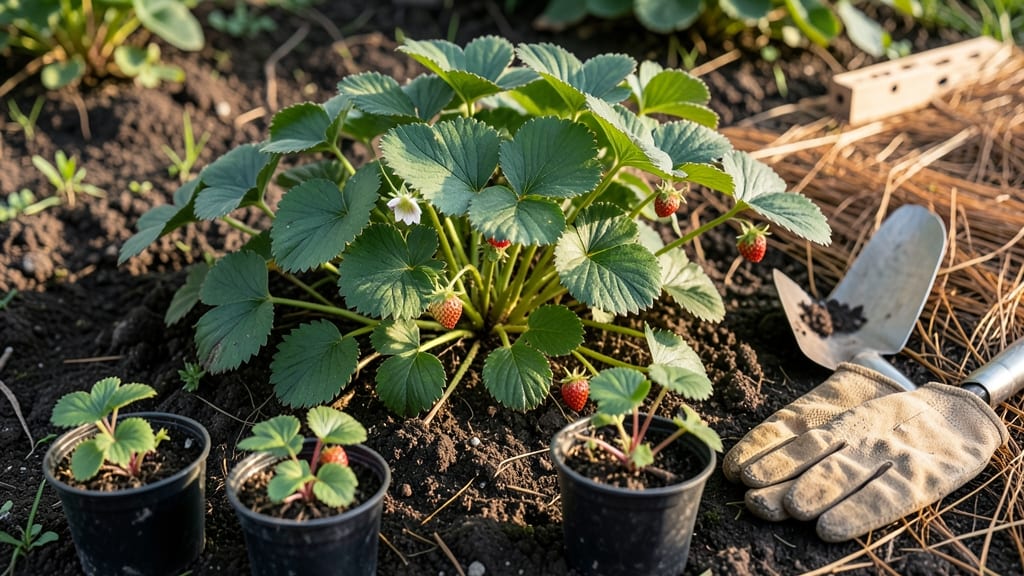
Perfect strawberry spacing in raised beds turns a 4x8-foot plot into a berry bonanza—not just a handful of fruit. 🌱 I learned the hard way that crowded plants compete for sunlight and air, while proper spacing means bigger berries, fewer diseases, and easier harvesting.
The right layout also depends on whether you're growing June-bearing, everbearing, or day-neutral varieties, each with its own rhythm. For June-bearing varieties, space plants 18-24 inches apart in rows 3-4 feet apart—this gives roots room to spread and crowns space to multiply.
Everbearing and day-neutral types need slightly less elbow room: 12-18 inches apart in rows 2-3 feet apart. The key is mimicking how strawberries grow naturally in the wild, where they spread via runners but don’t smother each other.
You’ll end up with lush, productive plants that produce pounds of berries per season instead of struggling for resources. A well-spaced bed also makes weeding and pest control easier—no more tangled runners or hidden slugs.
Plus, the berries ripen more evenly, so you’re not left with a mix of overripe and green fruit. Adjust for your bed size: in a 4x4-foot bed, fit 4-6 plants in a square pattern, while a 4x8-foot bed can hold 8-12 plants in two rows.
And don’t forget to pair strawberries with companion plants like thyme or borage to deter pests naturally. Here’s how to get it right the first time.
📚 In This Guide
- What you need
- Instructions
- Tips and common mistakes
- Wrapping up and next steps
What you need
- ● Raised bed frame: Wooden, metal, or composite (minimum 4’ x 8’ for optimal spacing; height: 6–12 inches for drainage).
- ● Strawberry plants: June-bearing, everbearing, or day-neutral varieties (6–12 plants per 4’ x 4’ bed, depending on spacing goals).
- ● Soil: High-quality raised bed mix (50% topsoil, 30% compost, 20% perlite/vermiculite; 1 cubic yard per 4’ x 8’ bed).
- ● Mulch: Straw or pine needles (2–3 inches; 10–15 sq. ft. coverage per bed).
- ● Drip irrigation or soaker hose: ¼-inch tubing with emitters (1–2 per plant).
- ● Garden stakes or labels: Bamboo stakes or plant tags (1 per plant).
- ● Row covers: Frost cloth for early-season protection.
- ● Plant food: Balanced fertilizer (10-10-10) or compost tea for a mid-season boost.
- ● Weed barrier: Landscape fabric (if mulching isn’t enough).
- ● Pruners: Bypass pruners for trimming runners.
Step-by-Step guide to perfect raised bed strawberry spacing
Here’s how I arrange strawberries in raised beds for maximum fruit production—no wasted space, no overcrowding.
🌱 Step 1: Plan Your Raised Bed Layout for Optimal Airflow
Strawberries need 12-18 inches between plants for proper airflow and sunlight penetration. I divide my 4-foot-wide raised bed into three rows, spacing plants 16 inches apart in the outer rows and 12 inches apart in the center. This staggered arrangement mimics a natural drip irrigation system, letting water flow evenly without pooling.
Use a string line to mark rows before planting—this ensures straight lines and consistent spacing. If your bed is wider than 4 feet, add another row in the center to prevent shading. I always plant everbearing varieties in the outer rows and June-bearing in the center, so they mature at different times and extend the harvest season.
⏰ Step 2: Time Planting for Seasonal Success
Plant in early spring, about 4-6 weeks before your last frost date, when soil reaches 50-60°F. This gives roots time to establish before summer heat stress. I use bare-root plants for deeper root penetration or container-grown for immediate harvests. Water deeply 2-3 days before planting to reduce transplant shock.
Watch for new growth within 2-3 weeks—this signals successful root establishment. If leaves yellow, it’s usually overwatering; if they wilt, the soil is too dry. Adjust your watering schedule based on these cues. I mulch immediately after planting with 2-3 inches of straw to retain moisture and suppress weeds.
☀️ Step 3: Adjust Spacing for Variety and Growth Habit
June-bearing strawberries need 18 inches between plants because they produce a single large harvest. Everbearing and day-neutral varieties can handle 12-16 inches since they fruit continuously. I group day-neutral strawberries in the shadiest part of the bed—they tolerate lower light better than June-bearing types.
If your bed has limited space, opt for smaller varieties like 'Alpine' or 'Mignonette,' which thrive in 8-12 inches of spacing. These compact plants also resist disease better in tight quarters. Avoid crowding—overlapping canopies lead to fungal issues and poor fruit quality.
🌿 Step 4: Maintain Spacing Through Pruning and Thinning
Remove weak or diseased runners immediately—they compete with healthy plants for nutrients. I prune old leaves in early spring to redirect energy to new growth and fruit production. Leave 3-4 strong leaves per plant to maintain photosynthesis while keeping the center open for airflow.
Thin seedlings if they emerge too close together—6-8 inches apart is ideal for young plants. Use sterilized scissors to snip runners at the base, not the plant itself. This prevents damage and encourages stronger root systems. I replant runners in a separate bed if I have extra space, but never let them overcrowd the original planting.
✂️ Step 5: Rotate and Refresh for Long-Term Health
Replace strawberries every 3-4 years—they decline in productivity due to soil-borne diseases. I rotate them with green manure crops like clover or vetch to restore nitrogen. Before replanting, amend the soil with 2-3 inches of compost and a balanced fertilizer (10-10-10) to replenish nutrients.
If you’re keeping the same bed, sterilize the soil with solarization or a vinegar-water mix (1 part vinegar to 4 parts water) to kill pathogens. I also switch to resistant varieties if disease persists. Proper spacing now means fewer problems—and bigger berries—later.
Tips & tricks for perfect raised bed strawberry spacing
These game-changing strategies will help you optimize your strawberry yield without the guesswork—because proper spacing makes all the difference.
Variety-Specific Spacing: The 12-18 inch range in Step 1 is flexible, but don't compromise on June-bearing varieties—they absolutely need that full 18 inches for their massive single harvest. I've seen everbearing types produce just as well at 12 inches because their continuous fruiting prevents the same stress. Think of it like giving your plants breathing room for their growth habit.
String Line Precision: That string line in Step 1 isn't just for looks—it creates perfectly straight rows that maximize every square inch of your bed. I mark my lines with small stakes at both ends, then stretch the string taut between them. This ensures your 16-inch and 12-inch spacing stays consistent across the entire bed, preventing the natural tendency to eyeball and end up with uneven gaps.
Soil Temperature Test: Before planting, test your soil temperature by placing a thermometer in the bed for 10 minutes. You're aiming for that 50-60°F range mentioned in Step 2, but if it's cooler, wait—cold soil stresses roots. I've planted too early when temps were only 45°F and ended up with stunted plants. A simple soil thermometer (around $10) prevents this common mistake and gives your strawberries the best possible start.
Mulch Thickness Matters: That 2-3 inches of straw in Step 2 isn't optional—it's the difference between thriving plants and struggling ones. Too little mulch (under 2 inches) lets weeds compete, while too much (over 3 inches) can suffocate roots. I spread my straw evenly after planting, then fluff it gently with my fingers to create small air pockets that prevent compaction.
Pro Tips for Raised Bed Strawberry Plant Spacing
- These game-changing strategies will help you optimize your strawberry yield without the guesswork—because proper spacing makes all the difference.
- Variety-Specific Spacing: The 12-18 inch range in Step 1 is flexible, but don't compromise on June-bearing varieties—they absolutely need that full 18 inches for their massive single harvest.
- String Line Precision: That string line in Step 1 isn't just for looks—it creates perfectly straight rows that maximize every square inch of your bed.
Frequently asked questions
What’s the ideal raised bed strawberry plant spacing for June-bearing vs. everbearing varieties?
June-bearing strawberries need 12–18 inches apart in rows spaced 2–3 feet apart to maximize airflow and sunlight. Everbearing varieties can handle slightly tighter spacing—10–14 inches apart—since they produce smaller, more compact plants. Always check your seed packet for variety-specific recommendations!
When is the best time to plant strawberries in a raised bed?
Plant in early spring (3–4 weeks before last frost) or late summer (6–8 weeks before first frost) for the best root establishment. Avoid planting in extreme heat or cold—strawberries thrive in 50–70°F soil temps. A raised bed warms up faster in spring, giving you a slight edge!
Can I plant strawberries closer together if I use mulch or drip irrigation?
Mulch (straw or pine needles) and drip irrigation help, but don’t drastically reduce spacing. Even with these tools, stick to 10–12 inches apart for everbearing types and 14–16 inches for June-bearing. Overcrowding leads to disease, poor fruit quality, and smaller yields—no shortcuts!
How do I fix overcrowded strawberries in my raised bed?
If your plants are too close, thin them immediately by removing the weakest runners or plants. Space remaining ones properly and add 2–3 inches of mulch to suppress weeds and retain moisture. For next season, plan your layout to avoid this—strawberries reward good spacing with bigger, sweeter berries!
Does raised bed height affect strawberry spacing?
Not directly, but taller beds (12+ inches) drain better, reducing rot risk and letting you plant slightly closer (1–2 inches tighter) if needed. Focus on spacing first—height helps with soil warmth and moisture control, not plant arrangement. Aim for 10–18 inches apart regardless of bed height.
Wrapping up and next steps
Perfecting your raised bed strawberry plant spacing is the secret to a thriving, high-yield harvest—no guesswork required! 🌱 By following proven layouts like the trench method or permanent bed designs, you’ll create an organized, productive space that maximizes airflow, sunlight, and soil health.
Now that you’re armed with spacing tips and troubleshooting tricks, it’s time to roll up your sleeves and plant with confidence.
Ready to transform your garden? Start small—try a single raised bed with your ideal spacing plan—and watch your strawberries flourish. Happy planting! 🌟