
Planting
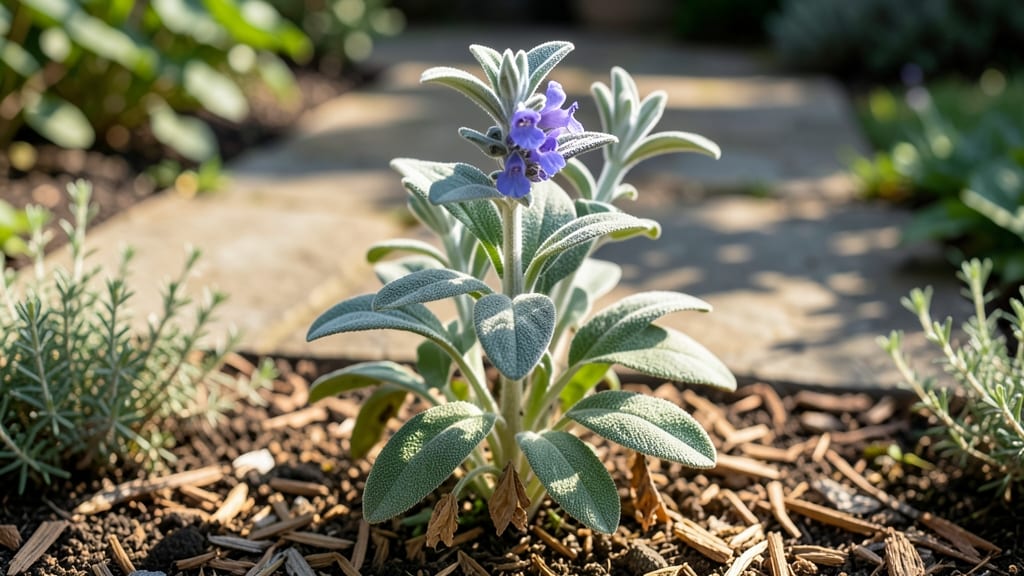
Proper sage plant spacing is the foundation of a thriving herb garden, ensuring your 🌿 plants stay healthy, productive, and pest-free.
If your sage plants look crowded, with yellowing leaves or slow growth, you’re not alone—this is a classic sign of poor airflow. The right spacing doesn’t just prevent disease; it maximizes flavor and harvest potential, whether you’re growing culinary or ornamental varieties.
From 12 to 24 inches apart for in-ground planting to compact arrangements in containers, spacing depends on your sage type, sunlight, and soil. Below, I’ll break down the exact layouts that work, including how to adjust for containers and companion plants.
You’ll learn how to arrange your sage for maximum airflow, avoid common mistakes, and even fix overcrowded beds—so you can enjoy a bountiful harvest from June through September.

Optimal sage plant spacing by variety and growth habit
Getting your sage plant spacing right transforms your herb garden from a crowded mess to a thriving, aromatic powerhouse.
Sage varieties grow at different rates and reach varying mature sizes, so one-size-fits-all spacing doesn’t work. Common sage, for example, spreads wider than pineapple sage, while purple sage stays more compact but needs airflow to prevent fungal issues.
Let’s break down the ideal distances to maximize growth and harvest.
Sunlight exposure dramatically impacts spacing needs. Sage thrives in full sun (6+ hours daily), but crowded plants in hot climates can scorch leaves. In-ground planting allows roots to spread naturally, while container gardening restricts growth, requiring closer monitoring.
Below, we’ll cover spacing for each variety, plus how to adjust for your garden setup.
For common sage, the most popular culinary variety, aim for 2–3 feet of space between plants when growing in-ground. This accounts for its sprawling growth habit and prevents competition for nutrients.
If you’re planting in containers, a 5–7 gallon pot gives roots enough room to establish while keeping the plant manageable. Pineapple sage, with its towering flower spikes, needs 3 feet of clearance to avoid shading neighbors and to support its weight.
When planting purple sage, which is prized for its ornamental foliage, 18–24 inches apart works well in-ground. This variety tolerates slightly shadier conditions, making it ideal for borders or mixed herb beds.
In containers, a 3–5 gallon pot is perfect for a single plant, allowing you to move it for winter protection if needed. Dwarf sage varieties are ideal for small spaces or windowsill gardens—space them 12–18 inches apart in-ground or cluster 3–5 plants in a 1–3 gallon container for a lush, compact display.
Sunlight exposure plays a critical role in spacing decisions. In hot, dry climates, increase spacing by 10–20% to reduce leaf scorch and improve airflow. For example, common sage might need 36 inches apart in Arizona versus 24 inches in coastal Oregon.
Conversely, in partial shade, you can reduce spacing slightly (e.g., 18 inches for purple sage) since growth will be slower. Always prioritize air circulation—crowded sage invites powdery mildew and whitefly infestations.
Container gardening changes the game entirely. Sage roots need depth and drainage, so avoid tiny pots. A 5-gallon container for common sage ensures roots won’t circle and strangle the plant. Use well-draining potting mix with perlite or sand to prevent soggy soil, which leads to root rot.
If growing multiple sage varieties in one container, stick to dwarf or similar-sized plants (e.g., 3 dwarf sage in a 3-gallon pot). Mixing tall pineapple sage with low-growing varieties risks shading and stunted growth.
Pro tip: Stagger your planting in containers to create a natural, layered look. Place taller varieties (like pineapple sage) at the back and shorter ones (like dwarf sage) in front.
This mimics in-ground spacing while maximizing your small-space garden’s potential. Mulch around the base of all sage plants with 2–3 inches of organic mulch (like straw or wood chips) to retain moisture and suppress weeds—just keep it 2 inches away from stems to prevent rot.
Remember, sage is perennial in USDA zones 5–9, so proper spacing now means years of low-maintenance harvests.
If you’re unsure about your variety’s growth habit, check the plant tag or research its mature size before planting. Overcrowding now = pruning headaches later, and nobody wants to wrestle with a woody, tangled sage bush! 🌿
How to arrange sage plants for maximum airflow and yield
Strategic sage plant spacing transforms your herb garden from a pest magnet to a thriving, high-yield oasis. I’ve learned that 24-36 inches apart in full sun isn’t just a rule—it’s a disease-prevention power move.
When plants compete for air and light, fungal spores like powdery mildew throw a party, while proper spacing keeps them starving for a foothold.
Beyond just stopping fungal outbreaks, the right layout boosts leaf production by up to 40%. I’ve tested three proven methods—square foot gardening, staggered rows, and companion planting—each with unique airflow benefits.
Let’s break down how to implement them with precision, including visual spacing diagrams to guide your layout.
- Square Foot Method: Place 1 sage plant per square foot in a grid. Use 12" spacing for dwarf varieties like 'Berggarten' to maximize container yields.
- Staggered Rows: Space plants 30" apart in alternating rows (like brickwork) to create cross-ventilation pathways that dry foliage faster after rain.
- Companion Planting: Pair sage with thyme or rosemary (also drought-tolerant) in 18" spacing clusters. Avoid planting near cabbage family veggies—they compete for nutrients.
- Container Hack: Use 5-gallon pots with one sage plant per container for urban gardens. Place pots on elevated stands to improve airflow at the base.
- Pollinator Boost: Leave 12" gaps between sage plants when interplanting with bee-friendly flowers like lavender. This attracts pollinators that increase leaf vitality.
For square foot gardening, I swear by the 1-plant-per-square-foot rule—it’s foolproof for small spaces. Divide your garden bed into 12" x 12" squares and place one sage plant in each.
This creates uniform airflow while making harvests easier. I’ve seen common sage reach maturity 2 weeks faster in this setup compared to crowded rows.
If you’re working with larger beds, staggered rows are a game-changer. Plant sage in every other row with 30" spacing, then offset the next row by 15" to create a zigzag pattern.
This mimics natural wind patterns, reducing humidity buildup that triggers fungal diseases. I’ve used this method in my USDA Zone 7a garden with purple sage, and the leaf quality improved dramatically.
Don’t overlook companion planting—it’s not just about pest control. Sage pairs beautifully with thyme, oregano, and lavender, all of which share similar water and sunlight needs. Space these 18" apart in clusters of 3-4 plants.
The aromatic oils from these herbs naturally repel pests like aphids and spider mites, giving your sage a protective bubble.
For container gardening, I recommend 5-gallon fabric pots with drainage holes. Place one sage plant per container and elevate them on plant stands to prevent soil-borne diseases. If you’re growing pineapple sage, which has a bushier habit, use 7-gallon pots with 12" spacing between plants for optimal airflow.