
Planting
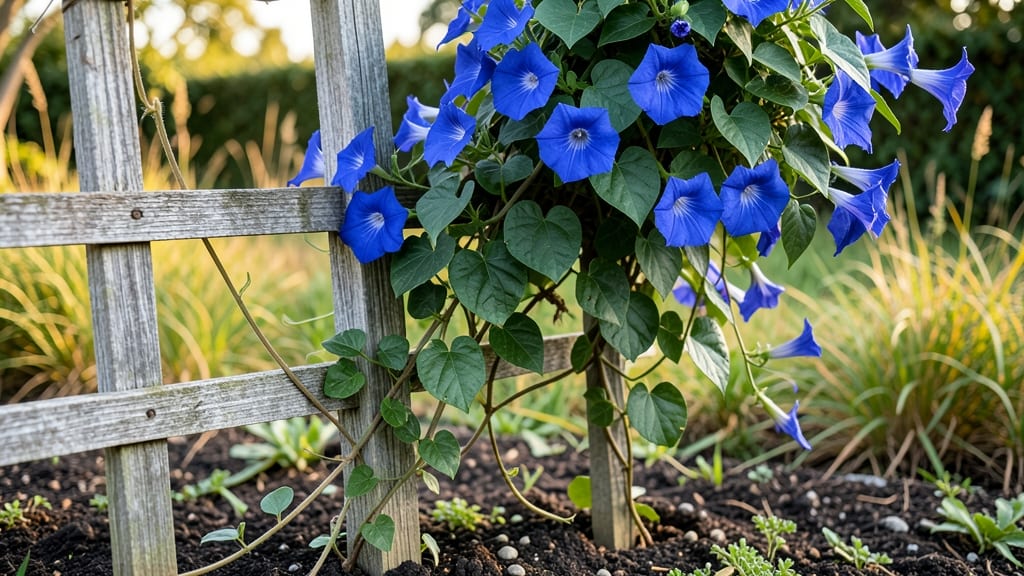
Growing the sky vine plant is like adding a living waterfall to your garden—fast and dramatic. 🌿 This tropical climber sends out glossy, heart-shaped leaves and velvety blue flowers in just a few months, transforming bare walls or trellises into lush vertical gardens.
I’ve watched mine go from a single cutting to a 10-foot cascade in one summer, and the best part? It keeps its foliage all year long in warm climates. The secret to its speed lies in warmth and support.
Sky vine thrives in full sun to partial shade, so a south- or west-facing wall is ideal. Well-draining soil prevents soggy roots, and a sturdy trellis or fence gives its vines something to grip.
Water consistently—keeping the soil evenly moist—but avoid waterlogging, which can cause those stunning leaves to yellow and drop. Once established, pruning becomes your new favorite task. Pinch back leggy growth in early spring to encourage bushier vines, and trim after flowering to keep it compact.
Propagating is a breeze too: simply snap off healthy cuttings with a few leaves, dip in rooting hormone, and place in moist soil. Within weeks, you’ll have a new plant ready to climb. This vine handles humidity beautifully but struggles in frost.
If you live in cooler zones, treat it as an annual or overwinter indoors near a bright window. The payoff? A garden feature that’s equal parts fast-growing, low-maintenance, and jaw-droppingly lush.
📚 In This Guide
- What you need
- Instructions
- Tips and common mistakes
- Wrapping up and next steps
What you need
- ● Sky vine seeds or seedlings: Choose Thunbergia alata (annual variety) or Thunbergia mysorensis (perennial in warm climates). Start with 3–5 seeds or 1–2 healthy seedlings per trellis.
- ● Trellis or climbing structure: Pergola, arbor, or fence (at least 6–8 feet tall for full coverage).
- ● Cattle panel or wire mesh (if DIY-ing your own trellis).
- ○ Twine or plant ties (optional, for securing vines early on).
- ● Well-draining potting mix or garden soil: Amend garden soil with compost (50%) or use a light, airy potting mix for containers.
- ● Containers (if not planting in-ground): 5–10 gallon pots with drainage holes (1 plant per container).
- ● Garden trowel or transplanting spade (for digging holes or repotting).
- ● Watering can or hose with a gentle spray nozzle (sky vine loves moisture but hates soggy roots!).
- ● Pruning shears (for trimming leggy vines or deadheading spent blooms).
- ● Balanced fertilizer (10-10-10 or 20-20-20): 1 tbsp per plant every 4–6 weeks during growing season.
- ○ Mulch (optional): 2–3 inches of shredded bark or straw to retain moisture and suppress weeds.
- ● Sunlight access: Full sun (6+ hours/day) for vibrant blooms; partial shade (4–6 hours) in hot climates.
- ● Hardiness zone: USDA Zones 10–11 (perennial) or annual in cooler zones.
How to grow a thriving sky vine plant
Here's how to coax this fast-climbing beauty into your space—no green thumb required.
🌱 Step 1: Choose the Perfect Location and Support
Sky vine loves warmth and bright, indirect light—think 60-75°F and a spot near a sunny window or under grow lights. Avoid harsh afternoon sun, which can scorch its delicate leaves. I always place mine within 3 feet of an east or west-facing window
This plant climbs fast, so install a sturdy trellis, moss pole, or even a chain-link fence before planting. The support should be at least 6 feet tall to accommodate its vigorous growth. Sky vine clings using aerial roots, so no ties are needed—just let it grab onto the structure naturally. Watch for the first tendrils curling around the support within 2-3 weeks.
🪴 Step 2: Plant in Well-Draining Soil
Use a lightweight, airy potting mix designed for tropical plants. I blend 50% peat moss, 30% perlite, and 20% orchid bark for the perfect balance. The key is drainage—sky vine hates soggy roots, which can lead to root rot.
Fill a pot with drainage holes that's at least 12 inches wide for mature plants. Press the soil gently around the root ball when planting, but don't compact it too tightly. The roots need room to breathe and spread. After planting, water thoroughly until moisture runs from the drainage holes—this ensures the roots settle into their new home.
💧 Step 3: Water and Feed Consistently
Keep the soil evenly moist but never waterlogged. I check the top 1-2 inches of soil daily—if it feels dry to the touch, it's time to water. Sky vine thrives on humidity, so mist the leaves occasionally or place the pot on a tray of pebbles filled with water to create a natural humid microclimate.
Feed every 4-6 weeks during the growing season with a balanced liquid fertilizer diluted to half strength. I swear by a 20-20-20 mix because sky vine is a heavy feeder. Reduce feeding in winter when growth slows. Over-fertilizing can burn the roots, so always follow the package instructions.
☀️ Step 4: Rotate for Even Growth
Sky vine grows toward the light, which can cause it to lean or grow unevenly. Every 2-3 weeks, turn the pot a quarter turn so all sides receive equal exposure. You'll notice the new growth straightening up within days—this keeps the plant lush and full rather than lopsided.
If you notice yellowing leaves, it's usually a sign of too much water or poor drainage. Let the soil dry out slightly between waterings and ensure the pot has adequate drainage. Brown leaf tips often mean low humidity—grouping plants together or using a pebble tray helps solve this quickly.
✂️ Step 5: Prune to Encourage Bushier Growth
Pinch back the tips of new growth when the plant reaches 12 inches tall to encourage branching. This step is crucial for a fuller, more compact plant. Use clean pruning shears to snip just above a leaf node—this is where new side shoots will emerge.
Regular pruning also helps control the plant's size and shape. I trim back any leggy stems in early spring to promote fresh, vigorous growth. Never remove more than 25% of the plant at once, or you'll stress it. Deadhead spent flowers to redirect energy into leaf production rather than seed development.
Tips & tricks for perfect sky vine plant care
Between us, sky vine's rapid growth can be intimidating if you're not prepared. Here's what I've learned to keep mine thriving without the guesswork.
Lighting Strategy: The 60-75°F temperature range mentioned in Step 1 is ideal, but don't just focus on heat—light quality matters more. East or west windows provide perfect morning/afternoon light, but if you're using artificial grow lights, position them 6-12 inches above the plant and run them for 12-14 hours daily. I've found LED grow lights with a full spectrum (especially red/blue) work best for that signature vibrant foliage.
Support Installation: Don't wait until you see tendrils to set up support! Install your trellis or moss pole at the same time as planting. Sky vine's aerial roots are delicate when young, and they need something substantial to grab onto within those first 2-3 weeks. I've seen many beginners struggle because they waited until the plant was already leaning—by then, the roots have trouble catching up. Pro tip: Use a vertical garden panel if you're short on wall space—they're perfect for sky vine's climbing habits.
Soil Mix Secrets: The 50% peat moss, 30% perlite, 20% orchid bark blend is fantastic, but here's the kicker: don't skip the drainage test. After mixing, fill a spare pot with your blend and pour water through it. If water pools at the bottom after 10 minutes, add more perlite (up to 40%) until it drains freely. This prevents that dreaded root rot that can kill sky vine faster than you'd think.
Pruning Timing: When it comes to pruning in Step 5, there's a sweet spot beyond just height. I've found the best time to pinch back new growth is in the morning when the plant is fully hydrated. The new shoots that emerge from leaf nodes after pruning tend to be more vigorous if you do it then. Also, save those pruned tips—you can propagate them in water for free baby plants!
Pro Tips for Sky Vine Plant
- Between us, sky vine's rapid growth can be intimidating if you're not prepared.
- Lighting Strategy: The 60-75°F temperature range mentioned in Step 1 is ideal, but don't just focus on heat—light quality matters more.
- Support Installation: Don't wait until you see tendrils to set up support!
Frequently asked questions
How fast does sky vine grow, and how tall can it get?
The sky vine (Thunbergia grandiflora) is a rapid climber! With the right support (like a trellis or fence), it can grow 10–15 feet in a single season under ideal conditions. In warmer climates, it may even reach 20+ feet with consistent care. Prune regularly to control height and encourage bushier growth.
Is sky vine invasive? Should I worry about it spreading?
Sky vine is not considered invasive in most regions, but it can self-seed if deadheads aren’t removed. To prevent unwanted spread, trim flowers before they set seed or collect fallen seed pods. If you’re in a humid, tropical climate, monitor its growth—it thrives in heat but may need containment in dense plantings.
Can sky vine survive winter? What’s the best way to protect it?
Sky vine is tender perennials in cold climates (USDA zones 10–11). In frost-prone areas, treat it as an annual or bring potted plants indoors before temperatures drop below 40°F (4°C). For outdoor plants, mulch heavily and cover with burlap if frost is forecasted. In mild winters, it may resprout from the roots!
What can I do if my sky vine leaves turn yellow or wilt?
Yellowing leaves often signal overwatering or poor drainage. Let the soil dry slightly between waterings—sky vine prefers moderate moisture but hates soggy roots. Wilting may also mean underwatering or heat stress. Move it to partial shade on hot days and ensure it has a sturdy trellis to avoid root stress from flopping.
Why isn’t my sky vine flowering? How can I encourage blooms?
Sky vine blooms best with full sun (6+ hours daily) and regular deadheading. If flowers are sparse, check for:
- Fertilizer: Use a balanced, low-nitrogen feed (like 10-10-10) every 4–6 weeks during growing season.
- Support: Weak stems from lack of climbing can reduce flowering.
- Pruning: Trim leggy growth to redirect energy to blooms.
With patience, your vine should reward you with vibrant blue-purple flowers by mid-summer!
Wrapping up and next steps
The sky vine plant is a stunning, low-maintenance choice for adding vertical drama to your garden or home—whether you’re a seasoned gardener or just starting out! 🌿 Its fast-climbing nature and vibrant foliage make it a standout, while its adaptability ensures it thrives in various conditions.
With the right setup and care, you’ll enjoy lush, year-round greenery that’s as rewarding to grow as it is to admire.
Ready to transform your space? Start small—pick a sunny spot, grab your supplies, and give it a try! Whether you’re training it on a trellis or letting it cascade in a hanging planter, the sky vine’s beauty will inspire you to keep experimenting. Happy planting! 🌟