
Planting
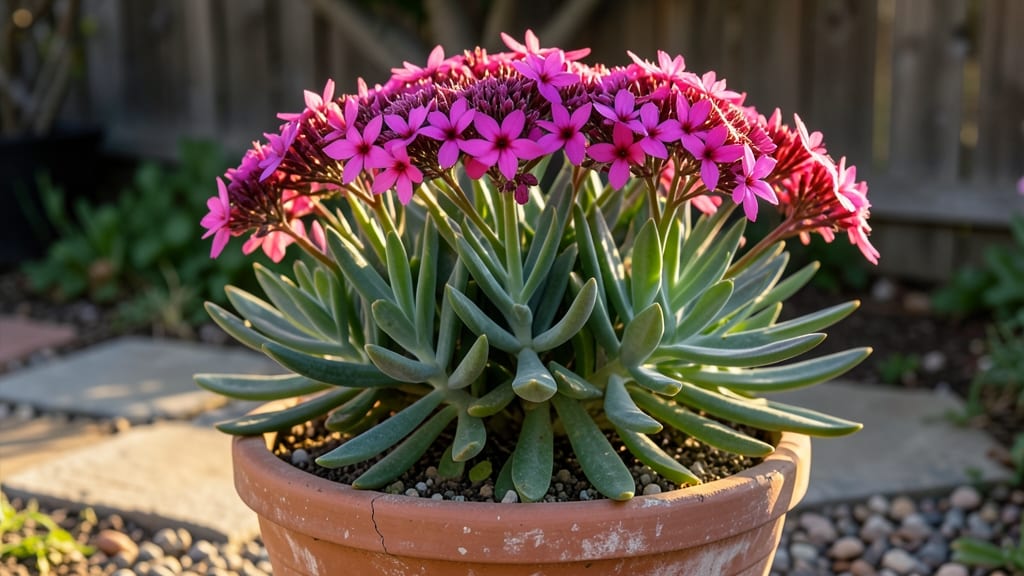
The star sedum plant thrives as a drought-resistant succulent with striking star-shaped leaves, requiring minimal water, well-draining soil, and full sun exposure for optimal growth and vibrant foliage year-round.
The star sedum plant's secret lies in its succulent biology, which stores water in thick, fleshy leaves while minimizing evaporation through a waxy coating. 🌟 This makes it perfect for hot, dry climates where other plants struggle.
Unlike thirsty houseplants, star sedum only needs watering every 2-3 weeks once established, and its deep roots help it access moisture deep underground. The star-shaped leaves aren't just pretty—they're an adaptation that reduces surface area, further conserving water.
Beyond drought tolerance, this plant rewards growers with year-round color and minimal maintenance. Its compact growth habit makes it ideal for containers, rock gardens, or as a ground cover where it spreads slowly but steadily. The key to keeping it vibrant?
Avoid overwatering—root rot is its only real enemy—and give it a south-facing spot where it can soak up at least 6 hours of direct sunlight daily. Even in winter, its deep green leaves stay lush, making it one of the most reliable low-maintenance plants for busy gardeners.
💡 In This Article
- Why Star Sedum Plants Survive Extreme Drought Conditions
- Pro Tips for Growing Star Sedum in Containers and Landscapes
Why star sedum plants survive extreme drought conditions
The star sedum's drought resistance starts with its succulent physiology, where water is stored in thick, gelatinous cells within its leaves. These cells can expand like tiny water balloons when hydrated, storing up to 90% water content by weight—far more than most plants.
This adaptation allows it to survive weeks without rainfall, a trait shared with cacti but optimized for cooler climates.
The plant's star-shaped leaves aren't just decorative; their unique geometry creates a 30-40% smaller surface area than round leaves, reducing water loss through evaporation by up to 25% compared to standard succulents.
Beneath the soil, star sedum develops a deep taproot system that can reach 12-18 inches underground, accessing moisture reserves other shallow-rooted plants can't tap into. This root structure also helps stabilize the plant in rocky or poor-quality soils where water pools unpredictably.
The real magic happens at the cellular level with CAM photosynthesis—a process where the plant opens its stomata (pores) at night to absorb CO₂, then stores it as malic acid until daylight.
This nighttime gas exchange minimizes water loss during the hottest part of the day, when evaporation rates skyrocket. 🌵 In comparison, most plants perform photosynthesis during daylight hours, losing precious moisture in the process.
The plant's waxy cuticle layer, visible as a faint blue-gray sheen on the leaves, acts like a natural raincoat, reflecting sunlight and sealing in moisture. This protective coating is 10-15 times thicker than that of non-succulent plants, reducing water loss by up to 50% in arid conditions.
Even the leaf arrangement plays a role—star sedum's rosette growth pattern creates microclimates where humidity lingers longer, further conserving moisture. These adaptations explain why star sedum thrives in regions with less than 10 inches of annual rainfall, where many other plants would wither.
What most gardeners don't realize is how star sedum's drought tolerance extends to temperature extremes. Its ability to enter dormancy during heatwaves or cold snaps (down to 20°F) without permanent damage sets it apart from tropical succulents.
During dormancy, metabolic processes slow dramatically, and the plant can survive on stored reserves for months. This survival mechanism is similar to how desert animals like tortoises conserve energy during extreme weather.
The plant's crassulacean acid metabolism (CAM) pathway also allows it to fix carbon efficiently in low-light conditions, making it adaptable to both sunny deserts and partially shaded urban environments.
For practical application, understanding these adaptations means you can plant star sedum in full sun without fear of scorching, knowing its water-storing abilities will protect it. The plant's star-shaped leaves also create natural air channels that improve airflow around the plant, further reducing fungal risks in humid climates.
This combination of biological tricks explains why star sedum remains vibrant even when neglected—it's not just drought-tolerant, it's drought-proofed at a cellular level. 💧
Consider this comparison: A standard houseplant like a fern may need daily watering and high humidity, while star sedum can go 6-8 weeks without water in ideal conditions. The difference lies in these physiological adaptations that have evolved over millennia in harsh environments.
By replicating these natural conditions in your garden—well-draining soil, full sun, and minimal interference—you're essentially giving the plant the perfect survival kit it's been optimized for.