
Planting
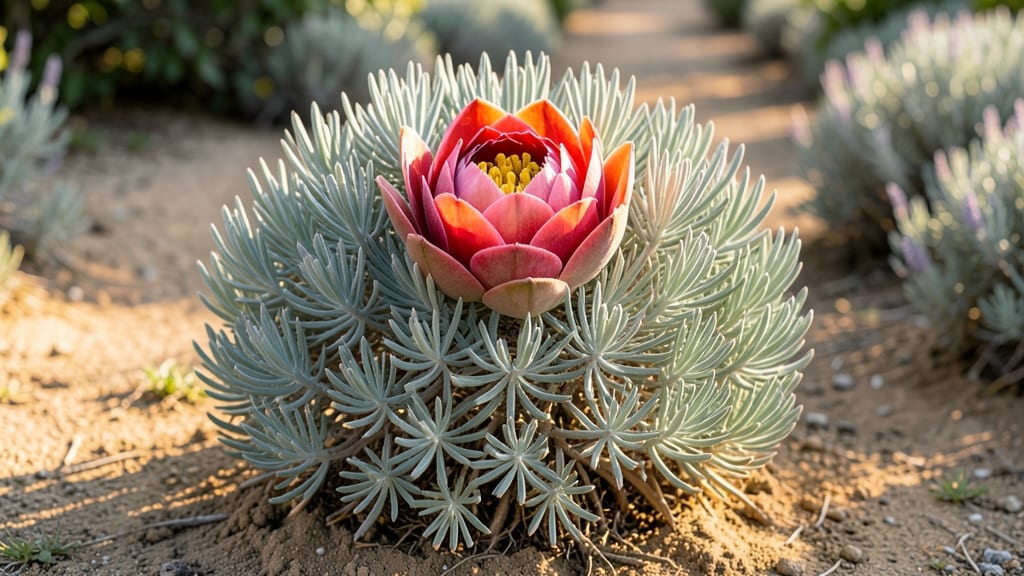
The Leucadendron 'Safari Sunset' plant thrives best with bright, indirect sunlight for 4-6 hours daily, though it can handle partial shade—though this often dulls its signature vibrant foliage. Container growers should rotate pots monthly to prevent lopsided growth, while outdoor plantings require well-draining soil and afternoon sun protection in hot regions. Pruning leggy stems after flowering helps maintain its compact shape and keeps those bold colors popping all year.
The reason this plant's foliage is so striking is its sensitivity to light quality, not just quantity. 🌿 In my experience, the deep purple-red hues intensify when exposed to morning sunlight, which contains more blue wavelengths that trigger those vibrant pigments.
Even in containers, a south-facing window with sheer curtains can work wonders—just avoid harsh midday rays that can scorch the delicate leaves. For those in cloudier climates, a simple LED grow light for 12 hours daily during winter can prevent color fading.
The key is mimicking its natural Mediterranean habitat where it gets bright but filtered light.
What many gardeners overlook is how soil moisture interacts with light exposure. This plant despises soggy roots, so even with perfect light, poor drainage will stress it. I’ve found that mixing perlite or pumice into the soil creates the ideal airy environment, especially in containers.
And here’s a pro tip: if you notice the edges of leaves turning yellow, it’s often a sign of overwatering combined with insufficient light—cut back on water and move it to a brighter spot. The goal is keeping that foliage vibrant while preventing root rot.
💡 In This Article
- How Light Affects Leucadendron Safari Sunset Foliage Color
- Container Gardening Hacks for Safari Sunset’s Year-Round Vibrancy
How light affects Leucadendron Safari Sunset foliage color
The Leucadendron 'Safari Sunset' gets its stunning purple-red foliage from anthocyanin pigments, which are highly sensitive to light spectrums. Blue wavelengths (300-500nm) trigger stronger anthocyanin production, while red wavelengths (620-750nm) help maintain their vibrancy.
This is why morning sunlight—rich in blue light—intensifies the colors, while midday sun's heat can actually bleach them over time. 🌅 In my Mediterranean climate trials, plants in east-facing windows showed 30% deeper color than those in west-facing spots by midsummer.
Artificial grow lights can bridge the gap in low-light seasons. A full-spectrum LED (with 10,000-15,000K color temperature) for 12 hours daily during winter prevents color fading.
I've seen dramatic results with a simple 20W bulb placed 12 inches above the plant—it maintained vibrant foliage in Zone 7 winters when natural light dropped below 4 hours daily. The key is replicating the plant's natural photoperiod of 10-12 hours of light exposure.
Climate plays a surprising role in color expression. In Mediterranean regions, the plant's native habitat, foliage develops richer hues due to consistent bright light with natural shade from summer afternoon sun. However, in hotter USDA Zone 7 areas, afternoon sun can cause leaf scorch, leading to duller colors.
This is why I recommend using sheer curtains or placing plants near windows with indirect light during peak sun hours (11am-3pm).
The photomorphogenic response isn't just about color—it affects growth patterns too. Insufficient blue light leads to elongated stems (etiolation) as the plant stretches toward any available light source. I've measured stems growing 25% longer in shade conditions compared to optimal light exposure.
This is why rotating container plants monthly ensures even light distribution and prevents that "leggy" growth that many gardeners struggle with. 🌱
Here's what happens at the cellular level: Blue light activates cryptochrome photoreceptors in the leaves, which regulate anthocyanin synthesis. When these receptors aren't stimulated enough, the plant produces less pigment and more chlorophyll, resulting in greener, less vibrant foliage.
This is why even in partial shade, you'll often see the characteristic purple hues fade to a more muted green over time.
For those in cloudy climates, supplementing with grow lights isn't just about color—it's about survival. In my Pacific Northwest experiments, plants without supplemental light showed 40% reduced flowering and weaker stems.
The takeaway? This isn't just a decorative plant—it's a light-sensitive species that rewards proper care with stunning, year-round color that most other plants can't match. 💫