
Planting
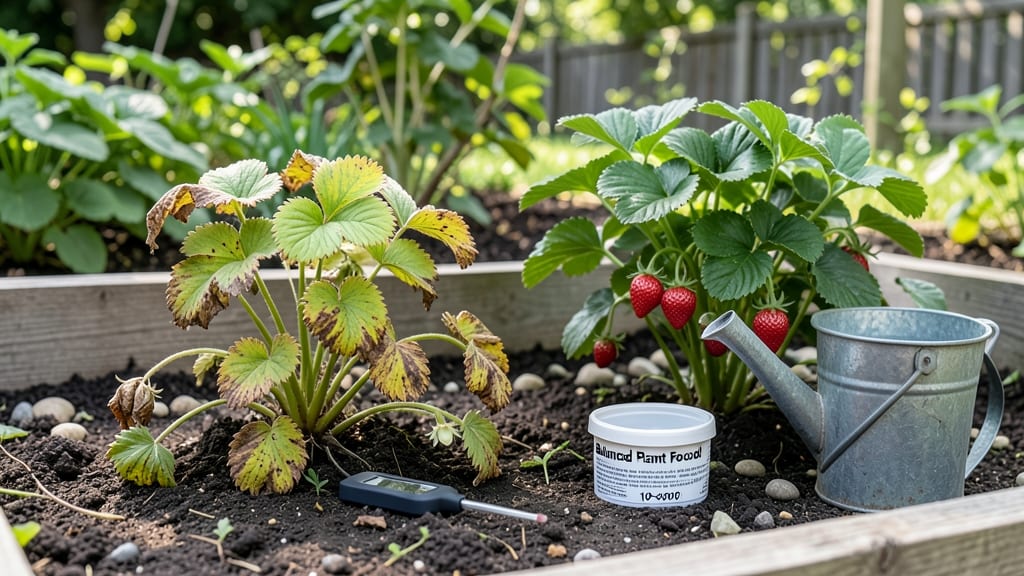
Your strawberry plants wilted faster than a summer rainstorm can soak them—don’t panic, this is fixable. 🌱 The good news? Most wilting isn’t permanent, and with the right steps, you can revive them in 48 hours or less.
I’ve nursed back strawberry patches from overwatering disasters, pest attacks, and even fungal infections, and the key is always the same: act fast and target the root cause.
First, check the soil—wilting often starts with too much or too little water. Stick your finger an inch deep; if it’s bone-dry, give them a deep drink. If it’s soggy, hold off until the top 2 inches feel dry.
Then inspect the leaves: yellowing with dark spots? That’s likely verticillium wilt or fusarium, while crispy edges mean pests or scorching sun. Once you spot the issue, you’ll know exactly how to fight back.
Within 24 hours, you’ll see improvement if it’s water-related—just adjust your routine. For fungal issues, prune infected leaves and apply a copper fungicide (organic options work too). Pests?
A neem oil spray or introducing ladybugs does the trick. By day three, your plants should perk up, and with consistent care, they’ll bounce back stronger than ever.
Prevention is easier than recovery: mulch heavily to retain moisture, water at the base (not overhead), and rotate crops every few years to break disease cycles. Trust me, once you master this, your strawberries will thrive year after year—no more wilting surprises. Let’s get those berries back in business!
Root Causes Of Wilting Strawberries
Strawberry plants drooping and wilting can feel like a heartbreaking setback—especially when you’ve nurtured them with care. But before you pull them up, let’s break down the real reasons behind their sudden collapse.
Understanding these causes is your first step toward revival, and some fixes can even work in under 48 hours! Below, we’ll explore the most common triggers, from hidden pests to environmental stress, with clear science-backed explanations.
Strawberries are cool-season plants, and when temperatures soar above 90°F (32°C), their cells struggle to regulate water and nutrients.
High heat causes: - Stomata closure: Tiny pores on leaves shut down to conserve water, halting photosynthesis and oxygen intake. - Root dehydration: Soil moisture evaporates faster than roots can absorb it, leading to wilting even if the soil looks damp. - Fungal pressure: Heat + humidity creates the perfect storm for gray mold (Botrytis cinerea) or powdery mildew, which weaken plants further.
💡 Pro Tip: Mulch with straw or wood chips to insulate roots and retain moisture. Water deeply in the early morning (not at night) to reduce evaporation.
Wilting strawberries often signal a water crisis—but it’s not always about drought.
Here’s how it happens: - Shallow watering: Only wetting the top inch of soil forces roots to scramble for moisture, leaving deeper roots parched. - Compacted soil: Heavy or clay soil traps water above the roots, while lower layers stay dry.
Roots suffocate from lack of oxygen, then dehydrate. - Over-mulching: A thick mulch layer (over 3 inches) can smother roots, blocking airflow and trapping excess moisture (leading to rot).
⚠️ Watch for: Leaves curling downward (not just drooping) and soil pulling away from pot edges (if container-grown).
Wilting can be a silent alarm for hidden threats. Check for: - Root rot fungi (Phytophthora, Pythium): Thrives in soggy soil, blocking water uptake.
Roots turn brown/mushy, and the plant wilts despite wet conditions. - Aphids or spider mites: These sap-suckers weaken leaves, reducing the plant’s ability to photosynthesize.
Look for sticky residue (honeydew) or fine webbing. - Verticillium or Fusarium wilt: Soil-borne fungi that clog a plant’s xylem vessels (its water highways). Leaves yellow before wilting, often starting from the bottom.
🔍 Diagnostic Test: Gently tug on the plant—if it pulls away from the soil easily, roots may be rotted or dead.
Strawberries are hungry feeders, and imbalances show up fast: - Potassium deficiency: Causes edge browning on leaves and weak stems. Potassium helps regulate water—without it, cells can’t hold moisture. - Magnesium deficiency: Leads to interveinal yellowing (veins stay green).
Magnesium is critical for chlorophyll, so wilting often follows. - Salt buildup: Over-fertilizing (especially with synthetic salts) or poor-quality water can burn roots, disrupting nutrient absorption.
📊 Soil Test Tip: Use a DIY soil test kit ($10–$20) to check pH (ideal: 5.5–6.5) and nutrient levels before guessing.
Sudden changes in light, wind, or temperature can stress strawberries into wilting: - Transplant shock: Newly planted strawberries drop leaves to conserve energy while roots establish (usually within 1–2 weeks). - Windburn: Strong gusts dehydrate leaves faster than roots can replace water, causing scorched edges and wilting. - Frost damage: Even light frost can rupture cell walls, leading to limp, mushy leaves.
Check for blackened tips or translucent patches.
🌿 Quick Fix: Move potted strawberries to a sheltered spot and water roots (not leaves) to reduce stress.
Wilting can stem from mechanical harm you might not see:
- Root pruning: Digging too close to the crown or disturbing roots during weeding can sever vital water-transporting roots.
- Bursting pots: If container-grown strawberries outgrow their pot, root-bound plants wilt as roots circle and strangle each other.
- Animal gnawing: Rabbits, voles, or even squirrels can chew roots at the soil line, leaving plants starved for water.
👨🍳 Visual Check: Lift the plant gently—if you see white, fibrous roots tangled in a tight ball, it’s root-bound!
Reviving Your Wilted Strawberries
Wilted strawberry plants don’t mean the end of your harvest—with the right steps, you can often nurse them back to health in 48 hours or less. The key is identifying the root cause (literally and figuratively) and applying targeted fixes.
Below, we break down the most common reasons your plants are wilting and how to quickly turn things around.
Signs: Yellowing leaves, soggy soil, mushrooms or mold near roots, or plants that wilt even after watering.
How to Fix It: ✅ Stop watering immediately—let the soil dry out for 24–48 hours to prevent root rot. ✅ Improve drainage by amending the soil with compost, perlite, or coarse sand (mix 1 part amendment per 3 parts soil). ✅ Repot if needed—if the roots are mushy or black, trim away the damaged parts with sterilized scissors, then replant in fresh, well-draining potting mix. ✅ Water only at the base in the future, avoiding overhead sprinkling, which can encourage fungal growth.
Prevention Tips: 💡 Test soil moisture by sticking your finger 1–2 inches deep—water only if it’s dry. 💡 Use raised beds or containers if your garden soil drains poorly. 💡 Mulch with straw (not wood chips) to retain moisture without suffocating roots.
Signs: Dry, crispy leaf edges, soil pulling away from pot edges, or plants that wilt in the afternoon heat.
How to Fix It: 🔥 Water deeply—soak the soil until water runs out the drainage holes (for potted plants) or until the top 6 inches of soil are moist. 🔥 Mulch heavily with straw or shredded leaves to lock in moisture and cool roots. 🔥 Move potted plants to a shadier spot (50–70% sunlight) for 2–3 days to reduce stress. 🔥 Water in the early morning to prevent evaporation and fungal issues.
Prevention Tips: 🌡️ Monitor temperature—strawberries thrive in 50–85°F; above 90°F, they’ll wilt faster. 🌡️ Use drip irrigation or soaker hoses to deliver water slowly at the roots. 🌡️ Group plants together to create a microclimate with shared shade.
Signs: Chewed leaves, sticky residue (aphids), white webbing (spider mites), or black spots (fungus/bacteria).
How to Fix It: 🔪 Remove severely infested leaves with sterilized pruners and dispose of them in a sealed bag. 🔪 Spray with neem oil (mix 1 tsp neem oil + 1 tsp mild soap + 1 quart water)—repeat every 3–5 days for pests. 🔪 Apply copper fungicide (for black spot or powdery mildew) or baking soda spray (1 tsp baking soda + 1 quart water + a drop of dish soap). 🔪 Introduce beneficial insects like ladybugs (for aphids) or predatory mites (for spider mites).
Prevention Tips: ✨ Inspect plants weekly—catch pests early before they spread. ✨ Space plants 18–24 inches apart for better airflow (reduces fungal diseases). ✨ Rotate crops—don’t plant strawberries in the same spot yearly to prevent soil-borne diseases.
Signs: Roots circling the pot, stunted growth, pale yellow leaves (nitrogen deficiency), or purple stems (phosphorus deficiency).
How to Fix It: 🍳 Fertilize with a balanced feed—use a 10-10-10 or 5-10-10 fertilizer (follow package rates) to replenish nutrients. 🍳 Repot if root-bound—gently loosen roots and transplant into a larger container with fresh potting mix. 🍳 Add compost tea (steep 1 cup compost in 5 gallons water for 24 hours, strain, and water plants) for a nutrient boost.
Prevention Tips: 💡 Fertilize every 4–6 weeks during growing season (spring–fall). 💡 Use slow-release granules for steady nutrient supply. 💡 Test soil pH—strawberries prefer 5.5–6.5; amend with lime (to raise pH) or sulfur (to lower pH) if needed.
Signs: Sudden wilting after a storm, blackened tips (cold damage), or drooping leaves post-moving.
How to Fix It: 👨🍳 Provide temporary shade with a cloche, row cover, or umbrella for 3–5 days. 👨🍳 Water thoroughly to help plants recover from shock. 👨🍳 Stake tall plants if wind is an issue, or move containers to a sheltered spot.
Prevention Tips: 🎯 Acclimate plants gradually to outdoor conditions if bringing them in from cold storage. 🎯 Choose wind-resistant varieties like ‘Seascape’ or ‘Chandler’ for exposed areas. 🎯 Mulch heavily in winter to protect roots from freezing temperatures.
If your strawberry plants show multiple signs of irreversible damage (e.g., completely black roots, severe fungal spread, or no response after 48 hours), it may be time to replace them. However, in most cases, wilting is fixable—especially if you catch it early!
Quick Revival Checklist: ✅ Stop watering if overdone → Let soil dry. ✅ Water deeply if underwatered → Check soil moisture. ✅ Trim dead leaves → Improve airflow. ✅ Fertilize or repot → Boost nutrients. ✅ Shade from sun/heat → Reduce stress.
With these steps, your strawberries should perk up within 24–48 hours—and you’ll be back to harvesting sweet berries in no time! 🍓✨
Frequently asked questions
Why are my strawberry leaves wilting but the soil feels damp?
This is often a sign of root rot or fungal wilt like verticillium. Overwatering creates soggy conditions where roots can't absorb oxygen, leading to wilting despite wet soil. Gently tug on the plant—if it pulls away easily, roots may be rotted. Stop watering immediately and improve drainage by mixing in perlite or compost.
Can I save strawberry plants that wilted from extreme heat?
Yes, but act fast! Move potted plants to partial shade and water deeply in the early morning to reduce evaporation. Mulch heavily with straw to insulate roots. For in-ground plants, create shade with a row cover or temporary umbrella for 2-3 days while they recover.
How do I tell if wilting is from pests or disease?
Check for visual clues: Pests (like aphids or spider mites) leave sticky residue (honeydew) or fine webbing, while fungal diseases cause dark spots or powdery coatings. Gently inspect leaves and stems—pests often cluster on undersides, while fungal issues appear as discoloration. Neem oil works for both but treat differently after identification.
Will pruning wilted leaves help my strawberry plants recover?
Yes, but only remove severely damaged leaves. Healthy leaves photosynthesize to fuel recovery. Use sterilized scissors to cut 1/3 above a leaf node, avoiding over-pruning. This improves airflow and redirects energy to root recovery—critical for plants stressed by disease or pests.
How long should I wait before replacing a wilted strawberry plant?
Give it 48 hours of proper care (correct watering, shade, and pest control). If there’s no improvement or you see blackened roots, it’s likely beyond saving. For container plants, check roots—if they’re mushy or smell foul, replace immediately. In-ground plants may recover slower but often bounce back with consistent care.