
Planting
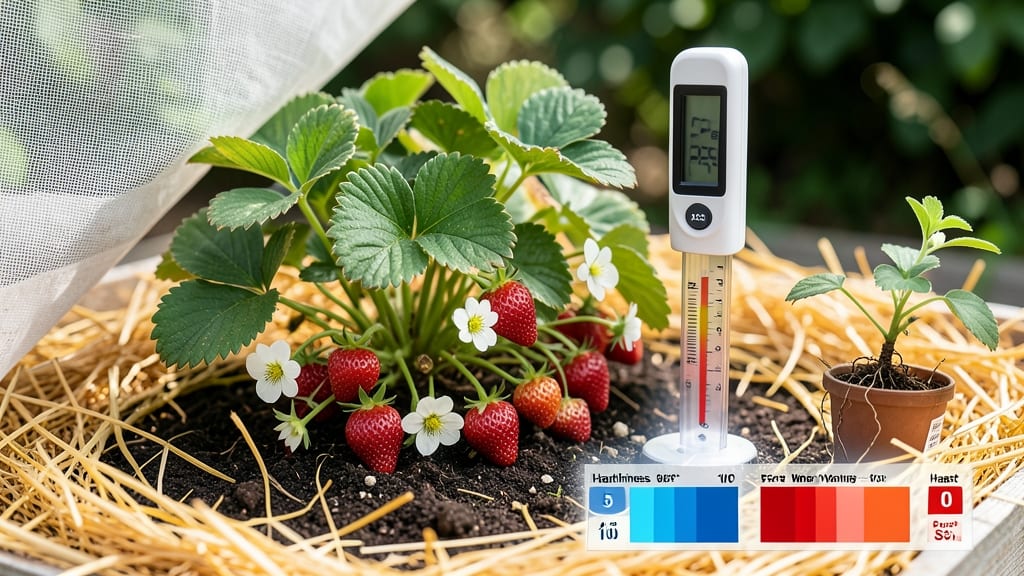
Growing strawberries at the right temperature is the secret to fast, sweet harvests—too hot or too cold, and your plants will struggle, leaving you with bitter fruit or no fruit at all.
Picture this: you’ve just planted your 🍓 strawberries in early spring, eager for that first juicy berry, only to watch them wilt under unexpected heat or freeze before flowering. The truth? Strawberries are picky about temperature, but once you nail it, you’ll see doubled yields in just one season.
From germination to fruiting, each stage has its own ideal range—50°F to 85°F is the sweet spot for most varieties, but regional tweaks make all the difference.
Whether you’re in a cool Zone 6a climate or a sweltering summer region, we’ll break down exactly what your strawberries need to thrive.
In this guide, you’ll discover how to adjust for early spring planting, protect against late frosts, and even extend your harvest into fall—plus, the one trick that keeps strawberries producing longer than ever.


Optimal temperature ranges for strawberry growth by season
Strawberries are finicky about temperature—too hot or too cold, and you’ll see poor fruit set, weak plants, or even death. The key is understanding how daytime vs. nighttime temperatures affect each growth stage.
In my Zone 6a garden, I’ve learned that spring planting thrives in cooler conditions, while summer fruiting demands warmth—but not too much. Let’s break down the ideal ranges for every phase of growth, including tricks for early spring or late fall planting.
For seedlings and young plants, the magic happens between 40°F and 75°F. Below 40°F, growth stalls, and above 85°F, roots suffer.
I once planted June-bearing strawberries in late May when temps hit 90°F+, and the seedlings wilted within days—until I moved them to partial shade. Nighttime temperatures matter just as much: they should stay above 45°F to prevent frost damage and below 70°F to avoid stress.
During flowering and fruiting, strawberries need consistent warmth—but not extreme heat. I’ve noticed that when daytime temps hit 90°F+, flower buds drop, and fruit turns blind (small and hard). The sweet spot for fruiting is 70-85°F days with 55-65°F nights.
If your summer is scorching, use shade cloth (30-50%) to protect plants during peak afternoon heat. I swear by a simple white shade cloth draped over hoops—it keeps temps down without blocking light completely.
For early spring planting (like my March experiments), aim for soil temps of at least 45°F and air temps above 50°F. Cold soil slows root growth, so I always warm the bed with black plastic mulch a week before planting.
In late fall, plant June-bearing varieties 6-8 weeks before your first frost—this gives roots time to establish before winter. Everbearing and day-neutral varieties are more flexible and can handle cooler fall temps down to 35°F.
One mistake I’ve made? Assuming all strawberries tolerate heat equally. June-bearing varieties (like Jewel or Chandler) struggle in Zone 9+ summers, while day-neutral types (Seascape or Albion) thrive in cooler coastal climates.
Always check your variety’s heat tolerance before planting. For example, Seascape handles 90°F days better than Chandler, which may need afternoon shade.
If you’re in a hot climate (Zones 9-11), focus on shade and irrigation. Drip irrigation keeps roots cool, and mulch (straw or wood chips) locks in moisture. I’ve seen strawberries in Arizona produce well with 50% shade cloth during summer.
For cold climates (Zones 3-5), use row covers in early spring to protect young plants from late frosts. A floating row cover raised on stakes adds 5-10°F of protection—enough to extend your growing season by weeks.
Pro tip: Monitor your garden’s microclimate. A north-facing bed stays 10°F cooler than a south-facing one, even in the same yard.
I planted June-bearing strawberries in both spots last year—the south bed fruited 2 weeks earlier, but the north bed had larger, sweeter berries because of the cooler temps. Adjust planting times based on your microclimate: plant early in cooler spots, late in hot ones.
Finally, don’t forget that soil temperature matters just as much as air temperature. Use a soil thermometer to check—roots need at least 50°F
How to protect strawberries from extreme heat or cold
Extreme temperatures can wreak havoc on your strawberry plants, causing blossom damage, fruit rot, or even plant death. When daytime temps soar above 90°F (32°C) or nighttime dips below 32°F (0°C), strawberries struggle to thrive.
The good news? Simple protective measures can safeguard your crop and ensure a bountiful harvest.
I’ve learned through trial and error that strawberries are surprisingly resilient with the right care. For example, my June-bearing varieties in Zone 7 once suffered from late spring frosts until I started using row covers.
Now, I protect them year-round with a combination of mulching, shade, and strategic planting. Let’s explore how you can do the same.
🌡️ Critical Temperature Limits for Strawberries
Strawberries thrive between 50-85°F (10-29°C) but face stress outside these ranges. Below 32°F (0°C) causes frost damage, while above 90°F (32°C) leads to sunburn and poor fruit set. Act quickly when temps approach these extremes to prevent irreversible harm.
For heat protection, I always start with a thick layer of organic mulch, like straw or wood chips, to insulate roots and retain moisture. This simple step can reduce soil temps by 10-15°F (5-8°C) during heatwaves.
Pair this with shade cloths (30-50% shade) to filter intense sunlight, especially in USDA Zones 8-11 where summer temps regularly exceed 100°F (38°C).
When frost threatens, I cover my strawberries with floating row covers or lightweight blankets at dusk. Secure the edges with bricks or U-shaped pins to prevent wind damage. For severe cold snaps, I use black plastic mulch in early spring to warm the soil faster.
This trick has helped me extend my growing season by 2-3 weeks in Zone 6.
Emergency measures are also key. If a sudden heatwave hits, I move potted strawberries to a shadier spot and increase watering frequency to twice daily. For frost emergencies, I use string lights or candles under row covers to create a microclimate that raises temps by a few degrees.
These methods have saved my plants during unexpected temperature swings.
Finally, choose the right strawberry varieties for your climate. Day-neutral types like 'Seascape' tolerate heat better, while June-bearing varieties like 'Chandler' handle cold well. Pairing the right plants with protective strategies ensures your strawberries stay healthy and productive, no matter the weather.
With these techniques, you’ll protect your strawberries from extreme temperatures and enjoy a longer harvest season with fewer setbacks. Happy gardening! 🌱