
Planting
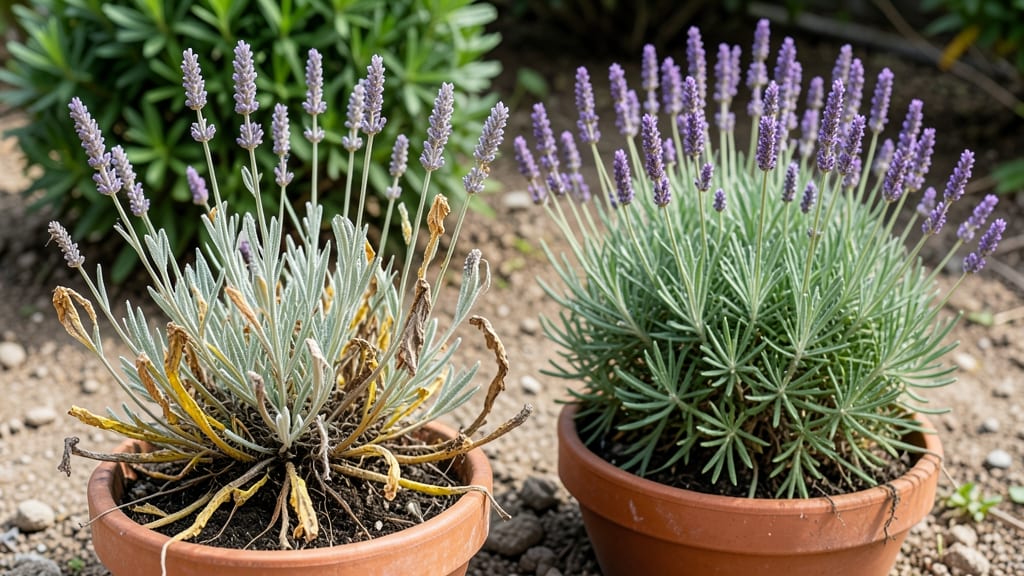
What’s wrong with my lavender plant? Those yellowing leaves spell one word: overwatering. 💧 I’ve nursed back more than my share of soggy lavender, and the fix is simpler than you’d think—once you spot the signs. The key is understanding how lavender’s roots hate wet feet, even when the soil looks dry on top.
Here’s the telltale trio of overwatering: yellowing leaves at the base, mushy stems when you squeeze them, and a musty smell when you lift the pot. Lavender thrives on neglect—it’s designed to survive drought, not regular drinks.
Most people drown it by watering every time the top inch feels dry, but lavender needs dry soil between waterings to stay healthy.
Drainage is your first defense—lavender demands it. If your pot lacks holes, transfer it now. Then, prune back any yellowed growth to redirect energy to fresh, healthy stems. After that, water only when the soil is completely dry, and watch those new silver-green leaves push through in 2-3 weeks.
Once you’ve adjusted, keep an eye out for browning tips—that’s usually underwatering, lavender’s other nemesis. The secret? Let the soil dry out fully between waterings, and your lavender will reward you with fragrant, bushy growth all season long.
Root Causes Behind Lavender Struggles
Lavender plants are hardy, drought-resistant beauties—but when they start looking sad, it’s usually a sign that their basic needs aren’t being met. Understanding the why behind common issues like yellowing leaves, wilting stems, or poor growth is the first step to saving your plant.
Below, we break down the most frequent culprits, backed by science, so you can diagnose—and fix—the problem fast.
Lavender’s native Mediterranean habitat means it’s evolved to thrive in dry, rocky soil with minimal moisture. When you overwater, you’re essentially suffocating its roots—leading to root rot, yellowing leaves, and stunted growth. Here’s why it happens:
- Poor drainage: Lavender hates soggy soil. If your pot lacks drainage holes or the soil retains too much water (like clay or heavy loam), roots can’t breathe. Science note: Oxygen deprivation in roots triggers anaerobic bacteria, which produce toxins that damage cells.
- Frequent watering: Even well-draining soil can become waterlogged if you irrigate too often. Lavender needs water only when the top 1–2 inches of soil are bone-dry. Overwatering also leaches essential nutrients like nitrogen and phosphorus, weakening the plant.
- Cold or compacted soil: Cold temperatures slow root activity, making lavender more susceptible to rot. Compacted soil (from foot traffic or poor aeration) restricts water flow, creating pockets of excess moisture.
💡 Pro Tip: Stick your finger in the soil—if it’s damp below 1 inch, wait. If you’re unsure, lift the pot: a soggy weight means it’s time to hold off on watering.
While overwatering is the #1 killer, chronic underwatering can also turn your lavender into a crispy, stressed-out mess. Here’s the science behind the struggle:
- Water deficit triggers wilting: Lavender’s thick, waxy leaves conserve moisture, but severe drought forces cells to lose turgor pressure (the "plumpness" that keeps leaves upright). Result: Drooping, grayish-green foliage.
- Root shrinkage and dieback: Without enough water, roots shrink and may die back, reducing the plant’s ability to absorb nutrients. Over time, this leads to stunted growth and a weak structure.
- Nutrient uptake halts: Water is the medium that carries minerals (like potassium and magnesium) to leaves. Without it, even fertile soil won’t help—your lavender starves from the inside out.
🌡️ Key Sign: Check the soil’s moisture level before watering. If the leaves are crispy (not just wilted), it’s too late—the plant is in survival mode. From now on, water deeply but infrequently (every 7–10 days in hot weather, less in cooler months).
Lavender isn’t picky about soil type, but it demands well-draining, alkaline-to-neutral pH (6.5–7.5). If your soil is off, your plant will suffer—here’s how:
- Compacted or clay soil: Heavy soils trap water and block oxygen, leading to root suffocation. Science note: Compacted soil has <10% air porosity, compared to ideal sandy soil’s 25–30%. Roots can’t access oxygen, leading to fungal infections and nutrient deficiencies.
- Acidic soil (pH <6.0): Lavender prefers slightly alkaline conditions. In acidic soil, aluminum and manganese become toxic, causing yellowing between leaf veins (chlorosis). Over time, this weakens the plant’s immune system.
- Lack of organic matter: While lavender doesn’t need rich soil, a mix of 50% gritty material (sand, perlite, or gravel) and 50% compost or coco coir ensures proper aeration and microbial activity.
✨ Fix It: Amend heavy soil with coarse sand or pumice (1 part sand to 3 parts soil). For acidic soil, add crushed limestone or wood ash to raise pH gradually.
Lavender is relatively pest-resistant, but a few troublemakers can wreak havoc if left unchecked. Here’s what’s likely causing the damage:
- Spider mites (Tetranychus spp.): These tiny arachnids thrive in dry, hot conditions and suck plant sap, causing yellow stippling on leaves. Why it happens: They multiply rapidly when lavender is stressed (e.g., underwatered). Their webbing traps moisture, creating a perfect breeding ground.
- Root rot (Phytophthora or Pythium fungi): Overwatering creates the ideal environment for these water-loving fungi. Signs: Black, mushy roots and a foul smell. Science note: Fungi release enzymes that break down root cell walls, killing the plant’s water-nutrient transport system.
- Aphids or whiteflies: These sap-suckers cluster on new growth, causing leaves to curl, yellow, or stick together. They’re attracted to tender, fast-growing lavender—often a sign of over-fertilization.
🔥 Early Action: Inspect leaves undersides and stems for webs, tiny insects, or sticky residue (aphid honeydew). Treat with neem oil or insecticidal soap for mild infestations. For root rot, prune affected roots and repot in fresh, dry soil.
Lavender doesn’t need much fertilizer, but chronic deficiencies in key nutrients can turn leaves yellow or purple. Here’s what’s missing—and why:
| Nutrient | Deficiency Signs | Why It Happens |
|---|---|---|
| Nitrogen (N) | Pale yellow leaves (older leaves first) | Overwatering leaches nitrogen. Lavender in poorly drained soil can’t access it efficiently. |
| Magnesium (Mg) | Yellow patches between leaf veins (interveinal chlorosis) | Acidic soil locks out magnesium. Cool temps slow uptake. |
| Iron (Fe) | Young leaves yellow while veins stay green | Alkaline soil (pH >7.5) makes iron unavailable, even if it’s in the soil. |
| Potassium (K) | Brown leaf edges or weak stems | Overwatering or salty soil washes potassium away. Needed for osmotic regulation (water balance). |
💪 Fix It: For nitrogen, use a light application of compost (1/4 cup per plant). For magnesium/iron, apply Epsom salt (magnesium sulfate) or chelated iron. Avoid synthetic fertilizers—lavender prefers
Revive Your Lavender Fast
If your lavender plant is struggling, don’t panic—most issues have simple fixes! Below, we’ll match your plant’s symptoms to the right solution, plus prevention tips to keep it thriving. Lavender is tough, but even the hardiest plants need a little TLC when things go wrong.
Lavender hates soggy roots—yellowing leaves, wilting, or mushy stems are red flags. Here’s how to fix it:
🔥 Step 1: Stop Watering Immediately
- Let the soil dry out completely before watering again. Stick your finger 2 inches deep—if it’s damp, wait.
- Pro Tip: 💡 Lavender stores water in its woody stems, so it prefers drought over dampness.
🍳 Step 2: Improve Drainage
- Repot your lavender in a well-draining mix (cactus/succulent soil + perlite or sand).
- Add a layer of gravel or pebbles at the bottom of the pot to prevent waterlogging.
- If in the ground, amend the soil with coarse sand or grit to break up clay.
👨🍳 Step 3: Prune Damaged Growth
- Snip off yellow, mushy, or blackened stems with clean shears (sterilize with rubbing alcohol).
- Avoid cutting into healthy green wood—focus on dead or diseased parts.
⏰ Prevention Tips
- Water deeply but infrequently—once every 1–2 weeks (less in winter).
- Choose a terracotta pot (porous material helps excess water evaporate).
- Plant in full sun (6+ hours daily) to encourage strong, drought-resistant growth.
Brown, crispy edges or drooping leaves mean your lavender is thirsty—but not too thirsty! Lavender can bounce back quickly.
🔥 Step 1: Water Deeply (But Not Too Much)
- Water until it drains from the bottom of the pot, then empty the saucer.
- Pro Tip: 🌡️ Check soil moisture with your finger—if the top inch is dry, it’s time to water.
🍳 Step 2: Adjust Your Watering Schedule
- Morning watering is best—it gives leaves time to dry before evening.
- In extreme heat, water lightly every 3–4 days instead of waiting for full dryness.
👨🍳 Step 3: Boost Humidity (Temporarily)
- Place the pot on a tray of pebbles with water (not touching the pot) to increase airflow.
- Mist leaves sparingly (but avoid wetting the flowers).
⏰ Prevention Tips
- Group lavender with other drought-tolerant plants to create a microclimate.
- Mulch lightly with gravel (not organic mulch—it retains moisture).
- Avoid plastic pots—they trap moisture and can cause root rot.
White powdery spots or soft, black stems signal a fungal problem. Act fast to save your plant!
🔥 Step 1: Isolate the Plant
- Move it away from other plants to prevent spreading spores.
- Pro Tip: 🔥 Fungi love humidity—improve airflow by pruning nearby foliage.
🍳 Step 2: Treat with Fungicide
- Spray with neem oil (1 tsp per quart of water) or a copper-based fungicide.
- For root rot, repot in fresh, sterile soil and trim affected roots.
👨🍳 Step 3: Adjust Care
- Water at the base (avoid wetting leaves).
- Space plants 18–24 inches apart for better airflow.
- Avoid overhead watering—use a drip system or watering can with a narrow spout.
⏰ Prevention Tips
- Water early in the day so leaves dry quickly.
- Choose disease-resistant varieties like ‘Grosso’ or ‘Hidcote’.
- Sterilize pruners between cuts to prevent cross-contamination.
Sticky leaves, tiny webs, or cottony clusters mean pests are crashing your lavender party.
🔥 Step 1: Inspect & Remove Pests
- Blast off aphids with a strong spray of water.
- Wipe mealybugs with a cotton swab dipped in rubbing alcohol.
- Spider mites? Shower the plant with water to dislodge them.
🍳 Step 2: Use Natural Repellents
- Soap spray: Mix 1 tsp mild dish soap + 1 quart water, spray undersides of leaves.
- Insecticidal soap or neem oil (repeat every 5–7 days).
- Introduce beneficial insects like ladybugs or lacewings.
👨🍳 Step 3: Strengthen Your Plant
- Fertilize lightly with a balanced, low-nitrogen fertilizer (like 5-5-5) to boost resilience.
- Prune heavily infested branches and dispose of them in sealed bags.
⏰ Prevention Tips
- Inspect new plants before bringing them home.
- Encourage predators by planting marigolds or basil nearby.
- Avoid over-fertilizing—weak plants attract pests.
With these fixes, your lavender should perk up in 2–4 weeks. Remember: lavender is low-maintenance but hates neglect—give it the right conditions, and it’ll reward you with fragrant blooms for years! 🌿✨
Frequently asked questions
Why are my lavender leaves turning yellow at the base?
This is almost always a sign of overwatering. Lavender stores water in its woody stems and hates soggy roots. Let the soil dry completely between waterings—stick your finger 2 inches deep, and if it feels damp, wait. Yellowing at the base means roots are struggling from excess moisture.
Can I save lavender with brown, crispy tips?
Yes! Brown tips usually mean underwatering or low humidity. Water deeply until it drains from the bottom, then empty the saucer. For extra help, place the pot on a tray of pebbles with water (not touching the pot) to boost humidity. Most plants recover in 1-2 weeks with proper care.
What should I do if my lavender has white powdery spots?
That's powdery mildew, a fungal issue caused by poor airflow or wet leaves. Isolate the plant immediately and spray with neem oil (1 tsp per quart of water). Prune nearby foliage to improve airflow, and water at the base instead of overhead. Most cases clear up in 7-10 days with consistent treatment.
How often should I fertilize my lavender plant?
Lavender needs very little fertilizer—just a light application of 5-5-5 balanced fertilizer once in early spring. Too much nitrogen causes weak, leggy growth. For potted lavender, skip fertilizer entirely unless you notice yellowing leaves (a sign of nutrient deficiency).
Why is my lavender growing slowly or not flowering?
Slow growth or no blooms usually means too much shade or over-fertilizing. Lavender needs 6+ hours of full sun daily and hates rich soil. Move it to a sunnier spot and prune back any leggy growth in early spring. Most varieties bloom best when slightly stressed from dry conditions.