
Planting
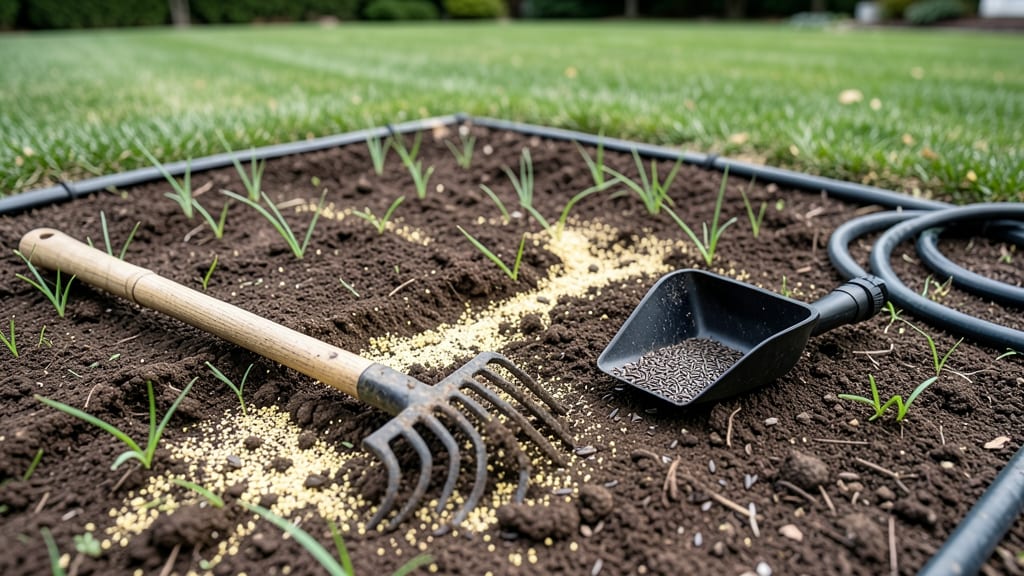
Planting grass seed in spring means thick, green lawns by summer—but timing is everything. 🌱 I’ve learned the hard way that planting too early risks frost damage, while waiting too long lets weeds take over.
The sweet spot? After your last frost date, when soil warms to at least 50°F and stays that way consistently.
Cool-season grasses like fescue and ryegrass thrive when days are long but nights still cool—typically 2-4 weeks after your last frost. Check your local frost dates (or use a soil thermometer) to avoid planting when unpredictable cold snaps could set you back.
Pro tip: Wait until you can dig 6 inches deep without hitting frozen soil.
You’ll know you’ve timed it right when seedlings emerge in 10-14 days, looking like tiny green carpet instead of sparse, struggling blades. The grass will fill in faster, outcompete weeds, and handle summer heat better than late-season plantings. Just don’t rush—patience here means a lawn that lasts.
For northern climates, aim for early to mid-spring; southern zones can push into late spring. Either way, keep soil moist (not soggy) for the first few weeks. That’s how you go from bare patches to a lush lawn that makes neighbors jealous.
📚 In This Guide
- What you need
- Instructions
- Tips and common mistakes
- Wrapping up and next steps
What you need
- ● Grass seed: Choose a cool-season variety (e.g., Kentucky bluegrass, fescue, or ryegrass) suited to your climate. Aim for 5–10 lbs per 500 sq ft, depending on your lawn’s needs.
- ● Lawn fertilizer: A slow-release, spring-specific blend (look for a ratio like 20-0-5 or 24-0-10). Use 1–1.5 lbs of nitrogen per 1,000 sq ft.
- ● Soil amendment: Compost (2–3 inches spread evenly) or a soil conditioner to improve drainage and fertility.
- ○ Topsoil or sand: ¼–½ inch of loamy topsoil or sand to cover seeds lightly (optional for thin or bare patches).
- ● Rake: A bow rake (for leveling) and a garden rake (for seed distribution).
- ● Broadcast spreader: For even seed distribution (manual or rotary-style preferred).
- ● Watering tools: A hose with adjustable nozzle or sprinkler (oscillating or pulsating for coverage).
- ● A watering can (for spot-checking moisture levels).
- ● Lawn mower: Set blades to 2–3 inches high (if overseeding existing grass).
- ● Soil test kit: To check pH and nutrient levels before planting (ideal pH: 6.0–7.0 for cool-season grass).
- ● Starter fertilizer: A high-phosphorus blend (e.g., 5-10-10) to boost root growth.
- ● Erosion control blanket: For slopes or high-wind areas to protect seeds until germination.
- ○ Lawn roller: Lightly compact soil after seeding (optional for large areas).
- ● Garden gloves & knee pads: Because comfort (and clean hands!) matter. 😉
Instructions for planting cool-season grass seed in spring
Timing matters most—plant too early and frost will kill tender sprouts, too late and summer heat will stress seedlings.
🌱 Step 1: Wait for Soil Warmth and Moisture
Cool-season grasses like fescue and rye germinate best when soil temperatures reach 50-65°F. Check by pressing your hand into the ground—it should feel warm but not scorching. Early spring often brings cold nights, so aim for late March to early May in most climates. You'll know it's time when morning dew lingers until midday and soil stays damp after rain.
If your spring is unusually wet, wait until the top 2 inches of soil feel slightly dry to the touch. Planting in soggy ground suffocates seeds and invites fungal rot. A simple finger test works best—push in gently; if moisture clings to your skin, hold off for a few days.
☀️ Step 2: Prepare the Soil for Optimal Germination
Rake the existing lawn or bare soil to create a fine, crumbly texture—think of it like breaking up clumps of dirt until it resembles coarse sand. Remove any debris, rocks, or dead grass clumps larger than ½ inch. This ensures good seed-to-soil contact, which is critical for even germination.
For new lawns, loosen the top ¼ inch of soil with a rake or garden fork. If your soil is compacted (common in high-traffic areas), consider aerating first. Cool-season grasses need loose soil to send down roots quickly—compacted ground will leave you with patchy, weak growth.
💧 Step 3: Spread Seed Evenly and Lightly
Use the 4 servings of seed provided (assuming a standard 5-pound bag covers 1,000 sq ft). Work in small sections—5x5 ft squares—to avoid missing spots. Scatter seed by hand or with a broadcast spreader, keeping the rate consistent. For a thick, even lawn, aim for ½ pound of seed per 100 sq ft.
Lightly rake the area again with a leaf rake to press seeds into the soil—just enough so they’re covered but not buried deeper than ¼ inch. This prevents birds from scattering seeds and ensures consistent moisture contact. Step on the area lightly to settle the soil without compacting it too much.
🌿 Step 4: Water Gently and Frequently
Water immediately after planting, applying ¼ inch of water to keep seeds moist. Use a fine mist setting on your sprinkler or watering can—forceful streams will wash seeds away. Keep the soil consistently moist (not soggy) for the first 10-14 days, which is when seeds germinate. You’ll see tiny green blades appear in about 7-21 days, depending on temperature.
Water twice daily—once in the morning and once in the evening—for the first week. After germination, reduce to 1 inch per week, breaking watering into shorter sessions. Overwatering drowns seedlings, while underwatering leaves them dry and crispy. Check soil moisture daily by pressing your finger ½ inch deep—it should feel damp but not wet.
⏰ Step 5: Maintain Until Establishment
Once seedlings reach 2-3 inches tall (about 3-4 weeks after planting), gradually reduce watering to 1 inch per week. Avoid walking on the lawn until the grass reaches 3-4 inches—this prevents smothering tender roots. Mow when the grass is 3-4 inches tall, setting your mower to 3 inches to encourage deep root growth.
Fertilize 4-6 weeks after germination with a starter fertilizer (high in phosphorus) to strengthen roots. Avoid heavy foot traffic for 6-8 weeks—this gives the lawn time to establish a strong network. You’ll know it’s fully established when the grass resists pulling up and stays green even during dry spells.
Tips & tricks for perfect spring grass seed planting
Real talk: Timing and soil prep make or break your cool-season lawn. Here's what nobody tells you about getting it right.
Soil Temperature Secret: That 50-65°F range in Step 1 is your sweet spot—but don't rely on guesswork. Invest in a soil thermometer for $10. I learned this the hard way after planting too early in chilly 45°F soil, which delayed germination by two weeks. Morning is the best time to check, as soil warms throughout the day. If your thermometer shows 60°F at 10am, you're golden.
Prep Like a Pro: For Step 2, rent a core aerator if your soil feels like concrete—it's worth the $50 for one use. The tiny holes let water and roots penetrate deeper, which is especially critical for new lawns. I've seen compacted soil prevent grass from growing for entire seasons. After aerating, spread a thin layer of compost (¼ inch) before seeding to give those roots a nutrient boost right from the start.
Seed Distribution Hack: In Step 3, work in those 5x5 ft squares but add a visual guide: lay down a piece of string or garden hose to mark each section. This prevents overlap and ensures you don't miss spots. For large areas, use a push broom to sweep seeds into the soil after raking—it creates a more even distribution than hand scattering. And here's my game-changer: after planting, lightly cover with a straw mulch (¼ inch thick) to protect seeds from birds and wind while keeping moisture in.
Watering Wisdom: Step 4's twice-daily watering rule is non-negotiable, but timing matters more than you think. Water at dawn (5-7am) and dusk (5-7pm) to minimize evaporation and fungal risks. I use a rain gauge to measure my ¼ inch of water—it's shocking how much most sprinklers actually deliver. Pro tip: if you see water pooling, you're overdoing it. The soil should feel like a damp sponge, not a swamp.
Pro Tips for When Plant Grass Seed In Spring
- Real talk: Timing and soil prep make or break your cool-season lawn. Here's what nobody tells you about getting it ri...
- Soil Temperature Secret: That 50-65°F range in Step 1 is your sweet spot—but don't rely on guesswork. Invest in a soi...
- Prep Like a Pro: For Step 2, rent a core aerator if your soil feels like concrete—it's worth the $50 for one use. The...
Frequently asked questions
When is the exact best time to plant grass seed in spring?
The ideal window is late spring to early summer—specifically, after the last frost (when soil temps hit 60–70°F) but before summer heat sets in. For cool-season grasses (like fescue or ryegrass), aim for April to May in most U.S. regions. Check your local frost dates for precision!
What if I miss the spring window? Can I plant later?
Yes, but timing matters! For cool-season grasses, late summer (August–September) is the second-best option. Avoid planting in peak summer heat (June–July) or winter—your seed may dry out or freeze. If you’re late, opt for fast-germinating seed mixes and keep soil moist.
How often should I water newly planted grass seed?
Water lightly 2–3 times daily (about 5–10 minutes per session) to keep the top 1–2 inches of soil damp—not soggy. Once seedlings sprout (7–21 days), gradually reduce to 1 inch of water per week. A sprinkler with gentle mist works best. Pro tip: Water in the early morning to cut down on evaporation!
Why isn’t my grass seed germinating? Troubleshooting tips?
Check these common culprits:
- Soil too hot/cold: Ideal temps are 60–75°F. Use shade cloth if needed.
- Poor soil contact: Rake seed lightly into soil (¼ inch deep) for better rooting.
- Dry soil: Water deeply before planting—dry seed won’t sprout!
- Birds/animals: Cover seed with straw or a lightweight netting temporarily.
Can I overseed an existing lawn in spring?
Spring overseeding is possible but tricky for cool-season grasses. Thin or bare patches? Go for it! Mow low, dethatch, and aerate first. For dense lawns, late summer/fall is easier. Use a light seed mix (½ lb per 100 sq ft) to avoid competition with established grass.
Wrapping up and next steps
Spring is the perfect time to give your lawn a fresh start—cool-season grasses thrive when planted between early spring and late spring, just as the soil warms and moisture levels are ideal. 🌱 By choosing the right timing, preparing your soil, and following best practices, you’ll be on your way to a lush, green lawn that stands out in the neighborhood.
Ready to roll up your sleeves? Grab your tools, mark your calendar, and start planting—your future lawn will thank you!
Next step: Check your local frost dates and soil temperature, then schedule your planting session before summer heat sets in. Happy gardening! 🌿