
Planting
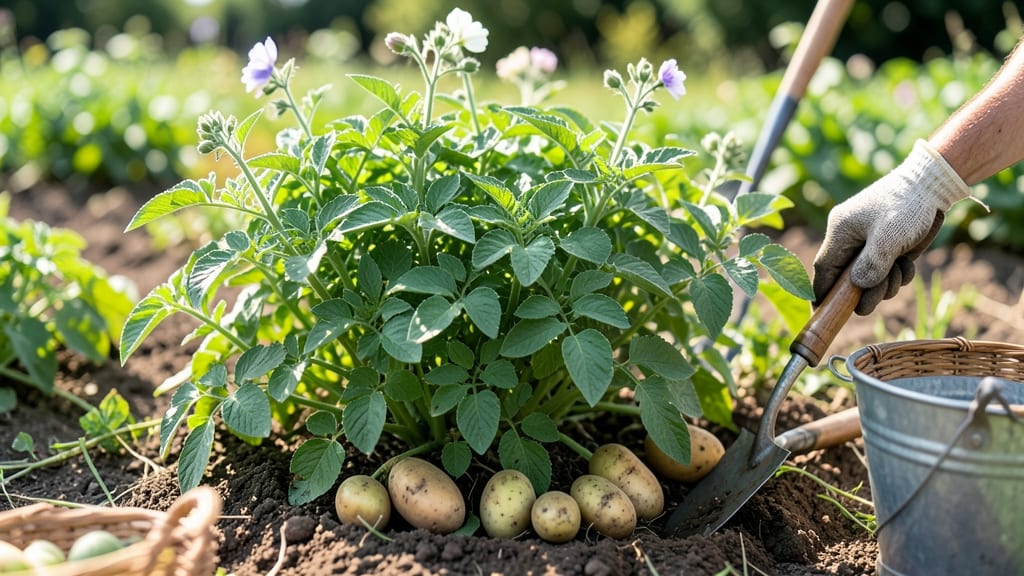
To pick potatoes after planting at the perfect moment means the difference between tender, flavorful tubers and tough, woody messes — and it all comes down to timing.
Picture this: you’ve spent weeks nurturing your 🥔 plants, only to dig them up too early and find tiny, underdeveloped potatoes, or wait too long and end up with cracked, sprouting spuds. The key? Understanding your potato variety, watching for plant signals, and reading the soil.
Some potatoes, like early varieties, are ready in as few as 70 days, while others need up to 120 days to reach peak flavor. I’ll show you how to spot the right cues — from flower blooms to foliage yellowing — so you never miss the harvest window again.
Whether you’re growing Yukon Golds or Fingerlings, you’ll learn the exact signs to look for, plus how soil conditions and regional factors play a role in getting that perfect harvest.
How to tell when potatoes are ready to harvest by variety
Not all potatoes mature at the same time, which is why knowing your variety is half the battle. Early varieties like Red Norland or Yukon Gold can be harvested as early as 70 days, while late varieties like Russet Burbank or Fingerlings may take up to 120 days.
Each type has its own harvest cues, and missing them means the difference between tender, flavorful spuds and tough, woody tubers.
The key to perfect timing lies in understanding your potato’s days-to-maturity and watching for visual signals like flower blooms or leaf yellowing. For example, new potatoes (small tubers) can be harvested early, while full-sized potatoes require more time.
Let’s break down the best harvest windows for popular varieties so you never miss the mark.
🌱
For early varieties like Red Norland, you can start harvesting as soon as the flowers bloom and the foliage begins yellowing. These potatoes are perfect for new potato dishes or quick cooking.
The tubers will be small but flavorful, typically around 1.5-2 inches in diameter. If you wait too long, they’ll toughen up and lose their delicate texture.
Mid-season varieties, such as Red Pontiac or Kennebec, take a bit longer—usually 90-110 days. These are ideal for storage potatoes because they develop thicker skins. Watch for 50% foliage dieback
Soil and plant signals that confirm perfect harvest timing
Potatoes send clear signals when they’re ready to harvest, but many gardeners overlook these visual and tactile cues. The key lies in observing both the above-ground foliage and the underground soil conditions.
These signs work for all varieties, whether you’re growing Yukon Golds or Red Pontiacs, ensuring you dig at the peak of flavor and texture.
First, focus on the plant’s flowering stage. When your potato plants bloom, it’s your first clue that tubers are forming underground. For most varieties, you’ll want to harvest 1-2 weeks after flowering begins, but this varies slightly depending on your climate.
Meanwhile, the soil itself holds critical clues—moisture levels and temperature play a surprising role in determining readiness.
⚠️ callout warning
- Harvesting too early results in small, underdeveloped tubers.
- Waiting too long leads to tough, woody potatoes with cracked skins.
- Ignoring soil moisture can cause tubers to split or rot underground.
Pro tip: Always check for firm, rough-skinned tubers—this is your foolproof signal!
Next, watch for foliage changes. As your potato plants mature, their leaves will begin to yellow and die back, a natural process called senescence. This typically starts at the plant’s edges and works inward.
When about 50-70% of the foliage has turned yellow, it’s time to dig—this is when most of your tubers have reached peak size.
The soil’s moisture level is another critical factor. Before harvesting, ensure the soil is dry enough to crumble in your hands but not bone-dry. Overly wet soil can cause tubers to bruise or rot when unearthed, while dry soil helps protect the spuds from damage.
Aim to harvest on a partly cloudy day to allow the soil to firm up slightly, making digging easier.
Finally, test a few tubers for readiness by gently probing the soil with your fingers. When you feel firm, 2-3 inch tubers with a healed stem end (no green), they’re perfect for harvest.
Avoid digging if the tubers are still small or if the stem end remains green—this indicates they need more time in the ground.
Remember, the earlier varieties (like Red Norlands) can be harvested sooner, while late-season types (like Russets) may need an extra 2-3 weeks. Always prioritize these plant and soil signals over rigid timelines for the best results. 🥔