
Planting
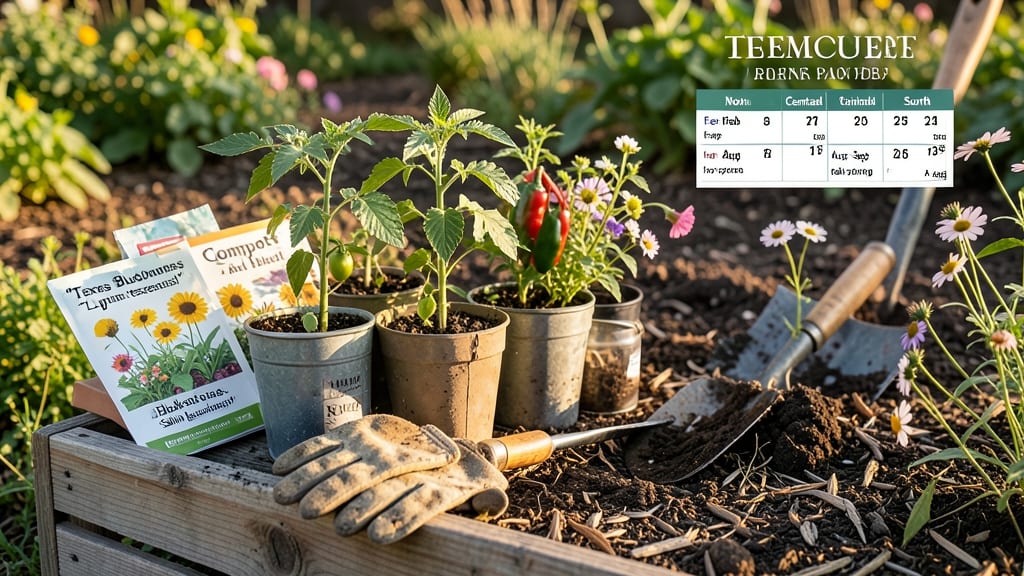
Planting your Texas garden at the wrong time means wilting before summer even arrives. 🌵 The key is working with—not against—the heat, starting cool-season crops in late February to early March in North Texas and January to February in South Texas, when soil temps dip below 70°F. Here’s the secret: focus on heat-tolerant varieties like okra, sweet potatoes, and black-eyed peas, which thrive when most gardens would rather nap.
Even lettuce and broccoli can make it if you plant them in shade cloth by late winter, then transition to fall for a second harvest when temps drop in October.
North Texas gardeners can push spring planting until mid-April, while South Texas should hold off until late March to avoid the brutal May heat. The payoff? A garden that stays productive when neighbors are sweltering—just time it right, and you’ll be harvesting long after the last frost warning.
📚 In This Guide
- What you need
- Instructions
- Tips and common mistakes
- Wrapping up and next steps
What you need
- ● Seeds or seedlings: Choose heat-resistant varieties (e.g., okra, black-eyed peas, peppers, or native Texas wildflowers). Start with 5–10 plants per variety for a balanced garden.
- ● Soil amendments: Compost (1–2 bags, 5–10 cubic feet)
- ● Organic mulch (straw or wood chips, 2–3 cubic feet)
- ● Lime (if soil pH is acidic; test first!)
- ● Watering supplies: Drip irrigation kit (or soaker hoses)
- ● 5-gallon watering can (for seedlings)
- ○ Rain barrel (optional, 30+ gallons for drought resilience)
- ● Hand tools: Trowel (for transplanting)
- ● Garden fork (for aerating clay soil)
- ● Pruners (for trimming)
- ● Protective gear: Gloves (nitrile for durability)
- ● Wide-brim hat & sunscreen (SPF 30+)
- ● Lightweight long sleeves (to avoid sunburn)
- ● Shade cloth (30–50% coverage for seedlings in peak summer)
- ● Row covers (floating fabric to deter pests)
- ● Soil moisture meter (to avoid over/under-watering)
- ● Trellis or stakes (for vining plants like pole beans)
- ● Texas-native plant guide (for low-maintenance, drought-tolerant picks)
Instructions for planting a heat-resistant Texas garden
Texas heat demands precision timing—here’s how to align your planting with local zones and seasonal shifts.
📅 Step 1: Identify Your Texas Planting Zone and Last Frost Date
Texas spans USDA Zones 6a-10b, so your timing varies dramatically. Check your exact zone via the Texas A&M AgriLife Extension map—this determines when to plant cool-season crops (like lettuce or broccoli) versus heat-tolerant varieties (okra, sweet potatoes). For most of Texas, the average last frost date falls between February 15 (North Texas) and March 15 (Central/East Texas).
I always mark these dates on my calendar with a red flag. For example, in Zone 8a (Austin), I wait until March 1 to plant heat-sensitive crops like tomatoes, while Zone 9a (San Antonio) can start as early as February 15. The key is avoiding surprise frosts—even in Zone 9, late-season cold snaps can still occur.
☀️ Step 2: Plant Cool-Season Crops 6-8 Weeks Before Last Frost
Start seeds or transplant cool-season vegetables 6-8 weeks before your last frost date—this ensures they mature before summer heat hits. For Texas, that means early January plantings for North Texas and late January for Central/East Texas. Leafy greens (spinach, kale), brassicas (broccoli, cabbage), and root crops (carrots, beets) thrive in cooler weather.
Here’s the thing—Texas soil can still be chilly even after the last frost. I always wait until soil temperatures reach at least 50°F (measured 2 inches deep) before planting. Use a soil thermometer for accuracy—cool soil slows germination, and you’ll end up with patchy, uneven growth.
🌱 Step 3: Transition to Heat-Tolerant Crops After April 1
After April 1, shift to heat-resistant crops that thrive in Texas summers: okra, sweet potatoes, peppers, and eggplants. These plants handle 90°F+ temperatures and even brief droughts better than most. For tomatoes and peppers, I wait until April 15 in North Texas and March 20 in South Texas to avoid transplant shock from sudden heat spikes.
Watch for soil moisture—Texas summers dry out fast. Mulch heavily with 2-3 inches of straw or wood chips immediately after planting to retain moisture and regulate soil temperature. I’ve learned the hard way that skipping mulch leads to wilting seedlings within days, even with daily watering.
💧 Step 4: Adjust for Summer Planting (June–August)
For a fall harvest, sow heat-tolerant crops like black-eyed peas, cowpeas, or malabar spinach in June–July. These handle Texas’s 100°F+ heat and even monsoon rains. I plant these in raised beds with drip irrigation to avoid waterlogged soil, which invites fungal diseases like southern blight.
Real talk: Overwatering in summer is a common mistake. Let the top 1-2 inches of soil dry out between waterings—deep, infrequent watering encourages stronger root systems. Use a moisture meter if you’re unsure; Texas clay holds moisture longer than it appears.
⏰ Step 5: Plan for Fall Plantings 120 Days Before First Frost
Texas’s first frost typically arrives November 15–December 15, depending on your zone. For a fall garden, start cool-season crops 120 days before your first frost date. In Zone 8a (Austin), that means July 15; in Zone 9a (San Antonio), you can extend until August 15. Succession plant every 2-3 weeks for continuous harvests.
This is the moment that matters: Use shade cloth (30-50%) for late summer plantings to protect seedlings from intense afternoon sun. I’ve seen new transplants bolt (flower prematurely) within days if not shaded properly—it’s a game-changer for leafy greens like lettuce and Swiss chard.
Tips & tricks for perfect Texas garden planting timing
Mastering Texas's planting calendar takes more than just dates—it's about understanding your microclimate and avoiding common pitfalls that can turn a thriving garden into a sad memory. Here's what I've learned after years of trial and error in the Lone Star State.
Zone-Specific Adjustments: While the instructions provide solid guidelines, remember that microclimates matter. For example, if you're in Zone 8a (Austin) but live in a valley where cold air settles, you might want to delay planting by 3-5 days beyond the suggested March 1 date. Conversely, if you're on a hilltop with warmer air circulation, you could push that date back slightly. Always check local weather patterns for the past 5 years—this gives you a better sense of your specific area's tendencies than relying solely on the average last frost date.
Soil Temperature is Non-Negotiable: That 50°F soil temperature isn't just a suggestion—it's the minimum threshold for successful germination. I've seen seeds sit for weeks in cooler soil, only to sprout unevenly or fail completely. Invest in a soil thermometer ($15 at any garden center) and check it daily in the morning. If temperatures dip below 50°F at night, consider using black plastic mulch to warm the soil faster. Pro tip: Place your thermometer 2 inches deep—surface temperatures can be misleadingly warm while deeper soil remains cold.
Heat-Tolerant Planting Hack: For those transition crops like tomatoes and peppers that need to wait until April 15 in North Texas, here's what I do: I start them indoors under grow lights in early March. This gives them a 4-6 week head start before transplanting. The key is hardening them off properly—take them outside for 2-3 hours daily starting 10 days before transplanting, gradually increasing exposure. This technique lets me enjoy tomatoes 2-3 weeks earlier than the traditional outdoor planting schedule.
Shade Cloth is Your Summer Ally: That 30-50% shade cloth recommendation isn't just for late summer plantings—it's also crucial for protecting young seedlings during Texas's intense afternoon sun, even in spring. I've seen delicate lettuce seedlings wilt and bolt within days when planted without shade. For maximum protection, use a movable shade frame that you can position to block the western sun (the hottest part of the day). This gives you flexibility to adjust as the sun's position changes throughout the season.
Pro Tips for When To Plant Garden In Texas
- Mastering Texas's planting calendar takes more than just dates—it's about understanding your microclimate and avoiding common pitfalls that can turn a thriving garden into a sad memory.
- Zone-Specific Adjustments: While the instructions provide solid guidelines, remember that microclimates matter.
- Soil Temperature is Non-Negotiable: That 50°F soil temperature isn't just a suggestion—it's the minimum threshold for successful germination.
Frequently asked questions
Got questions about planting in Texas?
Here are answers to common concerns—from timing to troubleshooting—to help you grow a thriving garden in the Lone Star State!
When is the absolute best time to plant in Texas?
The ideal window depends on your Texas Planting Zone (North vs. South). For North Texas (Zones 7b-8b), aim for late February to early April (after last frost, usually mid-March). In South Texas (Zones 8a-9a), plant September–November or February–March to avoid peak summer heat. Check your zone here for precision!
Can I plant in summer, or will it just die?
Most cool-season crops (lettuce, spinach, broccoli) will bolt or wilt in Texas summers (90°F+). However, heat-lovers like okra, sweet potatoes, and black-eyed peas thrive in summer—just plant after May 15 and mulch heavily. For fall/winter, start seeds 6–8 weeks before first frost (late July–early August).
What if I miss the ‘perfect’ planting window?
No stress! Use container gardening for heat-sensitive plants (e.g., herbs in pots) or opt for fast-growing varieties like bush beans or zucchini, which mature in 45–55 days. For fall, try succession planting—sow small batches every 2 weeks until early September.
Why are my seedlings wilting even after watering?
Texas soil + heat = stress! Check for:
- Overwatering: Wilting can mean root rot—let soil dry slightly between waterings.
- Underwatering: Deep water early morning (1–1.5 inches/week).
- Transplant shock: Harden off seedlings (acclimate to sun/heat) for 5–7 days before planting.
- Pests: Inspect for aphids or spider mites (spray with neem oil if needed).
Are there any ‘foolproof’ Texas-friendly plants?
Try these low-maintenance, heat-tolerant picks:
Plant
Best Planting Time
Why It Works
Okra
April–June or Sept
Drought-resistant; loves heat!
Black-Eyed Peas
March–April or Sept
Fixes nitrogen in soil; thrives in poor conditions.
Rosemary
Fall or early spring
Perennial; survives Texas winters and summers.
Sweet Potatoes
April–May
Slips grow fast; tolerates heat and sandy soil.
Pro tip: Mulch with straw or wood chips to retain moisture and regulate soil temp!
Wrapping up and next steps
Planting your Texas garden at the right time—whether in the cooler months of fall/winter or the early spring—sets the stage for a thriving, heat-resistant harvest. 🌱 With the right varieties, soil prep, and watering strategies, you can beat the brutal summer heat and enjoy fresh produce year-round.
Now that you’re armed with zone-specific timing and pro tips, there’s nothing stopping you from digging in!
Ready to take the next step? Start small—pick 1-2 heat-loving plants (like okra or peppers) or a shade-friendly herb garden—and watch your green thumb grow! 🌿 Grab your tools and get planting!