
Planting
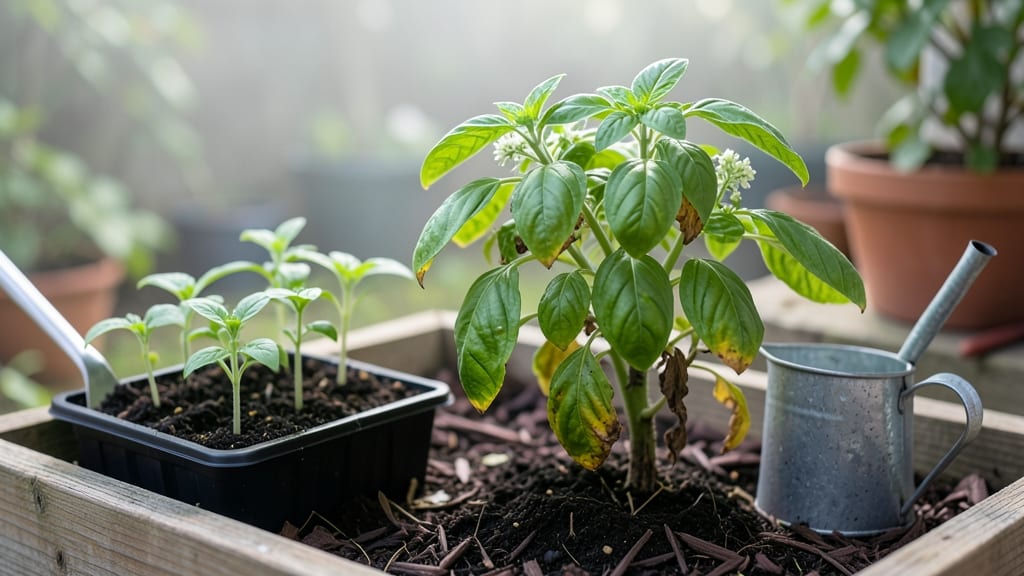
Your basil wilted after transplant because its delicate roots get shocked—just like when you move too fast after a workout. 🌱 The good news? This root-saver trick works even if your plants look like they’re giving up.
I’ve revived wilted basil every time by focusing on three key fixes: watering right, shielding from stress, and giving roots time to recover.
Most gardeners overwater after transplanting, drowning roots before they can adjust. Instead, water lightly every 2-3 days—just enough to keep soil moist, not soggy. Pair that with afternoon shade for the first week, and your basil will start perking up within 48 hours.
The secret’s in patience: roots need time to stretch into fresh soil without competition.
Once your basil recovers, it’ll grow back stronger than before—thicker stems, brighter leaves, and even more flavor. I’ve seen plants that looked dead bounce back with proper care. The key is acting fast: trim any yellow leaves, loosen soil around roots gently, and keep the environment stable.
This trick works for other tender herbs too—like cilantro or parsley—so bookmark it for next season. The same principles apply whether you’re transplanting seedlings or moving potted basil outdoors. Your garden’s about to get a second chance!
Root Shock And Transplant Trauma
Transplanting basil—whether from seed trays, pots, or garden beds—can be a delicate process, and root shock is one of the most common reasons your plants wilt after moving.
When roots are disturbed, they experience physical damage and stress, disrupting their ability to absorb water and nutrients efficiently. Here’s why it happens and what triggers it:
When you uproot basil, even with care, the delicate root hairs and fine feeder roots can tear or break. These tiny roots are responsible for up to 90% of water and nutrient uptake—once damaged, the plant struggles to hydrate itself, leading to wilting.
Actionable fix: Gently loosen the soil around the roots before lifting the plant (especially for container-grown basil) to minimize breakage. If roots are visibly damaged, trim any mushy or blackened sections with sterilized scissors to prevent rot.
Basil roots are adapted to a specific moisture level in their original environment. After transplanting, the plant may face:
- Too much water (if the new soil is oversaturated, roots can’t breathe).
- Too little water (if the soil dries out too quickly post-transplant).
Both extremes stress the roots, causing them to temporarily shut down water transport to the leaves—hence the wilt.
Actionable fix:
- Water deeply before transplanting to reduce shock.
- Mulch heavily (with straw or compost) to retain moisture.
- Avoid overhead watering for 2–3 days post-transplant to let roots establish without soggy soil.
Basil thrives in warmth (60–75°F) and struggles with sudden temperature swings. If you transplant basil:
- On a hot, windy day, leaves lose moisture faster than roots can replace it.
- Into cold or drafty soil, root activity slows dramatically, halting water absorption.
Actionable fix:
- Transplant in early morning or late afternoon to avoid peak sun/wind stress.
- Use shade cloth for the first 3–5 days if moving basil outdoors.
- Keep soil warm (use black plastic mulch or a cold frame in cooler climates).
Basil roots are sensitive to soil texture and nutrient shifts. If the new planting spot has:
- Compacted or rocky soil, roots can’t spread or absorb water.
- Poor drainage, roots suffocate and rot.
- A drastic pH change (basil prefers 6.0–7.0), nutrient uptake falters.
Actionable fix:
- Amend the soil with compost or coconut coir to improve aeration.
- Test pH levels and adjust with lime (to raise pH) or sulfur (to lower it) if needed.
- Add a slow-release fertilizer (like worm castings) to support recovery.
Transplanting at the wrong life stage or growth phase increases stress:
- Overly root-bound plants (container-grown basil with circling roots) struggle to adapt.
- Flowering basil (which diverts energy from leaves to seeds) wilts faster post-transplant.
Actionable fix:
- Repot root-bound basil 1–2 weeks before transplanting to encourage new root growth.
- Pinch off flowers before moving to prioritize leaf recovery.
- Choose young, vigorous plants (4–6 weeks old) for the best transplant success.
Sometimes, wilting isn’t just about roots—it could signal undetected stress from pests or pathogens. If basil was in a shared pot or garden bed, it might carry:
- Root-knot nematodes (microscopic worms that damage roots).
- Fungal infections (like Fusarium or Phytophthora) from contaminated soil.
Actionable fix:
- Inspect roots for galls, discoloration, or slimy textures before planting.
- Disinfect tools with rubbing alcohol between plants.
- Use neem oil or beneficial nematodes if pests are suspected.
Revive Your Basil Now
Wilted basil after transplanting isn’t a death sentence—it’s a call to action! 🌱 With the right care, your plants can bounce back stronger than ever. Below, we’ve mapped out practical fixes based on the most common causes, along with prevention tips to keep your basil thriving long-term.
If your basil is wilting immediately after transplant, it’s likely struggling with root stress from soggy soil. Basil hates "wet feet," and overwatering suffocates roots, leading to collapse.
How to Revive:
- Let the soil dry slightly before watering again. Stick your finger 1 inch deep—if it’s damp, wait 1-2 days.
- Repot if needed into a container with drainage holes and a well-draining mix (50% potting soil, 30% perlite, 20% compost).
- Water deeply but less often—basil prefers even moisture, not constant wetness. Aim for 1 inch of water per week (adjust for climate).
💡 Prevention Tip:
- Use a self-watering pot or drip irrigation to avoid overwatering.
- Mulch lightly with straw to retain moisture without trapping excess water.
Basil wilts when suddenly exposed to harsh sun after transplanting, especially if it was previously shaded. This causes leaf scorch and wilting.
How to Revive:
- Move to partial shade (morning sun + afternoon shade) for 3-5 days to help it recover.
- Gradually reintroduce sun—after a week, shift it to 4-6 hours of direct sunlight daily.
- Mist leaves lightly in the afternoon to reduce stress (but avoid soggy foliage).
🌡️ Prevention Tip:
- Hardening off your basil before transplanting: Acclimate it to outdoor conditions over 5-7 days by moving it outside for increasing lengths of time.
Rough handling can sever roots, causing wilting as the plant struggles to absorb water. Even a slight nick can set it back.
How to Revive:
- Trim damaged roots (if repotting) with sterilized scissors—cut cleanly at a 45° angle.
- Apply a root booster like hydroponic clay or mycorrhizal fungi to encourage regrowth.
- Keep soil moist (not soggy) for the first 7-10 days to support recovery.
✨ Pro Tip:
- Transplant at the right time: Do it in the early morning or late afternoon when temps are cooler, reducing stress.
Wilting can also signal hidden pests (like aphids or spider mites) or fungal infections (e.g., downy mildew) weakening the plant.
How to Revive:
- Inspect leaves for sticky residue (aphids), tiny webs (spider mites), or yellow spots (fungus).
- Treat with neem oil (1 tsp per quart of water) or insecticidal soap for pests.
- Improve airflow by spacing plants 12+ inches apart and pruning crowded growth.
🎯 Prevention Tip:
- Rotate crops yearly to prevent soil-borne diseases.
- Water at the base (not overhead) to keep foliage dry and deter fungal growth.
Basil needs nitrogen, potassium, and magnesium to stay perky. If your transplant soil lacks nutrients, wilting is a red flag.
How to Revive:
- Fertilize lightly with a balanced liquid fertilizer (10-10-10) 10 days after transplanting.
- Add compost tea (1 cup per gallon of water) for a gentle nutrient boost.
- Check pH—basil thrives in 6.0-7.0; adjust with lime (to raise pH) or vinegar (to lower pH) if needed.
💪 Pro Tip:
- Use a slow-release fertilizer (like osmocote) at planting to avoid overfeeding.
No matter the cause, follow this quick recovery plan:
- Trim wilted leaves (but leave healthy ones to photosynthesize).
- Support the plant with a small stake if it’s top-heavy.
- Monitor daily—if no improvement in 3-5 days, reassess the cause.
🌿 Final Thought: Basil is resilient—with the right adjustments, it’ll rebound faster than you think. Act fast, but don’t panic! Your garden’s favorite herb is just waiting for a second chance. 🍃
Frequently asked questions
Why does my basil wilt right after transplanting, even if I watered it?
Wilted basil after transplanting is usually root shock—the delicate roots get damaged when disturbed, even with care. Overwatering can make it worse by suffocating the roots. Try letting the soil dry slightly before watering again, and avoid soggy conditions for 3-5 days to help roots recover.
Can I save basil that’s completely wilted and drooping after transplanting?
Yes! Trim any yellow or crispy leaves immediately, then place the plant in partial shade and water lightly at the base. Most basil recovers within 2-3 days if the roots are still healthy. Avoid fertilizing until new growth appears—focus on hydration and stress relief first.
Should I transplant basil in full sun or shade after it wilts?
Start with partial shade (morning sun + afternoon shade) for 3-5 days to reduce stress. Basil needs 4-6 hours of sun daily, but too much direct sun after transplanting can cause leaf scorch. Gradually reintroduce full sun once the plant shows signs of recovery.
Is it better to transplant basil in the morning or evening?
Transplant in the early morning or late afternoon to avoid peak heat and wind stress. Cooler temps help roots establish faster. If transplanting in hot weather, provide temporary shade for the first 24 hours to prevent wilting.
How do I know if my basil wilting is from transplant shock or pests?
Check the roots and leaves: Transplant shock causes drooping but no visible damage. Pests (like aphids or spider mites) leave sticky residue or webs, while fungal issues show as yellow spots or mold. If you see pests, treat with neem oil; if roots look mushy, it may be overwatering or rot.