
Planting
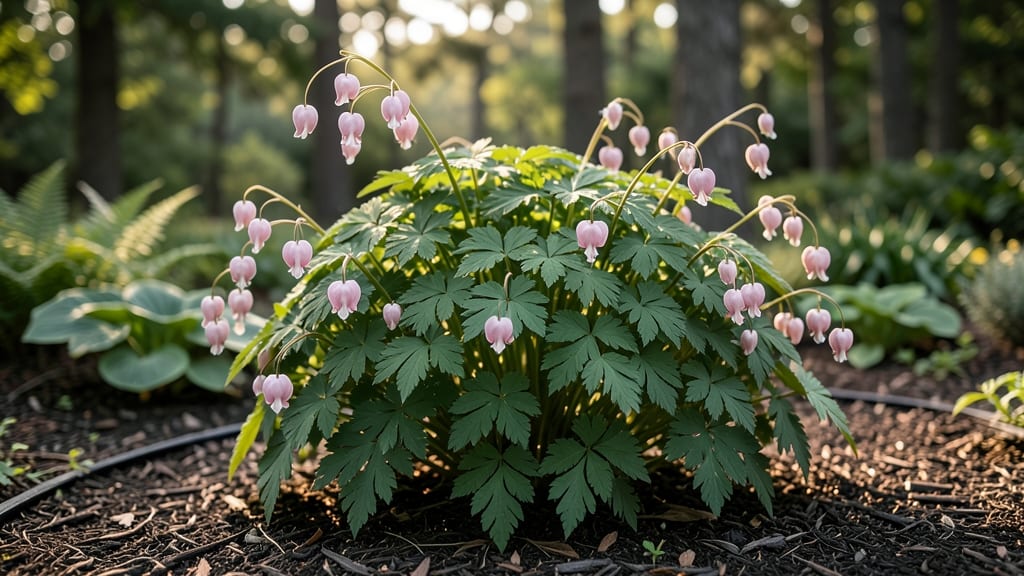
Your dappled garden just got a heartbreaker. 💚 Bleeding heart shade plants are the secret weapon for turning dim corners into lush, fragrant displays—no sun required.
I’ve watched mine transform shady spots into vertical waterfalls of pink and white blooms, and it’s easier than you’d think to grow these delicate beauties.
The key is patience and the right conditions: moist, well-draining soil, partial to full shade, and consistent watering (they hate drying out). Most gardeners struggle with leaf drop or floppy stems, but a simple pruning routine after blooming keeps them vigorous for years.
My plants now return every spring with barely any effort—just a little love and the right spot.
By summer’s end, you’ll have a fragrant, thriving focal point that hummingbirds adore. The heart-shaped flowers cascade like a living curtain, and the foliage stays lush even when other shade plants wilt.
It’s the kind of plant that makes neighbors stop and ask, “What is that?”—and then you get to brag.
Perfect for under trees, along north-facing walls, or even in containers for patios. Once established, they’re nearly foolproof—just watch them grow. Let’s get yours planted!
📚 In This Guide
- What you need
- Instructions
- Tips and common mistakes
- Wrapping up and next steps
What you need
- ● Bleeding heart plant: Option 1: Nursery-grown plant (1-2 mature plants, 12-18" tall, in 4-6" pots). Pro tip: Choose ‘Diana’ or ‘Hilda’ for extra hardiness! 🌡️
- ● Option 2: Seeds (10-20 seeds per packet). Note: Germination can take 2-4 weeks—patience is key! ⏳
- ● Option 3: Cuttings (3-5 healthy stems, 3-4" long, with nodes).
- ● Well-draining potting mix: 1 bag (1.5-2 cubic feet) of peat moss + perlite + compost (50/30/20 ratio). Soil pH: 6.0-7.0 (slightly acidic to neutral).
- ● Garden space: Partial to full shade (4-6 hours of dappled sunlight daily).
- ● Moist, humus-rich soil (amend with 2-3 cups of compost per planting hole).
- ● Planting tools: Trowel or small shovel (for transplanting).
- ● Garden gloves (to protect your hands from soil and thorns).
- ● Watering can or hose with a gentle spray nozzle (1 gallon capacity).
- ○ Optional (but helpful!): Mulch (2-3 inches of wood chips or shredded bark to retain moisture).
- ● Fertilizer: Balanced 10-10-10 or organic compost tea (1 tbsp per plant, applied every 4-6 weeks).
- ● Support stake (1-2 5-foot bamboo stakes) if planting in windy areas.
- ● Timing: Seeds: Start indoors 8-10 weeks before last frost, or sow directly in spring (after soil reaches 60°F).
- ● Cuttings/Plants: Transplant in early spring or fall (avoid summer heat!).
- ● Location prep: Test soil moisture (bleeding hearts hate soggy roots—ensure good drainage!).
- ● Choose a spot with 3-4 feet of vertical space for mature plants to sprawl.
Step-by-Step guide to planting and caring for bleeding heart in shade
Here's how I create a thriving bleeding heart display that blooms reliably year after year.
🌱 Step 1: Choose the Perfect Planting Location
Bleeding hearts thrive in partial to full shade, with 4-6 hours of morning sun ideal for most varieties. I look for spots with dappled sunlight—think under tall trees where light filters through leaves. The soil should stay consistently moist but well-drained; soggy roots lead to rot, while dry conditions cause buds to drop.
Test your spot by observing moisture levels: if the ground stays damp after rain for 24-48 hours, it's perfect. Avoid areas where water pools after heavy rain. I always plant mine where they'll get protection from hot afternoon sun—this prevents leaf scorch and keeps the foliage lush.
🪴 Step 2: Prepare the Soil and Plant
Bleeding hearts prefer rich, organic soil with a slightly acidic to neutral pH (6.0-7.0). Amend your garden soil with 3-4 inches of compost mixed into the top 12 inches of soil. I also add a handful of bone meal at planting time to encourage strong root development and abundant blooms.
Dig a hole twice as wide as the root ball but only as deep as the container's root system. Gently loosen the roots if they're circling and place the plant so the top of the root ball sits 1 inch below soil level. This prevents stem rot while encouraging new root growth. Backfill with native soil mixed with compost, tamping lightly to eliminate air pockets.
💧 Step 3: Water Deeply and Mulch Properly
After planting, water deeply until moisture reaches 6-8 inches down—this encourages roots to grow downward rather than stay shallow. I use a soaker hose to avoid disturbing the soil surface. Water 2-3 times per week during the first growing season, keeping the soil evenly moist but not soggy.
Apply 3 inches of organic mulch (like shredded bark or wood chips) around the base, keeping it 2 inches away from the stem to prevent rot. Mulch helps retain moisture, regulates soil temperature, and suppresses weeds. Replenish mulch annually in early spring to maintain its protective layer.
☀️ Step 4: Provide Support and Encourage Growth
Bleeding heart stems are semi-upright but often need support to prevent flopping. I install 3-4 foot tall stakes or a lightweight trellis at planting time, positioning them 6 inches away from the plant. Gently tie stems to the support with soft plant ties as they grow to prevent damage.
Fertilize in early spring with a balanced, slow-release fertilizer (10-10-10) applied at half strength. I avoid high-nitrogen fertilizers—they promote leafy growth at the expense of flowers. Instead, I use a low-nitrogen, phosphorus-rich fertilizer to encourage blooming. Deadhead spent blooms by snipping stems back to the first set of leaves to promote continuous flowering.
✂️ Step 5: Prune and Prepare for Next Season
After the first hard frost, when foliage turns brown, cut back stems to the ground. This prevents disease buildup in old stems and makes it easier to spot new growth in spring. I mark the planting location with garden flags so I don't accidentally dig up the crown when working nearby.
In late winter (February), apply a 2-inch layer of compost around the base and water thoroughly. This gives roots a nutrient boost before new growth begins. I also check for overcrowding—bleeding hearts spread slowly but can become dense over time. Divide clumps every 3-4 years in early spring by digging up the plant, separating sections with a sharp knife, and replanting immediately.
Tips & tricks for perfect bleeding heart planting in shade
These simple yet powerful strategies will help you create a thriving bleeding heart display that blooms beautifully year after year.
Location Intelligence: Pay close attention to the 4-6 hours of morning sun guideline in Step 1. I've learned the hard way that afternoon sun—even just 1-2 hours—can cause leaf scorch. Test your spot by observing how long moisture lingers after rain: if it stays damp for 24-48 hours, you've found the perfect balance between moisture retention and drainage. This is particularly important for container plantings where drainage is more critical.
Soil Preparation Secret: When amending your soil with 3-4 inches of compost in Step 2, don't just mix it into the top layer—work it down to 12 inches. This creates a nutrient-rich zone where roots can thrive. I've found that adding a handful of bone meal at planting time gives plants an immediate phosphorus boost, which is crucial for strong root development and abundant blooms. For even better results, mix in a small amount of perlite or sand if your native soil is particularly dense.
Watering Wisdom: The deep watering technique in Step 3 is crucial—aim for moisture to reach 6-8 inches down. I use a screwdriver to check moisture levels: if it comes out clean, water again. For container plantings, I've found that watering 2-3 times per week is often insufficient during hot weather. Instead, I water daily in containers during summer months, always checking the moisture level first. This prevents the roots from drying out between waterings.
Support System Strategy: When installing your 3-4 foot tall stakes in Step 4, position them slightly off-center rather than directly behind the plant. This creates a more natural look while still providing adequate support. I've also found that using soft plant ties made from fabric rather than plastic prevents stem damage as the plant grows. For a more decorative approach, consider using bamboo stakes or decorative metal supports that blend better with your garden aesthetic.
Pro Tips for Bleeding Heart Shade Plant
- These simple yet powerful strategies will help you create a thriving bleeding heart display that blooms beautifully year after year.
- Location Intelligence: Pay close attention to the 4-6 hours of morning sun guideline in Step 1.
- Soil Preparation Secret: When amending your soil with 3-4 inches of compost in Step 2, don't just mix it into the top layer—work it down to 12 inches.
Frequently asked questions
How often should I water my Bleeding Heart plant?
Water your Bleeding Heart consistently to keep the soil evenly moist but not soggy. Aim for about 1 inch of water per week, adjusting for rain. Drought stress causes wilting, while overwatering can lead to root rot. Mulch around the base to retain moisture and protect roots.
When is the best time to plant Bleeding Heart?
Plant Bleeding Heart in early spring or early fall when temperatures are mild. This gives roots time to establish before summer heat or winter frost. Avoid planting in hot summer months, as the shock can stress young plants.
Can Bleeding Heart grow in full shade?
Yes! Bleeding Heart thrives in partial to full shade, making it perfect for dappled gardens or woodland settings. It tolerates 2–6 hours of morning sun but can scorch in harsh afternoon rays. If leaves yellow, it may need more shade.
What pests commonly affect Bleeding Heart, and how do I treat them?
Watch for aphids, slugs, and spider mites. For aphids, spray with water or use insecticidal soap. Slugs can be deterred with beer traps or diatomaceous earth. Spider mites thrive in dry conditions—keep humidity up and wipe leaves with a damp cloth.
Why isn’t my Bleeding Heart blooming?
Blooms may skip a year if the plant is stressed, overcrowded, or not getting enough light. Prune back dead foliage in early spring, ensure it’s in well-draining soil, and fertilize lightly with balanced, phosphorus-rich food to encourage flowers.
Can I divide my Bleeding Heart plant to propagate it?
Yes! Divide mature clumps in early spring or fall. Dig up the plant, separate the rhizomes, and replant sections 12–18 inches apart. Water thoroughly to help roots establish. This is a great way to share plants with fellow gardeners!
Wrapping up and next steps
The Bleeding Heart shade plant is a dream for gardeners who love lush foliage and delicate blooms—perfect for adding romance and texture to shady spots! 🌿 With its fragrant charm and low-maintenance care, it’s an easy way to transform any dappled garden into a serene retreat.
Whether you’re a seasoned green thumb or just starting, this plant proves that beauty thrives even in the shade.
Ready to bring some magic to your garden? Grab your gloves, pick a spot, and let your Bleeding Heart flourish—your future blooms will thank you! 🌸 For extra inspiration, explore companion plants or creative container ideas to elevate your shade garden further.