
Planting
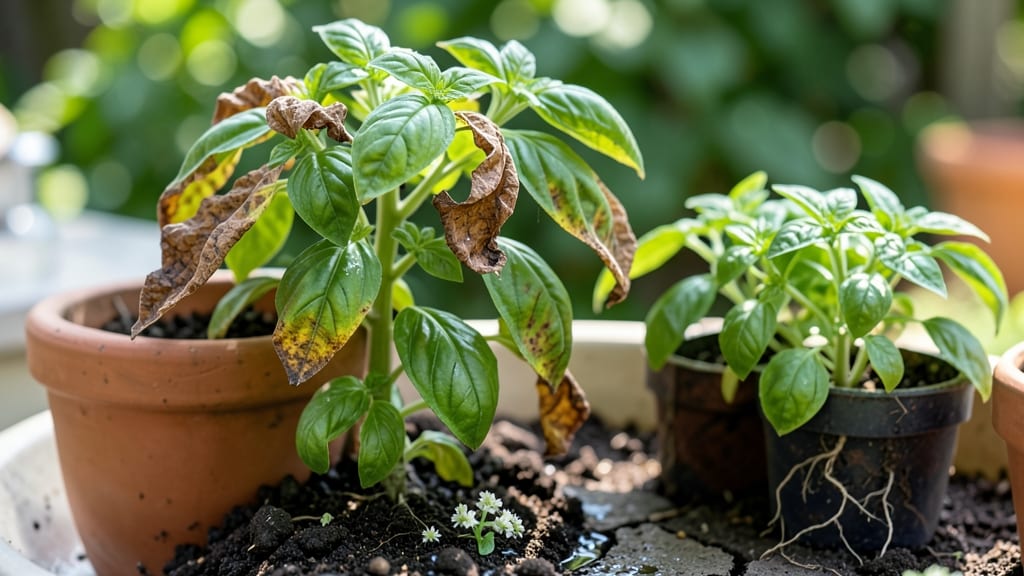
Brown leaves on your basil plant don't mean it's dying—it's just asking for help. 🌿 I've nursed back more "dead" basil than I can count, and the secret lies in pruning the right way and fixing light issues most gardeners overlook.
Start by checking the soil: if it's soggy, you're overwatering; if it's bone-dry, you're underwatering. Yellowing leaves with crispy brown edges? That's classic underwatering. Brown spots with a mushy center? Overwatering or fungal trouble.
Snip off the damaged leaves at the stem, and you'll see fresh growth within 10-14 days. The real game-changer is light. Basil craves 6+ hours of direct sun daily—if yours is in a shady spot, move it immediately. Even a few hours of afternoon sun makes a difference.
Prune back leggy stems to encourage bushier growth, and you'll have vibrant green leaves in no time. This works for both potted basil and garden beds. The key is acting fast—once the plant gets past the 50% leaf loss mark, recovery gets trickier. Let's bring yours back to life!
Root Causes Of Basil Leaf Browning
When your basil plant starts showing brown leaves, it’s often a cry for help from the plant itself. Understanding the underlying causes is the first step to reviving it. Below, we break down the most common reasons—each with a clear scientific explanation and actionable insights to address them.
Basil thrives in consistently moist but well-drained soil. When water accumulates in the roots due to overwatering or compacted soil, it leads to root rot—a fungal infection that cuts off oxygen and nutrients.
The plant responds by dropping leaves or turning them brown, starting from the edges and progressing inward.
Why it happens:
- Oxygen deprivation: Waterlogged roots suffocate, preventing them from absorbing nutrients and releasing toxins.
- Fungal growth: Excess moisture creates the perfect environment for pathogens like Pythium or Phytophthora, which attack root tissues.
- Nutrient imbalance: Overwatering flushes out essential minerals, weakening the plant’s cellular structure.
How to fix it:
- Check soil moisture by sticking your finger 1–2 inches deep—water only if it’s dry.
- Ensure pots have drainage holes and use a mix of potting soil with perlite or sand (30% amendment).
- If root rot is suspected, trim affected roots with sterilized scissors and repot in fresh, dry soil.
Basil is drought-tolerant but hates prolonged dryness, especially in hot conditions. When soil dries out, leaves lose turgor pressure, turning crispy and brown—often starting at the tips. Heat stress also accelerates transpiration, causing leaves to wilt and scorch.
Why it happens:
- Cellular dehydration: Without enough water, plant cells collapse, leading to necrosis (dead tissue).
- Oxidative damage: High temperatures increase reactive oxygen species (ROS), which break down chlorophyll and cell membranes.
- Root shrinkage: Roots retract from dry soil, reducing water uptake efficiency.
How to fix it:
- Water deeply when the top inch of soil feels dry, using lukewarm water to avoid shocking roots.
- Mulch with straw or coconut coir to retain moisture and regulate soil temperature.
- Move basil to partial shade (4–6 hours of morning sun) if temperatures exceed 90°F (32°C).
Basil is a heavy feeder and needs a balanced diet of nitrogen (N), phosphorus (P), and potassium (K). Deficiencies or fertilizer burn (too much salt) cause brown, crunchy leaves with yellowing between veins (chlorosis).
Over-fertilizing with synthetic salts also disrupts osmosis, leading to physiological drought—where roots can’t absorb water despite wet soil.
Why it happens:
- Nitrogen (N) deficiency: Leaves turn yellow between veins first, then brown as protein synthesis slows.
- Potassium (K) deficiency: Brown edges or "scorch marks" appear due to impaired water regulation and enzyme activity.
- Magnesium (Mg) deficiency: Interveinal chlorosis spreads from older leaves, followed by necrosis.
- Fertilizer burn: Excess salts (e.g., from synthetic fertilizers) draw water out of root cells via osmotic pressure, causing dehydration.
How to fix it:
- Flush soil with water to leach excess salts, then amend with compost or worm castings for slow-release nutrients.
- Use a balanced liquid fertilizer (e.g., 10-10-10) diluted to half-strength every 2–3 weeks.
- For magnesium deficiency, apply Epsom salt (1 tbsp per gallon of water) monthly.
Sap-sucking pests like spider mites, aphids, or whiteflies inject toxins while feeding, causing brown, stippled leaves. Fungal diseases (e.g., Alternaria or Septoria) thrive in humid conditions, creating dark brown spots with yellow halos. Bacteria like Xanthomonas cause bacterial leaf spot, which spreads rapidly in wet weather.
Why it happens:
- Pest damage: Mites pierce cells, releasing salivary enzymes that disrupt chlorophyll production.
- Fungal infection: Spores land on leaves, germinate in moisture, and release cellulolytic enzymes that digest plant tissue.
- Bacterial spread: Wet conditions allow bacteria to enter through stomata or wounds, clogging vascular tissue.
How to fix it:
- Inspect leaves undersides for pests—spray with neem oil (2%) or insecticidal soap for mild infestations.
- Remove severely infected leaves and apply copper fungicide or a baking soda spray (1 tsp baking soda + 1 quart water + a drop of dish soap) for fungal issues.
- Improve airflow by pruning crowded stems and avoid overhead watering.
Basil is sensitive to temperature extremes, wind, and sudden drafts. Cold snaps below 50°F (10°C) cause chilling injury, where cell membranes rupture and leaves turn brown. Strong winds desiccate leaves faster than they can photosynthesize, leading to transpirational loss.
Why it happens:
- Cold damage: Low temperatures increase ice crystal formation in cells, disrupting metabolism.
- Windburn: Rapid water loss from exposed leaves triggers oxidative stress, causing necrosis.
- Drafts from AC/heaters: Dry air reduces humidity below 40%, leading to physiological drought.
How to fix it:
- Protect basil from frost with row covers or move pots indoors near a sunny window.
- Place pots in a sheltered spot or use a windbreak (e.g., a mesh screen).
- Use a humidifier or pebble tray if indoor conditions are too dry.
By identifying the root cause, you can target the issue directly and restore your basil’s vibrant green leaves. Next up: Learn how pruning and light adjustments can revive your plant in our step-by-step guide!
Revive Your Basil Quickly
Wilted, brown leaves on your basil plant? Don’t toss it just yet—most cases are fixable with a few simple adjustments. Below, we’ve mapped out practical solutions tailored to the most common causes, from overwatering to pests, along with prevention tips to keep your basil lush and green.
Let’s get your plant back to its vibrant best!
If your basil’s leaves are yellowing at the edges or turning mushy brown, it’s likely drowning in excess moisture. Basil thrives in well-draining soil but despises soggy roots.
How to Fix It: 🔥 Stop Watering Immediately – Let the top 1–2 inches of soil dry out completely before watering again. 🍳 Check Your Pot’s Drainage – Ensure it has drainage holes.
If not, repot your basil into a container with holes or add a layer of perlite or coarse sand to improve airflow. 👨🍳 Repot if Needed – If the roots are rotting (black, mushy, or smelly), trim the damaged roots, replant in fresh potting mix for herbs, and avoid watering for 3–4 days. 🥘 Adjust Your Watering Routine – Water only when the soil feels dry (stick your finger in—if it’s damp, wait).
Basil prefers moderate moisture, not a swamp!
Prevention Tips:
✨ Use a self-watering pot with a moisture meter to avoid guesswork. 🌡️ Group basil with other herbs to create a microclimate that regulates humidity. 🎯 Avoid saucers without drainage—water should escape, not pool.
Basil loves bright, indirect light (6–8 hours daily). Too much sun causes scorched brown edges, while too little leads to weak, pale leaves.
How to Fix It:
🔥 Move to a Sunny Spot – Place your basil near a south- or west-facing window (or under grow lights if indoors). 🍳 Gradual Acclimation – If moving from shade to sun, do it slowly over 3–5 days to avoid shock. 👨🍳 Provide Afternoon Shade – If leaves are crispy from intense midday sun, use a sheer curtain or move the plant slightly back. 🥘 Rotate the Pot Weekly – Ensures even light exposure so the plant doesn’t lean.
Prevention Tips:
✨ Monitor leaf color—healthy basil leaves should be deep green, not yellow or brown. 💡 Use reflective surfaces (like a white wall or aluminum foil) to bounce extra light indoors. 🌿 Harvest regularly – Pruning encourages bushier growth, which can help shade lower leaves naturally.
Brown, crunchy, or spotted leaves often signal pests (aphids, spider mites, whiteflies) or fungal/bacterial infections like powdery mildew.
How to Fix It: 🔥 Inspect Leaves Closely – Look for tiny bugs, webbing, or white powdery residue.
Use a hand lens if needed. 🍳 Blast Off Pests – Spray leaves with neem oil (mix 1 tsp neem oil + 1 tsp mild soap + 1 quart water) or rub alcohol (70% isopropyl) on a cotton swab for stubborn bugs. 👨🍳 Prune Infected Parts – Snip off brown, spotted, or wilted leaves with sterilized scissors (wipe with rubbing alcohol). 🥘 Improve Airflow – Thin out crowded plants and space them 6–12 inches apart to reduce humidity (which pests love).
Prevention Tips:
🔪 Quarantine new plants for a week before adding them to your garden. ⏰ Water in the morning so leaves dry quickly, discouraging fungal growth. 💪 Strengthen your basil with a balanced fertilizer (like 10-10-10) every 4–6 weeks.
Basil is tender—it wilts or browns when exposed to frost, cold drafts, or scorching heat.
How to Fix It:
🔥 Protect from Cold – Move potted basil indoors or under a cover if temps drop below 50°F (10°C). 🍳 Shield from Wind – Place basil sheltered from strong breezes (use a windbreak or move to a leeward side of the garden). 👨🍳 Acclimate Slowly – If moving from indoors to outdoors, harden off by exposing it to outdoor conditions for 1–2 hours daily, increasing time over a week.
Prevention Tips:
🌡️ Avoid placing basil near vents, AC units, or drafty windows. 🎯 Use row covers in early spring or late fall for extra protection. ✨ Grow in containers for easy relocation if weather turns harsh.
- Trim the Damaged Leaves – Encourages new growth and redirects energy.
- Give It a "Basil Haircut" – Prune the top 1–2 inches to promote bushiness.
- Boost with Epsom Salt – Mix 1 tsp Epsom salt per gallon of water and water lightly to replenish magnesium (helps with leaf strength).
With these fixes, your basil should bounce back in 1–2 weeks—just give it consistent care, patience, and the right conditions. And remember: A little pruning goes a long way in keeping your basil happy and productive! 🌿🍃
Frequently asked questions
Why do basil leaves turn brown at the edges first?
Brown edges usually signal underwatering or high salt buildup from fertilizer. Basil leaves lose water through their edges first, so crispy brown tips mean the plant isn't getting enough moisture or nutrients. Check the soil—if it's dry 1 inch deep, water thoroughly. If you've been fertilizing heavily, flush the soil with plain water to remove excess salts.
Can I still use basil with brown spots?
Yes, but trim off the brown parts before using. Healthy green areas are perfectly safe to harvest. For severe cases (like fungal spots), remove the entire leaf. Brown spots from pests or disease won't harm you, but they can spread—so prune aggressively and treat the plant to prevent further damage. Always wash leaves before using in cooking.
How often should I prune basil to prevent browning?
Prune basil every 2-4 weeks to encourage bushy growth and prevent leggy stems that stress the plant. Always cut above a leaf node (where leaves meet the stem) to stimulate new branches. Never remove more than 1/3 of the plant at once, or you'll shock it. Regular pruning improves airflow, reducing humidity-related issues like fungal spots.
Is my basil dying if half the leaves are brown?
Not necessarily! Basil can recover from 50% leaf loss if the roots are healthy. Focus on fixing the root cause (water, light, or pests) and prune back the damaged growth. Within 2-3 weeks, you should see new shoots emerging from the stem base. If the stem itself turns brown or mushy, the plant may be beyond saving—check for root rot in that case.
Why does my indoor basil get brown leaves faster than outdoor basil?
Indoor basil struggles with low humidity and inconsistent light—both major causes of browning. Most homes have air that's too dry (especially with heating/AC), causing leaf edges to crisp. Place a pebble tray with water nearby or use a humidifier. Also, supplement with grow lights for 12-14 hours daily to mimic outdoor conditions.