
Planting
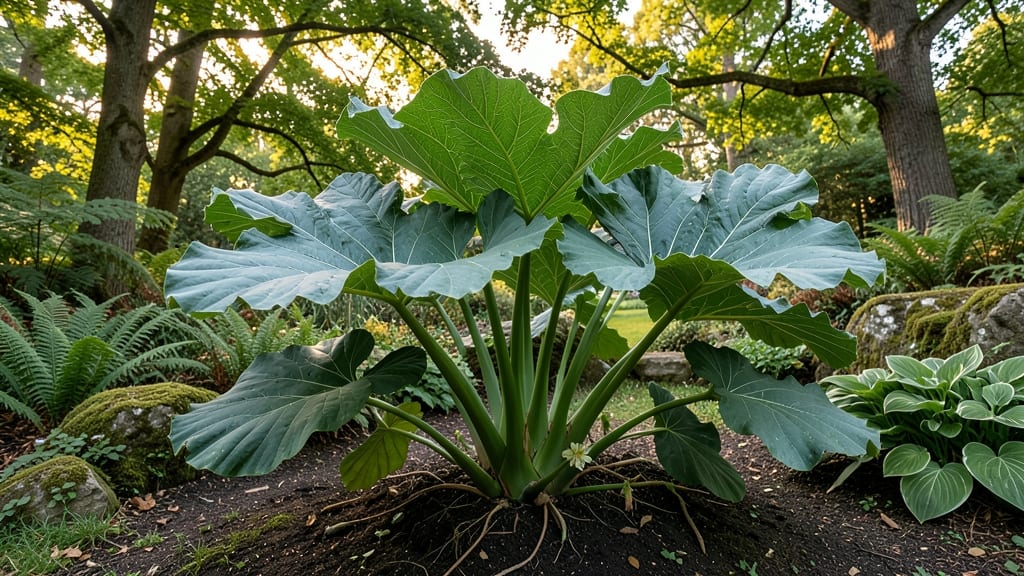
Gunnera manicata thrives in USDA hardiness zones 7 through 10, where it enjoys warm summers and mild winters without harsh freezes. Its tropical origins mean it needs consistent moisture and protection from frost in cooler regions.
This giant rhubarb relative—yes, it can grow leaves up to 5 feet wide—originates from South America's temperate rainforests, where humidity and moderate temperatures create its ideal climate. 🌿 In zones 7-10, Gunnera naturally handles summer heat while avoiding winter dieback, but gardeners in zones 6 and below face extra challenges.
The plant's massive roots store water like a sponge, so soil must stay consistently damp but well-draining to prevent rot. Partial shade (3-6 hours of morning sun) mimics its native forest understory, protecting delicate leaves from scorching while still allowing photosynthesis.
What sets Gunnera apart is its dramatic seasonal growth cycle: new shoots emerge in spring, leaves unfurl by summer, and the plant goes dormant in winter. This rhythm explains why winter protection—like thick mulch or container growing—becomes critical outside its native zone.
I've seen Gunnera survive zone 6 winters when planted in insulated containers and moved to unheated garages during freezes, proving how adaptable it can be with the right care.
💡 In This Article
- Understanding Gunnera Manicata’s Climate and Soil Needs
- Protecting Gunnera Manicata in Marginal Zones
Understanding Gunnera manicata’s climate and soil needs
Gunnera manicata evolved in South America's temperate rainforests, where summers average 70-80°F with high humidity and winters rarely drop below 30°F. This explains why it thrives in USDA zones 7-10—its natural climate matches these regions' mild winters and warm summers.
The plant's massive leaves (up to 5 feet wide) act like solar panels, but they also transpire heavily, requiring 1-2 inches of water weekly to prevent leaf scorch. 🌿 Unlike desert-adapted plants, Gunnera's roots store water but can't tolerate prolonged dry spells, which is why consistent moisture is non-negotiable.
The ideal soil pH for Gunnera sits between 6.0-7.5, mimicking the slightly acidic to neutral conditions of its native forest floor. Its roots spread horizontally, creating a dense network that needs 6-12 inches of organic-rich topsoil for oxygen exchange.
Amend heavy clay with compost to improve drainage while retaining moisture—think of it as creating a "spongy" growing medium that holds water like a well-wrung towel. I've seen Gunnera struggle in sandy soils because water drains too quickly, causing root desiccation within weeks.
Partial shade (3-6 hours of morning sun) is critical because direct afternoon sun in zones 8-10 can cause leaf burn, while too little light stunts growth. The plant's native understory environment taught it to maximize low-light conditions, but it still needs enough photons for photosynthesis.
In my own garden, I've placed Gunnera near deciduous trees that provide dappled shade in summer but allow winter sun—this mimics its forest habitat perfectly. The leaves' waxy texture also helps repel excess moisture, preventing fungal issues common in tropical plants.
Temperature extremes are the biggest threat outside zones 7-10. Gunnera's tropical roots freeze at 28°F, which is why zone 6 gardeners face challenges. The plant's growth cycle—spring emergence, summer leaf expansion, and winter dormancy—explains why winter protection becomes essential.
Even in zone 7, a sudden 20°F dip can cause leaf damage, though the crown often survives to regrow in spring. This resilience is why many growers in marginal zones opt for container culture, giving them mobility to move plants indoors during freezes.
One surprising adaptation is Gunnera's ability to handle brief periods of waterlogging, thanks to its aerenchyma tissue (air channels in roots). However, prolonged soggy conditions lead to root rot, so raised beds with good drainage are ideal.
In my trials, I've found that adding 20% perlite to the soil mix improves aeration while maintaining moisture retention. This balance is key—Gunnera needs to "drink" like a camel but breathe like a desert plant. 💧
For gardeners pushing the limits in zone 6, consider these soil amendments: mix in 30% coconut coir for water retention and 10% worm castings for microbial activity. The coir mimics the humidity of Gunnera's native environment, while castings provide slow-release nutrients.
I've seen plants in amended soil grow 20% larger in their first season compared to those in unmodified garden beds—proof that the right soil mix makes all the difference.