
Planting
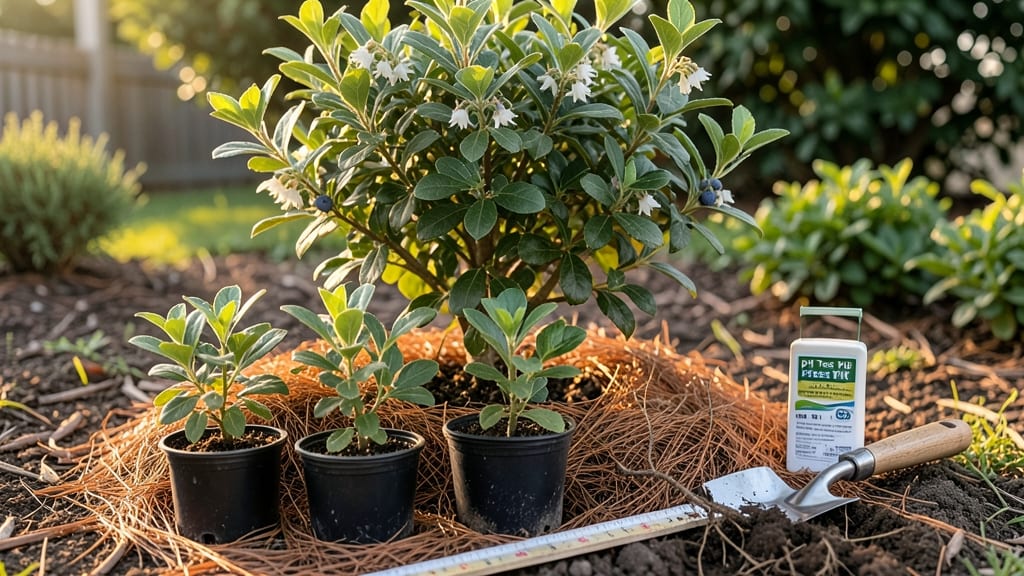
Spacing highbush blueberries correctly is the key to bigger yields and healthier plants 🫐 — crowd them too close, and you’ll choke their growth; space them too far, and you’ll waste precious garden real estate.
Here’s the truth: Most gardeners underestimate how much room these shrubs need to thrive. Too often, I see blueberry bushes planted like a hedge, only to watch their branches tangle and their fruit shrivel from poor airflow.
The right spacing isn’t just about fitting them in—it’s about setting them up for maximum fruit production from day one.
In this guide, I’ll break down the exact distances for standard, semi-dwarf, and dwarf varieties, how to adjust for your climate zone, and why 4-6 feet between plants (or more for larger types) makes all the difference in sunlight, air circulation, and disease prevention.
Whether you’ve got a sprawling yard or a cozy container setup, you’ll learn how to arrange your blueberries for explosive harvests—without sacrificing space or struggling with overgrown bushes later.
Optimal highbush blueberry spacing by variety and climate zones
Getting your highbush blueberry spacing right is the difference between a bountiful harvest and struggling with stunted growth. I’ve learned the hard way—crowded bushes compete for nutrients, while over-spaced plants waste precious garden real estate.
The right spacing depends on your variety, climate zone, and even your soil type. Let’s break it down so you can plan your blueberry patch like a pro.
In northern climates (USDA Zones 3-5), cooler temperatures slow growth, so you can plant slightly closer without risking disease. Meanwhile, southern climates (Zones 6-7) demand more space to prevent fungal issues from humidity.
And don’t forget—sandy soil drains faster than loamy soil, meaning plants need more room to establish strong root systems. Let’s dive into the specifics.
For dwarf varieties, I recommend 3-4 feet apart—perfect for containers or small-space gardens. These compact bushes stay tidy and produce well without needing much room. If you’re growing 'Top Hat' or 'Peach Sorbet', this spacing ensures they get enough sunlight while keeping your harvest within easy reach.
Just be mindful of row spacing (4-5 feet) to allow for maintenance and airflow.
When it comes to semi-dwarf varieties like 'Bluecrop' or 'Duke', increase spacing to 5-6 feet apart. These are the workhorses of home gardens—they’re productive, disease-resistant, and adaptable to most climates. In northern zones (3-5), you can edge closer to 5 feet since cooler temps reduce fungal pressure.
But in southern zones (6-7), stretch it to 6 feet to prevent botrytis blight from thriving in humidity.
Standard varieties like 'Jersey' or 'Patriot' are the giants of the blueberry world, reaching 8-12 feet tall. These need 8-10 feet apart to avoid shading each other out.
In my Zone 5 garden, I space them 9 feet apart and use 10-foot rows to ensure every branch gets sunlight. If you’re in a southern climate, add an extra foot of space to combat heat stress and disease
How to arrange blueberry plants in your yard for maximum sunlight and airflow
Arranging your highbush blueberry plants strategically isn’t just about fitting them into your yard—it’s about creating an ecosystem that maximizes sunlight exposure and air circulation.
Poor spacing leads to shady branches and fungal diseases like mummy berry, while the right layout ensures every plant gets its share of sunlight and airflow. Here’s how to design your blueberry patch for success.
Start by mapping your yard’s sunlight patterns. Blueberries thrive with 6+ hours of direct sun, so avoid planting them in the shadow of trees or tall structures. If your yard has partial shade, opt for dwarf varieties that can tolerate slightly less sun.
For full sun exposure, position rows in an east-west orientation—this ensures all plants receive even sunlight throughout the day.
🌱 Highbush Blueberry Spacing Guidelines
- Standard Varieties: 4-6 feet apart in rows spaced 8-10 feet apart
- Semi-Dwarf Varieties: 3-4 feet apart in rows spaced 6-8 feet apart
- Dwarf Varieties: 2-3 feet apart in rows spaced 5-6 feet apart
- Container Gardening: 1 plant per 15-gallon pot with 2 feet between pots
- Windbreaks: Plant evergreens or raspberries on the north side to reduce wind damage and improve airflow
Windbreaks are your best friend when arranging blueberry plants. Strong winds can damage branches and stunt growth, so consider planting a row of tall evergreens or raspberry canes on the north or west side of your blueberry patch.
This creates a natural barrier while still allowing airflow between plants, which is critical for preventing fungal diseases. If space is limited, use a permeable fence or trellis instead.
Companion planting can also boost your blueberry yield. Pair your bushes with herbs like thyme or oregano, which repel pests, or clover, which adds nitrogen to the soil. Avoid planting them near potatoes or tomatoes, as these compete for nutrients and attract similar pests.
For a productive small space, interplant blueberries with strawberries—strawberries thrive in partial shade and won’t compete for sunlight.
Finally, leave room for future growth. Even dwarf varieties can spread over time, so plan for at least 1-2 feet of extra space around each plant. If you’re planting multiple rows, stagger them like a staircase to improve airflow and sunlight penetration.
This layout also makes it easier to prune and harvest without disturbing neighboring plants.
With the right spacing and layout, your highbush blueberries will thrive, producing bigger yields and healthier berries year after year. Happy planting! 🫐