
Planting
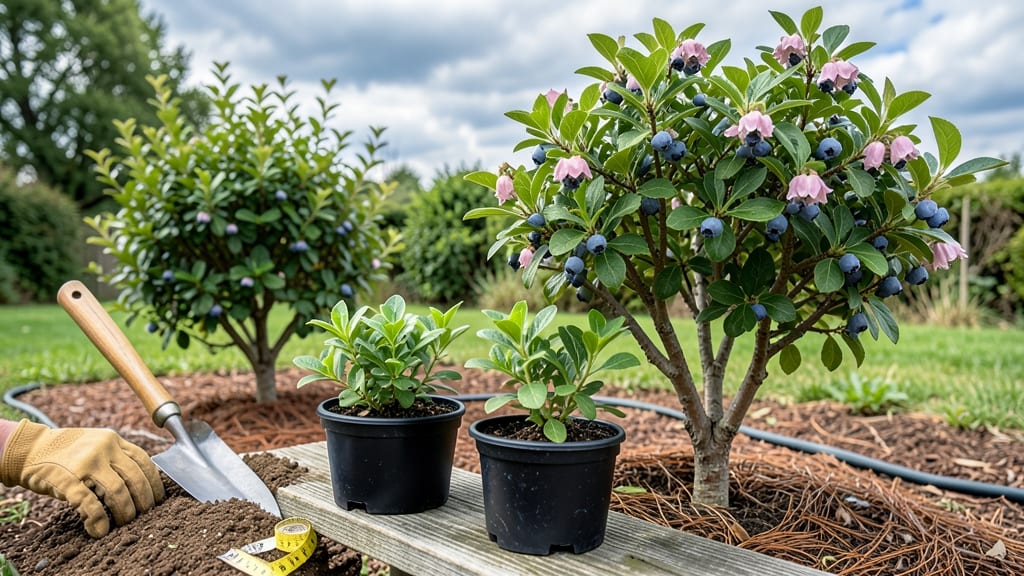
To plant blueberry bushes too close will limit their growth and fruit production, so proper spacing varies by variety: dwarf bushes need 3–4 feet apart, semi-dwarf types require 4–5 feet, and standard varieties should have 5–6 feet between plants. The root system (bare-root or container-grown) also influences how much room each plant needs for healthy airflow and sunlight penetration.
Blueberry bushes thrive when they have enough space to develop strong root systems and access sunlight without competing with neighbors. 🌱 Dwarf varieties, like 'Top Hat' or 'Peach Sorbet,' stay compact but still need room to breathe—crowding them can lead to smaller berries and weaker stems.
Semi-dwarf types, such as 'Bluecrop,' strike a balance between space efficiency and productivity, while standard varieties like 'Jersey' spread wider over time, requiring more distance to prevent overcrowding.
Container-grown bushes often need slightly more spacing than bare-root plants because their roots are already established in a confined space, so they'll expand faster once planted.
For small gardens, consider planting in clusters with 3–4 feet between bushes to create a natural hedgerow effect, while larger spaces allow for traditional rows with 5–6 feet spacing. Companion plants like ferns or low-growing perennials can help fill gaps without stealing nutrients.
If you're unsure about your variety's mature size, check the plant tag or consult a local nursery—they often provide spacing recommendations based on your climate zone.
💡 In This Article
- Blueberry Bush Spacing Science: Root Systems and Growth Habits
- Optimal Blueberry Plant Layouts for Small vs. Large Gardens
Blueberry bush spacing science: root systems and growth habits
Blueberry bushes develop a unique root system that spreads horizontally just beneath the soil surface—typically within the top 6–12 inches—while sending out shallow lateral roots that can extend 2–3 feet outward from the trunk. This shallow network means they're highly sensitive to competition for water and nutrients.
When bushes are planted too close, their root zones overlap, creating a "nutrient vacuum" where each plant fights for the same resources. 🌱 The result? Stunted growth, smaller berries, and increased susceptibility to diseases like root rot, which thrives in crowded, poorly ventilated conditions.
Variety genetics play a huge role in determining spacing needs. Dwarf varieties like 'Patriot' or 'Sunshine Blue' are bred to stay under 3 feet tall and wide, making them ideal for small spaces, but even these need 3–4 feet between plants to prevent root competition.
Semi-dwarf types such as 'Bluecrop' or 'Duke' mature at 4–5 feet tall with a spread of 4–6 feet, while standard varieties like 'Jersey' or 'Stanley' can reach 6–8 feet tall and wide.
The key difference lies in their genetic growth regulators—dwarf varieties have naturally suppressed growth hormones, while standard types produce more auxin, a plant hormone that promotes taller, bushier growth.
Root type also affects spacing requirements. Bare-root plants have less established root systems when planted, so they'll spread more gradually, allowing for slightly tighter initial spacing (3 feet for dwarfs).
Container-grown bushes, however, arrive with roots already confined to a pot, which can cause them to expand more aggressively once planted.
These should get 4–5 feet of space to accommodate their rapid early growth. 🌿 The soil's organic matter content matters too—rich, well-draining soil allows roots to spread more efficiently, reducing the need for extra spacing compared to heavy clay soils where roots grow more slowly and compactly.
Another critical factor is the bush's canopy size. Blueberries develop a dense, rounded canopy that requires sunlight penetration to all parts of the plant for optimal fruiting. When bushes are too close, the inner branches become shaded, leading to reduced photosynthesis and lower yields.
This is why standard varieties often need 5–6 feet between plants—it ensures sunlight reaches the center of the bush while allowing airflow to prevent fungal diseases like powdery mildew, which thrives in humid, stagnant conditions.
Consider this real-world example: In a commercial blueberry farm in Oregon, researchers found that 'Duke' blueberry bushes spaced 5 feet apart produced 20% more berries per plant than those spaced 4 feet apart, despite having the same number of plants per acre.
The extra space allowed for better root development and canopy growth, resulting in larger, higher-quality berries. This demonstrates how even small adjustments in spacing can significantly impact yield and fruit quality.
For home gardeners, the best practice is to visualize your bushes at their mature size before planting. Use a garden hose or string to mark out the spacing—this helps prevent overcrowding and makes it easier to maintain proper distances as the plants grow.
If you're planting in rows, leave 8–10 feet between rows to allow for mowing or weeding equipment to pass through comfortably.