
Planting
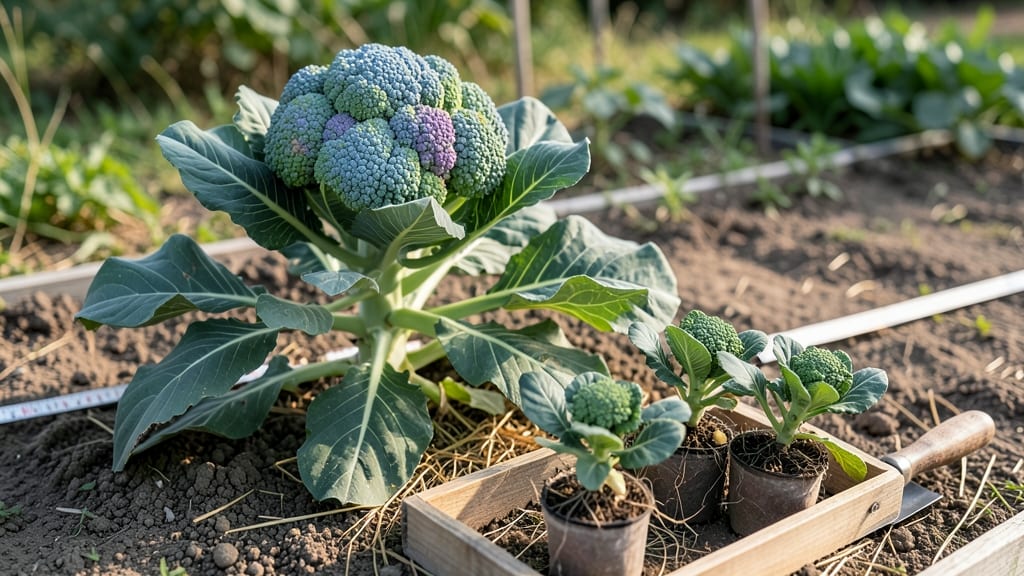
Planting broccoli too close steals their nutrients and air—18-24 inches apart gives each plant room to grow those thick, flavorful heads you crave. 🌱 I learned the hard way when my first crop turned into puny, bitter stalks because I crammed them like carrots.
The right spacing means fewer pests, better airflow, and heads that stay compact instead of leggy and sad. Broccoli thrives in 12-18 inches of row spacing, too—close enough to save space but far enough to avoid crowding.
If you’re short on room, try interplanting with fast-growing greens like lettuce or radishes, which mature before broccoli needs full sunlight. Just avoid planting near strawberries or tomatoes, which compete for the same nutrients and attract similar pests.
With proper spacing, you’ll harvest multiple heads per plant over weeks, not just one sad, undersized crown. The first cut should be when the head is tight and dark green—wait too long, and it bolts into bitter flowers.
The secret? Consistent water (1-1.5 inches per week) and mulch to keep roots cool and moist. For small gardens, square-foot planting works wonders—4 plants per square foot gives you 16-20 broccoli plants in just 4 square feet of space.
And if you’re worried about pests, interplant with dill or onions to confuse cabbage worms naturally. Trust me, your future self will thank you for the extra elbow room.
📚 In This Guide
- What you need
- Instructions
- Tips and common mistakes
- Wrapping up and next steps
What you need
- ● Broccoli seeds or seedlings: Choose cold-hardy varieties like Calabrese or De Cicco (check your USDA zone for best fits).
- ● Quantity: 10–20 seeds (or 5–10 seedlings) for a small garden; scale up for larger harvests.
- ● Well-draining soil: pH 6.0–7.0 (test with a soil kit or meter).
- ● Amend with compost (1–2 inches mixed into top 6–12 inches of soil).
- ● Fertilizer: Balanced 10-10-10 or organic compost tea (apply at planting and mid-growth).
- ● Avoid high-nitrogen fertilizers (they promote leafy growth over heads).
- ● Watering tools: Watering can or hose with a gentle spray nozzle (broccoli hates soggy roots!).
- ○ Drip irrigation system (optional but ideal for consistent moisture).
- ● Planting markers: Biodegradable labels or popsicle sticks to track spacing (critical for how close to plant broccoli!).
- ● Mulch: Straw or shredded leaves (2–3 inches) to retain moisture and suppress weeds.
- ● Row covers: Lightweight fabric to protect seedlings from pests or frost (remove when plants are 4–6 inches tall).
- ● Epsom salt: 1 tablespoon dissolved in a gallon of water (foliar spray for magnesium boost).
- ● Container gardening? 5–7 gallon pots per plant (with drainage holes) + potting mix.
How to space broccoli plants for maximum yield and head size
Think of broccoli spacing like a good party—too close and everyone gets crowded, too far and you waste space. Here's how to get it right.
🌱 Step 1: Plan Your Layout Based on Variety
Broccoli comes in two main types that dictate spacing: standard bush varieties and hybrid varieties bred for compact growth. For standard bush broccoli like 'Calabrese' or 'Waltham 29', give each plant 18-24 inches between them. This gives roots room to spread and heads plenty of space to develop without competing for sunlight.
Compact or dwarf varieties like 'Little Sprint' or 'Tasty Bite' only need 12-16 inches of space. I always check the seed packet first—it's the best source for variety-specific spacing. If you're planting in rows, space rows 24-36 inches apart to allow for easy access and airflow between plants.
☀️ Step 2: Position for Sunlight and Airflow
Broccoli thrives in full sun—at least 6-8 hours of direct sunlight daily. When planting, place each seedling where it will receive morning sun and afternoon shade if your climate gets scorching afternoons. You'll see leggy, pale stems if plants are too shaded—they're stretching desperately for light.
Airflow is just as important as sunlight. Crowded plants create humid microclimates that invite fungal diseases like downy mildew. Space plants according to their mature size (not just seedlings) to ensure they're never rubbing against neighbors as they grow. If you're planting in containers, use 1-gallon pots for each plant to give roots the same room they'd have in the ground.
🌿 Step 3: Adjust for Soil Type and Climate
Heavy clay soil or wet climates need slightly more space—24 inches between plants—because roots struggle to spread in dense conditions. Amend the soil with compost to improve drainage and aeration, which helps roots grow outward naturally. In well-draining, loamy soil, you can plant closer to the 18-inch minimum without sacrificing head size.
Cooler climates also benefit from slightly tighter spacing—18 inches—because plants grow more slowly and don't outcompete each other as quickly. In hotter regions, stretch to 24 inches to prevent stress from heat and drought. Watch for wilting leaves in the afternoon heat; that's your cue to increase spacing or provide afternoon shade.
⏰ Step 4: Thin Seedlings to Proper Spacing
If you're starting from seed, sow them ½ inch deep and 1 inch apart, then thin to your target spacing once seedlings have 3-4 true leaves. Use sharp scissors to snip unwanted seedlings at soil level—pulling risks disturbing roots of neighboring plants. Keep the strongest seedling in each spot; weak ones won't recover.
Thinning might seem cruel, but it's the best way to ensure each plant gets the resources it needs. You'll see a noticeable difference in head size and plant vigor after thinning. If you're short on space, prioritize planting the largest, healthiest seedlings first—they'll produce the biggest heads.
🪴 Step 5: Maintain Spacing Through the Season
Broccoli plants will naturally spread as they mature, so monitor their growth and adjust mulch or neighboring plants as needed. Add 2-3 inches of mulch around each plant to suppress weeds and retain moisture—just keep it 2 inches away from the stem to prevent rot.
If you notice leaves touching between plants, gently separate them or prune the smallest leaves to improve airflow. You'll know you've got the spacing right when plants look upright, bushy, and vibrant green without signs of stress. Avoid over-fertilizing nitrogen-heavy foods; it encourages leafy growth at the expense of head development.
Tips & tricks for perfect broccoli spacing
Let me save you the trial-and-error I went through—these are the spacing secrets that transformed my garden from scraggly stalks to head-turning harvests.
Variety Matters: The 18-24 inch spacing for standard bush varieties isn't arbitrary—it matches their mature root spread. I learned this the hard way after planting 'Calabrese' too close and getting tiny, bitter heads. For compact varieties like 'Little Sprint', those 12-16 inches are perfect because their roots stay contained. Always check your seed packet—it's your spacing bible!
Sunlight Strategy: That 6-8 hours of sunlight isn't just about light—it's about timing. I now plant with morning sun as the priority, especially in hot climates. The afternoon shade becomes crucial when temps hit 90°F. You'll know you've got it right when plants stand tall instead of stretching like they're reaching for the sky.
Soil-Specific Adjustments: Heavy clay soil? Give those roots extra room—the 24 inch spacing prevents waterlogging. In loamy soil, you can snuggle down to 18 inches. I test soil drainage by doing the squeeze test: if it holds a shape when squeezed, it's too dense. Amend with compost to create that perfect crumbly texture roots love.
Thinning Technique: Those 3-4 true leaves are your cue—wait no longer! I use clean scissors to snip at soil level, keeping the strongest seedling. The shock might look brutal, but you'll see the difference in head size within weeks. Pro tip: Thin on a cloudy day to reduce stress on the remaining plants.
Pro Tips for How Close To Plant Broccoli
- Let me save you the trial-and-error I went through—these are the spacing secrets that transformed my garden from scra...
- Variety Matters: The 18-24 inch spacing for standard bush varieties isn't arbitrary—it matches their mature root spre...
- Sunlight Strategy: That 6-8 hours of sunlight isn't just about light—it's about timing. I now plant with morning sun ...
Frequently asked questions
Got questions about planting broccoli? You’re not alone! Here are some of the most common concerns—and straightforward answers—to help you grow those perfect, bushy heads.
How far apart should I plant broccoli seedlings?
Space broccoli seedlings 18–24 inches apart in rows that are 24–36 inches apart. This gives roots room to spread and allows sunlight to reach all plants, preventing crowded, stunted growth. For container gardening, use 12-inch pots with 1 plant per pot.
Can I plant broccoli too close together?
Yes! Overcrowding leads to smaller heads, poor air circulation (which invites pests/disease), and competition for nutrients. If you’ve already planted too close, thin seedlings to the recommended spacing or transplant extras to a new spot. Pro tip: Use a ruler or spacing grid to mark rows before planting.
What’s the best time to plant broccoli for a fall harvest?
Broccoli thrives in cool weather. For fall harvests, plant 8–10 weeks before your first frost date (e.g., late summer in warm climates, early summer in cooler zones). Check your USDA zone and seed packet for exact timing—broccoli needs 60–90 days to mature.
Can I plant broccoli next to other vegetables?
Broccoli pairs well with onions, garlic, lettuce, celery, and spinach (they share similar growing conditions). Avoid planting near tomatoes, strawberries, or cabbage family plants (like Brussels sprouts), as they compete for nutrients or attract shared pests.
Why is my broccoli growing tall but not forming heads?
This usually means your plants are too crowded, not getting enough sunlight, or stressed by heat. Check spacing, thin if needed, and ensure they receive 6+ hours of sun daily. If temperatures rise above 80°F (27°C), broccoli may bolt (flower prematurely). Use shade cloth or plant in partial shade to delay bolting.
Wrapping up and next steps
Planting broccoli at the right distance is your secret weapon for bushy, thriving heads—and you’ve got all the know-how now! 🌱 Whether you’re squeezing in a small garden or maximizing a raised bed, proper spacing ensures strong plants, fewer pests, and a bountiful harvest.
With these tips, you’re well on your way to growing the juiciest, most flavorful broccoli your neighborhood has ever seen.
Ready to dig in? Start by prepping your soil—amend it with compost, mark your rows with stakes or string, and plant those seeds or transplants with confidence. Soon, you’ll be savoring homegrown goodness straight from your garden! 🥦✨