
Planting
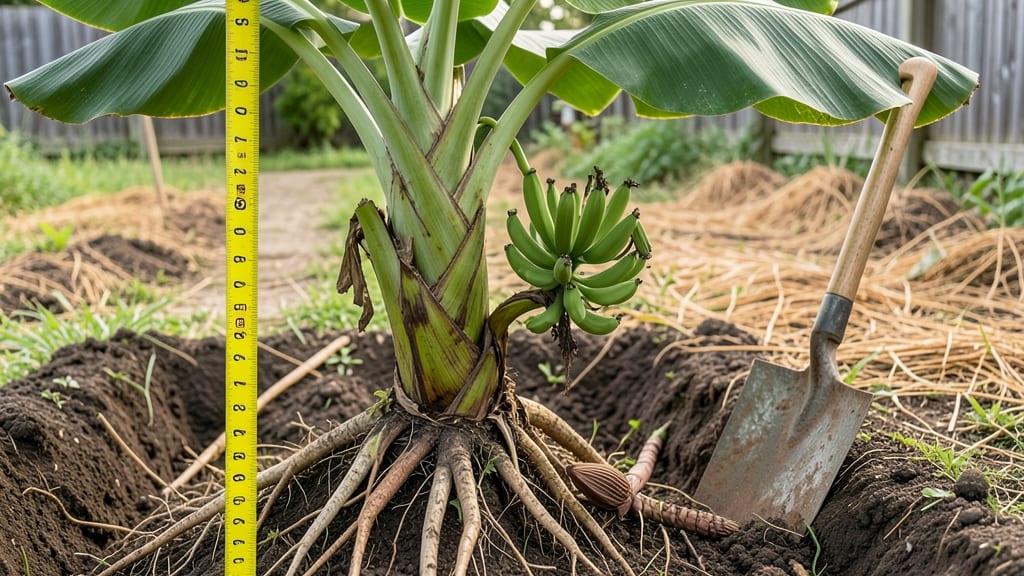
Banana tree roots spread 3–5 feet deep and can stretch 10–15 feet wide—far beyond what most gardeners expect, which is why proper spacing makes all the difference.
Picture this: you’ve just planted your 🍌 banana tree in Zone 6a, excited to harvest year-round, only to watch neighboring plants wilt or your soil dry out faster than expected. That’s the power of those hidden roots at work.
Understanding how deep banana tree roots grow isn’t just about avoiding competition—it’s about drainage, nutrient access, and even how much space your tree will need as it matures. Get this wrong, and you’re looking at stunted growth or stressed plants.
In this guide, I’ll break down the science behind banana tree roots, share spacing rules to keep your garden thriving, and reveal the 3 biggest mistakes that sabotage growth before it even starts.
Banana tree root depth explained: how far down and wide they spread
If you've ever wondered how deep banana tree roots go—or how much space they truly need—I've got the answers. Banana trees (Musa spp.) develop a fibrous root system that spreads both deep and wide, unlike shallow-rooted plants.
This unique structure helps them access water and nutrients efficiently, especially in tropical climates where they thrive.
The primary root depth of a mature banana tree typically reaches 3 to 5 feet below the soil surface. Meanwhile, the lateral roots can spread 10 to 15 feet outward, creating a vast network. This explains why banana trees need plenty of space—both vertically and horizontally—to avoid competition and thrive.
Here’s a quick breakdown of their root zones to visualize how they grow:
| Root Zone | Depth (Feet) | Spread (Feet) | Key Function |
|---|---|---|---|
| Primary Taproot | 3-5 | N/A | Anchors tree; accesses deep water |
| Lateral Roots | 0-2 | 10-15 | Absorbs nutrients; spreads wide |
| Feeder Roots | 0-1 | 5-8 | Fine roots for water/nutrients |
Soil type plays a huge role in how these roots develop. In sandy soil, roots grow deeper and faster to reach moisture, while clay soil can restrict lateral spread, forcing roots to stay shallow.
If your soil is heavy, amending it with compost or organic matter helps roots penetrate more easily.
For container-grown banana trees, the roots will adapt but still need deep pots (at least 2 feet deep) to mimic their natural depth. Without enough space, roots become root-bound, leading to stunted growth and poor fruit production. Always choose containers with drainage holes to prevent waterlogging.
Another common question: Can banana trees share space with other plants? The answer is no, at least not for mature trees. Their aggressive lateral spread means they’ll outcompete nearby crops for water and nutrients.
If you’re planting near vegetables, keep them at least 10 feet away from the banana tree’s trunk.
In tropical climates, banana trees grow year-round, so their roots are always active. In cooler zones, they may go dormant in winter, but the root system remains intact.
This means you can replant in the same spot without disturbing the roots—just avoid digging too close to the trunk to prevent damage.
One pro tip: If you’re planting multiple banana trees, space them 15 feet apart for standard varieties. For dwarf varieties like Dwarf Cavendish, 8-10 feet is sufficient. This spacing ensures each tree has enough room for its roots to spread without crowding.
Understanding root depth also helps with mulching. A 3-inch layer of organic mulch around the base protects roots from temperature fluctuations and retains moisture. Just keep the mulch 6 inches away from the trunk to prevent rot.
If you’re growing banana trees in urban gardens or small spaces, consider container growing or pruning older leaves to redirect energy to root growth. With the right care, even limited spaces can support healthy banana trees—just give those roots the room they need!
Proper spacing rules for banana trees to prevent root competition
Banana trees need plenty of space to thrive, and proper spacing rules prevent root competition that stunts growth. Their roots spread 10–15 feet wide and dig 3–5 feet deep, so crowding them leads to nutrient theft and weak plants.
I’ve learned the hard way—planting two mature banana trees too close results in yellowing leaves and fewer fruits!
For standard banana varieties, space them 10–15 feet apart in well-draining soil. Dwarf varieties like ‘Dwarf Cavendish’ can handle 5–8 feet between plants. If your garden is small, consider container growing with at least 3 feet of diameter per tree to mimic outdoor spacing.
Container growing is a game-changer for urban gardeners. Use large pots (20+ gallons) with drainage holes and fill them with a mix of peat moss, perlite, and compost. This mimics the deep, airy soil bananas love. Just remember—containers dry out faster, so water every 2–3 days in hot weather!
Pros & Cons of Banana Tree Spacing
- Maximizes fruit yield
- Reduces disease risk
- Allows full root spread
- Stunted growth
- Nutrient competition
- Increased pests
One common mistake I see is planting banana trees too close to shallow-rooted crops like lettuce or strawberries. Their roots compete for water and nutrients, leaving both plants struggling. Instead, pair bananas with deep-rooted companions like citrus trees or legumes, which enrich the soil without stealing resources.
If you’re dealing with an overcrowded banana patch, don’t panic! Prune older pseudostems (the "trunks") to redirect energy to healthier growth. You can also transplant smaller trees to give them more space. Just water them deeply for 2 weeks before and after moving to reduce shock.
Remember, bananas are heavy feeders. When spaced correctly, they reward you with larger, sweeter fruit and fewer pests. Start with the right spacing, and your banana trees will thrive for years to come! 🍌🌱