
Planting
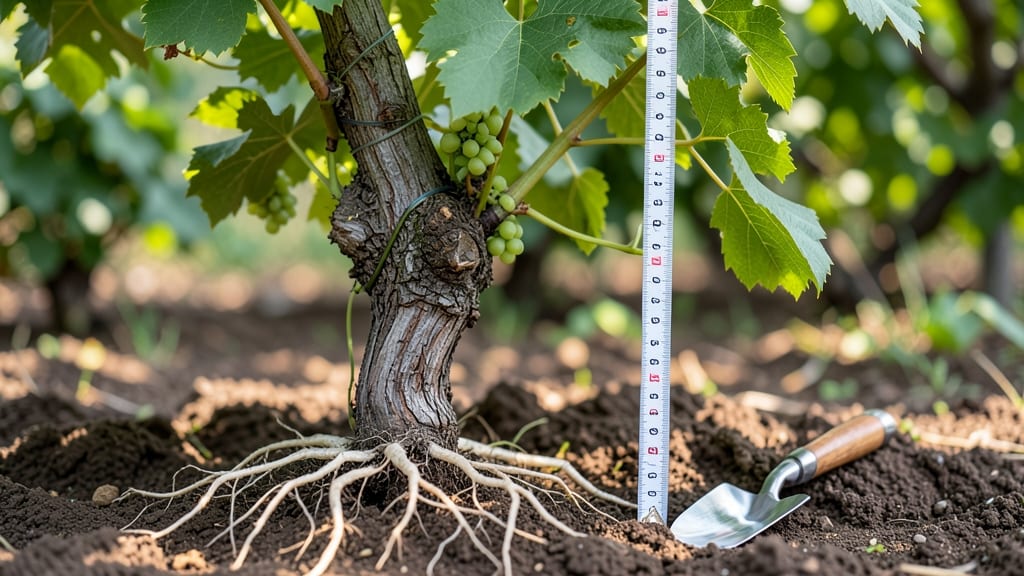
How deep grapevine roots can grow is often surprising—they frequently extend 10 feet or more while spreading widely to access water and nutrients 🍇.
Did you know they can stretch deeper than you might expect—sometimes reaching over 10 feet—while also spreading horizontally to claim more space? Understanding their underground behavior is critical for proper planting, pruning, and vineyard management.
If you’ve ever wondered why your grapevines struggle despite regular watering, the answer might lie in their roots. Shallow planting or compacted soil can stunt their growth, leading to weaker vines and smaller harvests.
In this guide, I’ll break down how deep grapevine roots typically grow, what affects their spread, and how to adjust your planting and care routine for healthier vines.
Grapevine root depth by variety: how far down do they grow?
When planting grapevines, most gardeners focus on the aboveground growth—those lush canopies and fruit-laden clusters—but what happens below the soil is just as critical. Grapevine roots can extend 3 to 10 feet deep, depending on the variety and growing conditions.
Understanding these patterns helps you optimize planting depth, improve water retention, and avoid root damage during maintenance.
Deep-rooted varieties like Cabernet Sauvignon and Syrah thrive in well-drained soils where roots can explore deeper layers for moisture and nutrients. In contrast, shallower-rooted types like Pinot Noir rely more on consistent surface moisture. Soil composition—whether clay-heavy, sandy, or loamy—also plays a pivotal role in how far roots penetrate.
Research from University of California Davis confirms that grapevine roots often follow a tapered root system, with the majority of feeder roots concentrated in the top 2 to 3 feet of soil. However, anchor roots can extend much deeper, especially in drought-prone regions where vines seek groundwater.
Here’s a breakdown of root depths by popular grapevine varieties, along with soil considerations to maximize growth:
| Variety | Root Depth (Feet) | Lateral Spread (Feet) | Soil Preference | Notes |
|---|---|---|---|---|
| Cabernet Sauvignon | 8–10 | 6–10 | Well-drained, rocky | Deep roots seek water; avoid compacted clay. |
| Chardonnay | 5–7 | 5–8 | Loamy, slightly acidic | Sensitive to waterlogging; needs aerated soil. |
| Pinot Noir | 3–5 | 4–6 | Moist, fertile | Shallow roots; mulch to retain moisture. |
| Syrah/Shiraz | 7–9 | 6–9 | Gravelly, warm | Thrives in Mediterranean climates; drought-tolerant. |
| Merlot | 4–6 | 5–7 | Moderately fertile | Balanced root system; adaptable to varied soils. |
Soil type dramatically influences root depth. In sandy soils, roots spread wider but may not penetrate as deeply, while clay soils can restrict downward growth unless amended with organic matter.
For example, Cabernet Sauvignon in rocky terrain might develop deeper roots to bypass shallow obstacles, whereas Pinot Noir in loamy soil stays more shallow but dense.
To encourage healthy root development, avoid planting grapevines in waterlogged areas or soils with high clay content unless you’ve amended them with compost or sand. A deep planting hole (18–24 inches) gives roots room to establish before encountering compacted layers.
For container-grown vines, ensure pots have drainage holes and use a well-aerated potting mix to prevent root suffocation.
Scientific studies, including those from Wine Australia, highlight that rootstock choice also affects depth. Grafting grapevines onto deep-rooting rootstocks like 1103 Paulsen or 140 Ruggeri can push roots 10+ feet deep, improving drought resistance.
If you’re planting in arid climates, select rootstocks known for deep penetration to access groundwater.
Monitoring root health is easier than you think. Look for yellowing leaves or stunted growth, which may signal shallow roots struggling for nutrients. In such cases, deep watering (1–2 feet down) or soil aeration can help roots explore deeper layers.
For established vines, a soil probe test every few years reveals root density and depth.
Pro tip: If you’re planting multiple grapevines, space them 8–12 feet apart to prevent root competition. Deep-rooted varieties like Syrah can outcompete shallower types for water, leading to uneven ripening or reduced yields. Always match root depth to your local soil profile and climate conditions for the best results.
Understanding your grapevine’s root habits isn’t just academic—it’s practical. Whether you’re designing a home vineyard or managing a commercial orchard, root depth dictates everything from irrigation schedules to pruning strategies. Dig deeper (literally) to unlock the full potential of your vines! 🌱🍇
How grapevine roots spread horizontally: space and soil considerations
Grapevine roots don't just grow deep—they spread horizontally with surprising aggressiveness. While the canopy might only reach 10–15 feet wide, roots can extend 3–5 times farther, creating a sprawling underground network. This lateral growth means proper spacing is critical to avoid competition for nutrients and water between vines.
Understanding this spread helps you design vineyard layouts or home garden setups that prevent overcrowding. For example, Cabernet Sauvignon vines need 6–8 feet between plants, while Pinot Noir can tolerate slightly closer spacing (5–6 feet).
The key is matching root spread to your vine's mature size and growth habits.
| Grapevine Type | Horizontal Spread | Recommended Spacing | Soil Prep Tip |
|---|---|---|---|
| Cabernet Sauvignon | 15–20 ft | 6–8 ft | Loosen soil to 18" depth |
| Chardonnay | 12–16 ft | 5–6 ft | Add compost to improve drainage |
| Pinot Noir | 10–14 ft | 4–5 ft | Mulch with wood chips to retain moisture |
| Concord (Table Grape) | 18–22 ft | 8–10 ft | Avoid compacted soil with gypsum |
To manage this horizontal spread, prioritize drip irrigation over overhead watering. Roots absorb moisture efficiently when water is delivered directly to the soil surface, reducing waste and fungal risks. Place emitters 12–18 inches from the vine's base and adjust flow rates to match your soil's drainage speed.
Mulching is another game-changer. A 3–4 inch layer of organic mulch (like straw or wood chips) keeps roots cool, retains moisture, and suppresses weeds—all while preventing soil compaction. Just avoid piling mulch against the vine's trunk, as this can trap moisture and invite disease.
Soil aeration is often overlooked but crucial. Grapevine roots thrive in well-aerated soil with good porosity. Use a broadfork to loosen compacted areas annually, especially in clay-heavy soils. For container-grown vines, choose pots with drainage holes and amend the potting mix with perlite or vermiculite to improve airflow.
Finally, monitor your vines' growth patterns. If you notice yellowing leaves or stunted shoots, it could signal root competition. Adjust spacing or prune older canes to redirect energy. With the right setup, your grapevines will reward you with healthier growth and better fruit production for years to come. 🍇🌱