
Planting
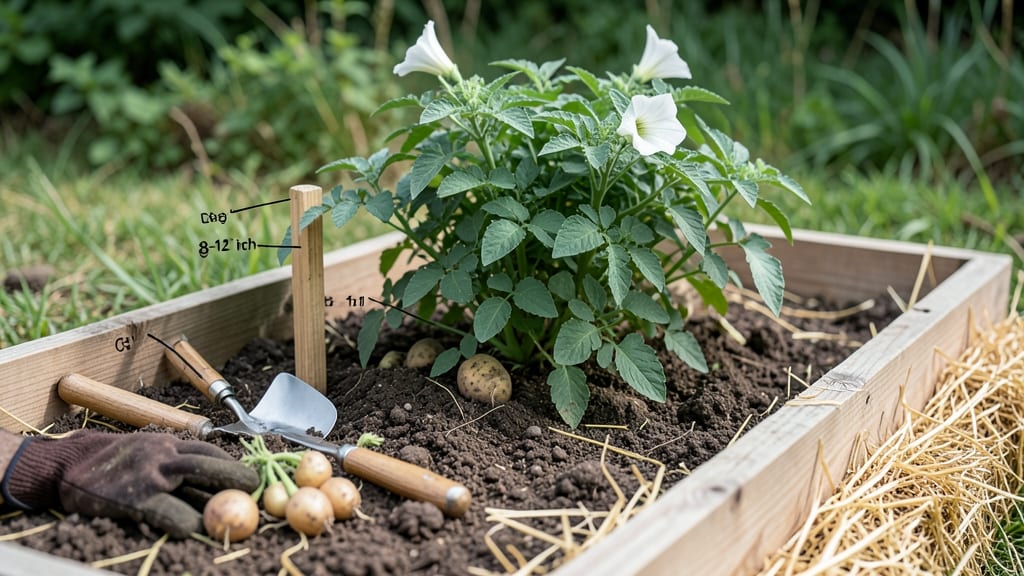
A raised bed for potatoes should be 12 to 18 inches deep—the magic number that balances root space, tuber growth, and soil health without wasting resources.
Picture this: you’ve spent hours building the perfect raised bed, only to harvest puny potatoes because the depth was off. Too shallow, and the tubers crowd; too deep, and you’re just digging a hole for wasted soil.
The right depth isn’t just about inches—it’s about creating the ideal underground ecosystem for your 🥔.
Potatoes need room to stretch their roots downward while forming tubers along the stems. A 12-inch minimum ensures early varieties have space, while 18 inches accommodates larger russets or long-season types. But here’s the kicker: depth alone won’t guarantee success—drainage, soil texture, and even your local climate play a role.
In this guide, I’ll break down the science behind 12–18 inches, how to adjust for your potato types, and the 5 mistakes that turn a deep bed into a flop. By the end, you’ll know exactly how to build (or modify) your raised bed for a bumper crop.
Optimal raised bed depth for potatoes: the science behind 12–18 inches
Potatoes thrive when their tubers have room to expand without competition. A 12–18 inch raised bed depth isn’t arbitrary—it’s rooted in how potatoes grow. Their roots spread horizontally while tubers form downward, needing loose soil to prevent compaction and encourage healthy growth.
Shallower beds restrict tuber development, while deeper beds risk waterlogging and poor aeration.
The ideal depth balances root zone needs with practical growing conditions. Most potato varieties produce tubers within the top 12–18 inches of soil, but deeper beds (20+ inches) can lead to soil compaction and reduced yields.
Meanwhile, beds under 12 inches limit tuber size and quantity, especially for late-season varieties that need more growing space.
Soil aeration is another critical factor. Loose, well-draining soil in a 12–18 inch bed allows roots to access oxygen and nutrients efficiently. Without proper aeration, tubers can become misshapen or develop diseases like rot. This depth also accommodates mulching and hilling, which protect tubers from light exposure (a common issue in shallow beds).
Drainage is non-negotiable for potatoes. Excess water in deeper beds (20+ inches) can suffocate roots, while shallow beds (under 12 inches) dry out too quickly. The 12–18 inch range strikes the perfect balance, ensuring tubers stay hydrated without drowning. For clay-heavy soils, this depth helps prevent water pooling, which is deadly for potatoes.
Potato varieties also influence ideal bed depth. Early-season varieties like 'Yukon Gold' or 'Red Pontiac' can thrive in slightly shallower beds (12–14 inches), while late-season varieties such as 'Russet Burbank' or 'Sweet Potato' need the full 16–18 inches to reach maturity.
Fingerlings, with their compact tubers, often do well in 12–14 inch beds, but larger varieties demand more space.
Let’s break down the science with a quick reference table to clarify why 12–18 inches works best for most gardeners:
| Factor | 12 Inches | 18 Inches | Why It Matters |
|---|---|---|---|
| Root Depth | Sufficient for early varieties | Ideal for late varieties | Accommodates tuber expansion |
| Soil Aeration | Good but limited | Optimal airflow | Prevents compaction and rot |
| Drainage | Fast-draining (risk of dryness) | Balanced moisture retention | Reduces waterlogging risks |
| Tuber Formation | Limited for large varieties | Maximizes yield | Supports bigger, healthier tubers |
| Hilling Space | Limited | Ample room | Encourages tuber development |
When building your raised bed, prioritize loose, fertile soil mixed with compost or aged manure. Avoid compacted layers, as they restrict root growth. For beds deeper than 18 inches, add a drainage layer of gravel or coarse sand at the bottom to prevent water buildup.
This is especially important in clay-heavy soils, where poor drainage can turn your bed into a soggy nightmare.
For container growing, stick to 12–16 inch depths. Smaller containers limit root spread, so choose compact varieties like 'Fingerling' or 'New Potato' types. If you’re growing in a multi-level bed, allocate the deepest section (16–18 inches) to late-season varieties and shallower sections (12 inches) to early harvesters.
Finally, monitor your soil’s moisture and adjust mulching accordingly. A 2–3 inch layer of straw or shredded leaves helps retain moisture in shallow beds while preventing soil crusting in deeper ones. This simple step can boost yields by up to 30% in optimal conditions.
By sticking to a 12–18 inch depth, you’re not just following a rule—you’re creating the perfect environment for your potatoes to thrive. Experiment with varieties and depths to find what works best in your climate, but always prioritize soil health and drainage over sheer depth. Happy digging! 🌱
How to adjust raised bed depth for different potato varieties and climates
Not all potatoes thrive in the same raised bed depth. Fingerling varieties like 'French Finger' need only 10-12 inches of soil, while russets such as 'Idaho Russet' demand 18+ inches for full tuber development.
Your climate zone also plays a role—cool regions like USDA Zone 4 benefit from deeper beds to extend the growing season, while warmer Zone 8+ gardens can use shallower beds with faster-maturing varieties.
Soil type matters too. Sandy soils dry quickly, so deeper beds help retain moisture for long-season varieties. In contrast, clay-heavy soils need at least 14 inches of depth to prevent waterlogging. Even container growing requires adjustments—use 18-inch-deep grow bags for russets, but 12-inch pots work for fingerlings.
High-altitude gardens (above 5,000 feet) often need 20-inch beds to compensate for shorter growing seasons. The extra depth ensures tubers mature before frost. For multi-level beds, prioritize deeper layers at the bottom (for russets) and shallower top layers (for fingerlings or greens).
| Potato Type | Ideal Depth (inches) | Climate Adjustments | Soil Considerations |
|---|---|---|---|
| Fingerlings (e.g., 'French Finger') | 10–12 | Shallower in warm zones (Zone 8+) | 12" minimum for sandy soils |
| Russets (e.g., 'Idaho Russet') | 18–24 | Deeper in cool zones (Zone 4–6) | 20"+ for clay soils |
| New Potatoes (e.g., 'Red Pontiac') | 12–14 | Standard for most climates | 14" for heavy soils |
| Container Growing (e.g., 'Yukon Gold') | 18 (grow bags) | Use fast-maturing varieties | Add perlite for drainage |
| High-Altitude (5,000+ ft) | 20–24 | Extend growing season | Cold-hardy varieties only |
For multi-level beds, allocate the deepest layer (18–24 inches) to russets or sweet potatoes, while the top layer (10–12 inches) works for fingerlings or greens. This maximizes space without sacrificing yield. Always test soil depth with a trowel—measure from the bed’s bottom, not the surface.
Pro tip: Layer your bed with compost-rich soil at the bottom (for root development) and topsoil on top. This mimics natural soil stratification and improves tuber quality. In drought-prone areas, add 4–6 inches of straw mulch to retain moisture in shallower beds.
Adjusting depth isn’t just about inches—it’s about matching your potato variety, climate, and soil to create the perfect underground home. With the right setup, you’ll harvest bigger, healthier tubers and avoid the frustration of wasted space or stunted growth. 🥔