
Planting
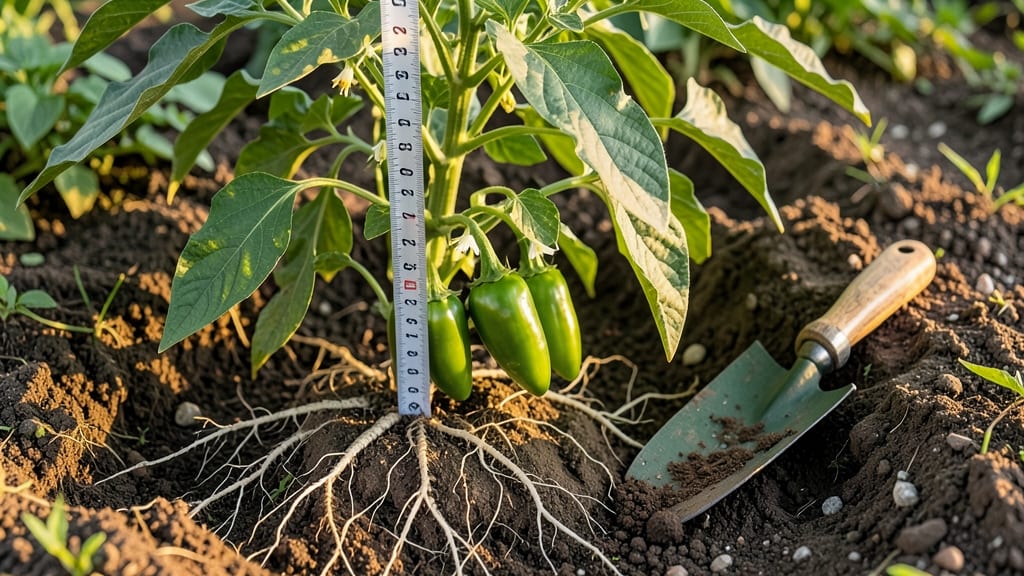
Jalapeño roots grow 12 to 18 inches deep to access moisture and nutrients, with lateral roots spreading horizontally in the top 6 inches of soil. Planting too shallow restricts growth, while proper soil depth and drainage support robust root systems and higher yields.
Understanding how deep jalapeño roots grow helps you create ideal growing conditions. 🌱 The primary taproot anchors the plant while absorbing water from lower soil layers, while the fibrous lateral roots spread out to gather nutrients.
Sandy loam soil—lightweight yet moisture-retentive—works best, as it allows roots to penetrate easily without becoming waterlogged. If you're container gardening, ensure pots are at least 12 inches deep to accommodate the root system's vertical growth.
One common mistake is planting too shallow, which forces roots to compete for resources near the surface. This can lead to stunted plants and fewer peppers.
For healthy jalapeños, mix in compost or aged manure before planting to enrich the soil, and avoid compacted or clay-heavy soil, which restricts root expansion. Proper spacing between plants also prevents root competition, giving each plant room to thrive.
💡 In This Article
- Jalapeño Root System: Depth, Spread, and Soil Requirements
- Best Soil Depth and Planting Tips for Jalapeños
Jalapeño root system: depth, spread, and soil requirements
The jalapeño plant develops a dual root system that balances vertical and horizontal growth. Its primary taproot plunges deep—typically 12 to 18 inches—to access groundwater and stabilize the plant, while a network of fibrous lateral roots spreads horizontally in the top 6 inches of soil.
This configuration mirrors other peppers but with a slightly deeper taproot than milder varieties like bell peppers, which usually max out at 10-12 inches. The deeper taproot helps jalapeños survive dry spells by tapping into moisture reserves below the surface.
Soil composition dramatically affects root development. Jalapeños thrive in sandy loam soil with a pH of 6.0-7.0, which balances drainage and nutrient retention. Clay soil, while nutrient-rich, becomes compacted when wet, restricting root penetration and oxygen flow.
The ideal soil should feel like a damp sponge—firm enough to support roots but loose enough to allow expansion. Organic matter like compost improves soil structure by increasing porosity, which is critical for root hairs (microscopic extensions) that absorb 90% of the plant's water and nutrients. 🌱
Root depth directly impacts plant maturity and yield. Shallow planting forces roots to compete for resources in the topsoil, leading to stunted growth and fewer peppers. In contrast, plants with well-developed taproots produce 20-30% more fruit due to increased nutrient and water uptake.
For example, a jalapeño planted in 12-inch-deep soil may yield 50-75 pods, while one in 6-inch-deep soil might produce only 20-30 pods. This difference highlights why gardeners in containers must use pots at least 12 inches deep—shallower pots limit root growth and reduce harvests.
Temperature and moisture also influence root behavior. Jalapeño roots grow best in soil temperatures between 70-85°F, which encourages microbial activity that breaks down organic matter into nutrients. During droughts, roots grow longer to seek moisture, but prolonged dryness can damage delicate root tips.
Mulching with straw or wood chips helps maintain soil moisture and temperature, creating an optimal environment for root expansion. Additionally, jalapeños are sensitive to waterlogging—excessive moisture cuts off oxygen, causing roots to rot and the plant to wilt.
Companion plants can further enhance root health. Pairing jalapeños with basil, marigolds, or onions improves soil structure and deters pests like aphids, which weaken roots by feeding on sap. Avoid planting near fennel or brassicas, as they release chemicals that inhibit root growth.
For example, basil not only repels pests but also releases growth-promoting compounds that stimulate root development. This symbiotic relationship ensures healthier plants and higher yields, making companion planting a low-effort way to boost root systems naturally. ✨
One often-overlooked factor is the role of mycorrhizal fungi—beneficial microbes that form symbiotic relationships with plant roots. These fungi extend the root system's reach by 10-20%, improving nutrient absorption, especially phosphorus, which is crucial for fruit development.
To encourage mycorrhizal growth, avoid synthetic fertilizers and instead use organic amendments like bone meal or fish emulsion. These microbes thrive in undisturbed soil, so minimal tilling preserves their colonies and supports long-term root health.