
Planting
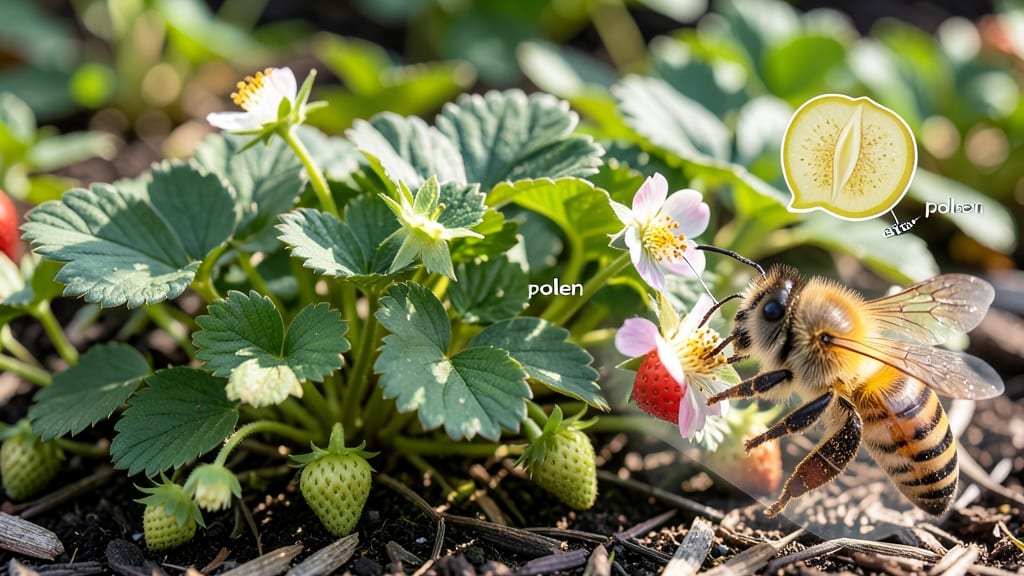
Strawberries pollinate primarily through insects like bees, which transfer pollen between flowers, though some varieties self-pollinate. Cross-pollination boosts fruit size and sweetness, while self-fertile types produce fruit independently but may yield smaller berries.
Strawberries rely on pollinators like bees to carry pollen from flower to flower, a process that creates larger, sweeter berries. 🐝 Without these helpers, the fruit can develop unevenly or remain small.
Some varieties, like 'Chandler,' thrive with cross-pollination, while others, such as 'Seascape,' can self-pollinate but may still benefit from extra attention. To maximize yields, I recommend planting pollinator-friendly flowers nearby to attract more bees and ensure better fruit development.
For gardeners with limited pollinators, hand-pollination works too—just use a small brush to transfer pollen between flowers. This method mimics nature and guarantees fruit set, especially in controlled environments like greenhouses. The key is consistency: check your plants regularly and act quickly if you notice fewer bees visiting.
💡 In This Article
- Strawberry Pollination Mechanics: Bees vs Wind vs Self-Fertilization
- Best Strawberry Varieties for Pollination Success in Gardens
Strawberry pollination mechanics: bees vs wind vs self-fertilization
A strawberry's pollination process begins with its unique flower anatomy, where each blossom contains both male (stamens) and female (pistil) reproductive parts. Bees play the starring role by collecting pollen from the yellow anthers (male parts) and transferring it to the sticky stigma (female part) of another flower.
This cross-pollination creates genetic diversity, leading to larger berries with more complex flavors. The pollen grains are roughly 0.001 inches in diameter—about the width of a human hair—making them nearly invisible to the naked eye but perfect for a bee's fuzzy body to carry.
The flower's design is a marvel of efficiency: its five white petals create landing platforms for pollinators, while the central stamens produce pollen that's easily accessible. When bees forage, they brush against these stamens, collecting pollen on their legs and abdomen.
As they move to the next flower, some of this pollen inevitably lands on the stigma, where it germinates and travels down the style to fertilize the ovules. This entire process takes about 10-15 minutes per flower visit, with bees often making dozens of stops in a single trip.
Not all strawberries need bees, though. Varieties like 'Chandler' and 'Albion' are self-fertile, meaning their pollen can fertilize their own flowers without outside help. However, these berries often develop smaller and with less flavor because they lack the genetic mixing that cross-pollination provides.
Wind can also play a minor role in pollination, though strawberry pollen is too heavy to travel far—typically no more than 10-20 feet—making wind pollination less effective than insect activity.
For gardeners, understanding these mechanics means recognizing when to intervene. In areas with low bee activity, you might notice smaller berries or flowers that fail to set fruit. This is your cue to either plant bee-friendly flowers nearby (like lavender or clover) or consider hand-pollination using a soft brush.
The key difference between cross-pollination and self-pollination becomes especially clear when comparing berry size: cross-pollinated 'Jewel' strawberries can grow up to 1.5 inches in diameter, while self-pollinated versions might stay under 1 inch.
Temperature also affects pollination success. Bees are most active when temperatures stay between 60-85°F, with humidity below 70%. Below 50°F, bees become sluggish, and above 90°F, they may avoid flowers altogether.
This is why early spring and late fall harvests sometimes produce smaller berries—pollinators are less active during these cooler periods. The flower's lifespan also matters: strawberry blossoms typically last only 3-5 days, giving pollinators a tight window to work.
What most gardeners don't realize is that strawberries can actually produce fruit without any pollination at all, though it's a rare phenomenon called parthenocarpy. In these cases, the berries develop from unfertilized ovules and remain seedless.
While this can happen naturally in some varieties, it's more common in commercial greenhouses where growers use hormones to stimulate fruit development. For home gardeners, this means you might occasionally find a small, seedless berry—but don't expect it to be as flavorful or large as properly pollinated fruit.
To maximize your strawberry yield, focus on creating an environment that encourages pollinators. Planting flowers that bloom early in the season (like crocus) provides bees with a food source before strawberries start flowering.
You can also create "bee highways" by leaving patches of wildflowers around your garden. The more bees you attract, the more consistent your pollination—and the sweeter your harvest will be. 🌸