
Planting
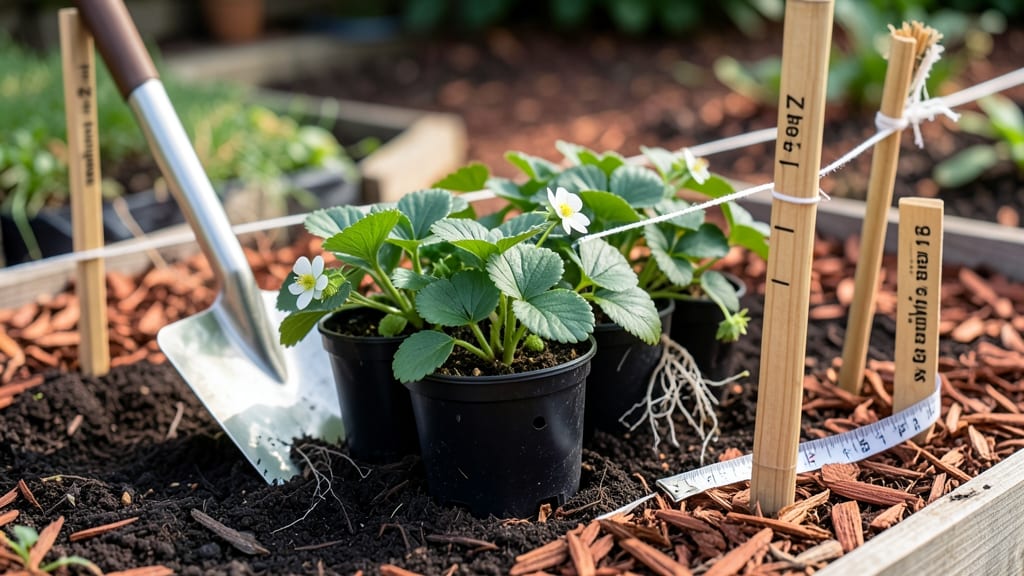
Strawberries need to be planted 18 to 24 inches apart for June-bearing varieties or 12 to 18 inches for everbearing and day-neutral types to thrive.
Struggling with strawberries that stay small, rot prematurely, or attract pests? Proper spacing is the secret weapon every gardener needs—but most get it wrong. Learn the exact distances for healthy plants, fewer diseases, and harvests packed with juicy berries.
Too little space leads to crowded runners, poor airflow, and fungal diseases like gray mold. Too much space wastes garden real estate and reduces yields. The right spacing balances sunlight, airflow, and plant health—so you get bigger berries with less effort.
Below, I’ll break down the ideal spacing for your strawberry patch, whether you’re planting in-ground or in containers, and how to adjust if your plants are already overcrowded.
Optimal strawberry plant spacing by variety and growth type
Strawberry spacing isn't one-size-fits-all—it depends on your variety type and growth habit. June-bearing varieties need more room to produce their one massive harvest, while everbearing and day-neutral types benefit from closer spacing to encourage continuous fruiting.
Even a few inches difference can mean the difference between juicy berries and disease-ridden plants.
Most gardeners make the mistake of crowding strawberries too closely, thinking it will boost production. But overcrowding leads to poor air circulation, fungal diseases, and smaller berries.
The key is balancing space for root expansion, sunlight exposure, and easy maintenance. Let's break down the exact distances for each type.
| Variety Type | Plant Spacing (inches) | Row Spacing (feet) | Container Spacing (inches) | Yield Impact |
|---|---|---|---|---|
| June-bearing | 18-24 inches | 3-4 feet | 12-18 inches (1 plant per 5-gallon container) | Larger berries, one-time harvest |
| Everbearing | 12-18 inches | 2-3 feet | 10-12 inches (2-3 plants per 5-gallon container) | Multiple harvests, moderate berry size |
| Day-neutral | 12-16 inches | 2-3 feet | 10-12 inches (3-4 plants per 5-gallon container) | Continuous harvest, smaller berries |
| Dwarf varieties (e.g., 'Albion', 'Tristar') | 8-12 inches | 1.5-2 feet | 8-10 inches (4-5 plants per 5-gallon container) | Ideal for containers, compact growth |
⚠️ Pro Tip: Adjust spacing 1-2 inches wider in hot climates to reduce stress.
For June-bearing strawberries, the 18-24 inch spacing allows roots to spread widely, supporting their heavy fruit load. These varieties produce all their berries in a 2-3 week window, so giving them extra room ensures each berry gets the nutrients and sunlight it needs.
Plant them in 3-4 foot rows to maximize sunlight penetration to the center of the bed.
Everbearing and day-neutral varieties, on the other hand, benefit from closer spacing (12-18 inches). These types produce fruit all season long, so compact spacing encourages frequent flowering and smaller, but abundant berries.
In containers, you can fit 2-3 plants in a 5-gallon pot for everbearing types, or even 3-4 plants for day-neutral varieties.
If you're growing dwarf varieties, like 'Albion' or 'Tristar', you can get away with 8-12 inch spacing. These are perfect for container gardening or small spaces, but even in-ground, they thrive with tighter spacing.
Just be prepared for smaller berries—they make up for it with prolonged harvests.
Sunlight exposure is another critical factor. Strawberries need 6+ hours of direct sun daily, but overcrowding can shade the center of your bed, leading to poor fruit development.
For example, a 4-foot row with 18-inch spacing leaves just 2 feet between plants, which is enough for good airflow and sunlight penetration.
In containers, spacing changes dramatically. A 5-gallon pot can comfortably hold 1 June-bearing plant or 2-3 everbearing plants, but avoid packing more than 4 dwarf plants per container.
Overcrowding in pots leads to root competition, nutrient deficiencies, and faster soil depletion. Always use well-draining soil and fertilize regularly to support container-grown strawberries.
One common mistake is ignoring the mature plant size when spacing. Strawberries spread via runners, and if you don't account for this, your bed can quickly become a dense mat of leaves and roots.
For June-bearing types, remove runners during the first year to encourage strong root establishment. For everbearing and day-neutral types, you can allow some runners to spread, but still maintain the recommended spacing.
Finally, consider your garden layout. If you're planting multiple rows, leave at least 2 feet between rows for easy access and weed control. This
Why proper spacing prevents common strawberry problems (and how to fix overcrowded plants)
Overcrowded strawberry plants are a silent yield killer. When plants compete for sunlight, nutrients, and air, they become stressed—leading to small berries, fungal infections, and even pest magnet syndrome.
I’ve seen gardens where strawberries barely ripen because the plants were packed too tightly, and the results are heartbreaking: moldy fruit, stunted growth, and wasted space. The good news? Fixing spacing issues is easier than you think, and it can transform your harvest.
Poor air circulation is the #1 culprit behind strawberry problems. When leaves brush against each other, moisture lingers, creating the perfect conditions for gray mold (Botrytis) and powdery mildew. I once lost an entire bed of everbearing strawberries to gray mold because I ignored the spacing guidelines.
The plants were so close that even my morning watering sessions turned into fungal feasts. Don’t let this happen to you—let’s fix it step by step.
🌱 Warning: Overcrowded Strawberries = Disaster
Strawberries need 12-24 inches between plants (depending on variety). If your bed looks like a strawberry sardine can, you’re asking for:
- Gray mold (fuzzy gray spots on fruit)
- Powdery mildew (white dust on leaves)
- Pests (slugs, aphids, and birds love crowded plants)
- Stunted berries (tiny, misshapen fruit)
Fix it now: Thin plants to 18-24" apart for June-bearing or 12-18" for everbearing/day-neutral. Use a ruler—don’t guess!
How do you know if your strawberries are overcrowded? Look for these red flags: leaves touching neighboring plants, berries sitting on the soil (not elevated), or runners (those long stems) getting tangled.
I once had a day-neutral variety where the runners grew so densely that the berries couldn’t ripen—they just rotted on the ground. If you see yellowing leaves or black spots on fruit, your spacing is likely the problem.
Ready to fix it? Start by removing the weakest plants—look for small, leggy, or diseased specimens. Use clean, sharp pruning shears to cut runners at the base if they’re spreading uncontrollably. For established beds, I recommend replanting every 3-4 years to reset spacing and improve soil health.
Just dig up every other plant, compost the healthy ones, and replant the remaining ones with proper spacing. It’s a little work, but your harvest will thank you.
Proper spacing also boosts pollination. Bees and other pollinators need room to move between plants. I planted a June-bearing variety too closely once, and the berries were half the size because pollinators couldn’t access the flowers easily.
Aim for 18-24 inches between plants in rows, and 3 feet between rows for June-bearing types. Everbearing and day-neutral varieties can handle slightly closer spacing (12-18 inches) since they produce fruit in multiple cycles.
Don’t forget about container gardening! If you’re growing strawberries in pots, use at least 12-inch diameter containers for each plant. Crowding in containers leads to root competition and nutrient deficiencies.
I once grew Albion strawberries in a 5-gallon bucket with two plants—big mistake. The berries were tiny and the plants looked stressed. Stick to one plant per container for optimal results.
With proper spacing, your strawberries will thrive—bigger berries, fewer diseases, and happy plants that produce year after year. Grab your ruler, check your beds, and give your strawberries the room they deserve. Your future strawberry jam (or smoothies!) will taste like heaven. 🍓