
Planting
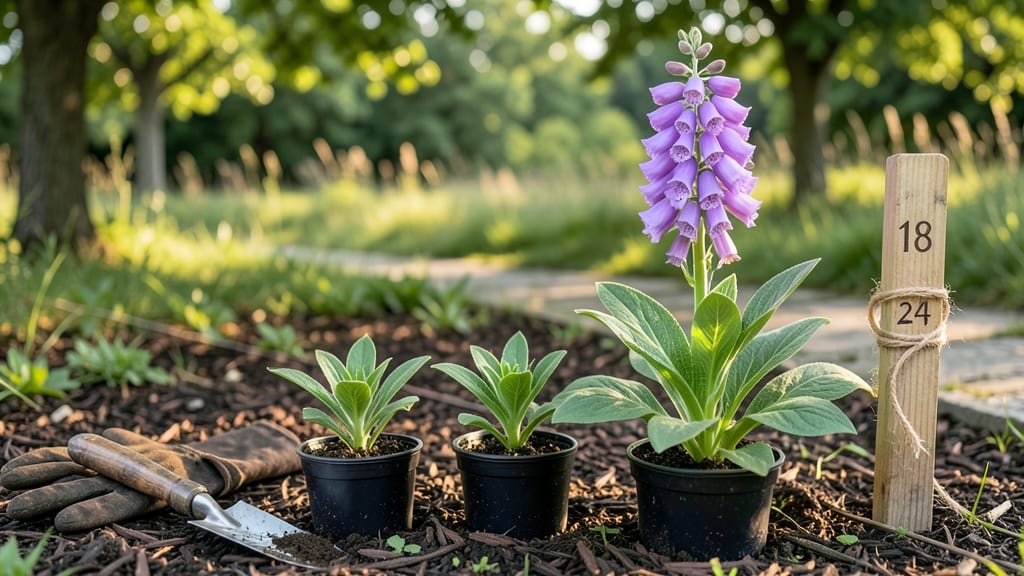
Planting foxglove the right distance apart steals their towering grace and turns those dramatic 5-foot spikes into weak, crowded stems that flop over by midsummer.
You’ve probably seen foxglove in a cottage garden, swaying gracefully in the breeze—until you realize the stems are leaning at odd angles or the blooms are sparse. That’s not just bad luck; it’s spacing gone wrong.
The right distance between plants ensures strong roots, better air circulation, and the boldest blooms possible. Too little space leads to disease, while too much wastes garden real estate.
Below, I’ll break down the exact spacing you need for each variety, plus how to fix mistakes if your foxglove is already struggling.
Whether you’re tucking them into a border or letting them dominate a woodland edge, these spacing secrets will keep your foxglove thriving for years—without the crowding.

Ideal foxglove spacing by variety: tall, medium, and dwarf types explained
Foxglove (Digitalis spp.) comes in stunning varieties, each with unique spacing needs to prevent overcrowding and ensure healthy blooms. The tall varieties like Digitalis purpurea reach 4-5 feet, while dwarf types like 'Pam's Choice' stay under 2 feet.
Proper spacing prevents weak stems and maximizes flower production, giving you those iconic bell-shaped spikes year after year.
Your foxglove's sunlight exposure and soil depth also influence spacing. In full sun, plants grow taller but need slightly more room, while partial shade encourages bushier growth.
Shallow soil? Space them wider to prevent root competition. Let’s break down the perfect distances for each type to create a thriving foxglove display.
Why spacing matters: Too close? You’ll get leggy stems and fewer flowers. Too far? You waste garden space. The key is balancing root spread (12-18 inches wide) with stem height to avoid competition for nutrients and light.
Here’s a quick reference for mature plant dimensions and ideal spacing by variety:
For tall foxglove varieties like Digitalis purpurea, aim for 18-24 inches apart in rows spaced 2-3 feet apart. This prevents stems from bending over under their own weight and ensures air circulation to reduce fungal diseases like powdery mildew.
In full sun, increase spacing to 24 inches to avoid competition for water.
Medium-height types like Digitalis grandiflora thrive with 12-16 inches apart, making them ideal for mixed borders or woodland gardens. Their bushier habit means they won’t need staking, but they’ll still benefit from partial shade to prevent leggy growth.
If planting in containers, use one plant per 12-inch pot to avoid root binding.
Dwarf varieties like 'Pam's Choice' are perfect for small gardens or containers. Space them 8-12 inches apart to create a dense, cottage-garden look. Their compact size makes them great for underplanting taller perennials like delphiniums or hollyhocks, where they’ll get dappled shade and moist soil.
Pro tip: If your soil is heavy clay, increase spacing by 2-4 inches to improve drainage. Amend the soil with compost before planting to encourage root development. And remember—foxglove is self-seeding, so thin seedlings to maintain proper spacing in future seasons.
For woodland gardens, space foxglove 18 inches apart in clusters of 3-5 plants. This mimics their natural habitat and creates a dramatic focal point while keeping maintenance manageable. Pair them with ferns or hostas to take advantage of their partial shade tolerance.
🌸
Common foxglove spacing mistakes and how to fix them
Foxglove thrives when given room to stretch its iconic spikes of bell-shaped flowers, but many gardeners unknowingly crowd these beauties. Overplanting leads to leggy stems, yellowing leaves, and fewer blooms—signs your foxglove is struggling for resources.
Even underplanting can cause issues, like poor air circulation that invites fungal diseases. The key is balancing their mature size with companion plants and garden layout.
I’ve seen gardens where foxglove was planted just 6 inches apart, thinking they’d fill in quickly. Instead, the plants competed for nutrients, resulting in weak stems that flopped under their own weight.
Even worse, crowded foxglove attracts slugs and snails, which thrive in damp, shaded conditions. If you’re noticing these problems, it’s time to reassess your spacing strategy.
⚠️ Critical Foxglove Spacing Rules
Standard foxglove needs 18–24 inches apart to mature fully. Dwarf varieties (1–2 ft tall) can tolerate 12–18 inches, while tall types (4–5 ft) require 24–36 inches to prevent stem breakage. Never plant closer than 12 inches—this guarantees competition for water and sunlight.
Pro Tip: Measure spacing from the center of each plant, not the edges. Use a planting grid or string line to maintain even rows.
One of the biggest mistakes is assuming foxglove will self-correct over time. While they’re perennial, their roots won’t magically spread to fill gaps if planted too tightly. If your foxglove looks stunted or sparse, check the spacing immediately—don’t wait for next year.
Dig up a few plants and replant them 12–18 inches apart in a new location with well-draining soil.
Underplanting is another pitfall, especially in woodland gardens where foxglove is often paired with ferns or hostas. If you’re using foxglove as a backdrop plant, leave 36 inches of clearance behind them to avoid blocking sunlight for shorter companions.
I’ve seen gardens where foxglove was planted too close to delphiniums or hollyhocks, causing both species to struggle.
To fix overcrowding mid-season, start by thinning out the weakest stems at the base. Use clean, sharp pruning shears to cut stems 1 inch above the soil line. This encourages new growth from the roots while giving remaining plants more space.
For severe cases, transplant a few plants to a new area—foxglove handles division well if done before flowering.
Create a foxglove spacing checklist for your garden: ☑️ Measure mature plant heights and adjust spacing accordingly ☑️ Ensure partial shade (4–6 hours of sunlight) reaches all plants ☑️ Mulch around the base to prevent soil compaction ☑️ Monitor for yellowing leaves or leggy stems—signs of overcrowding ☑️ Replant or thin if spacing is less than 12 inches apart
With the right spacing, your foxglove will reward you with towering, disease-free blooms for years. The effort to adjust spacing now will pay off in bold, healthy growth and a garden that looks effortlessly natural. Happy planting! 🌸