
Planting
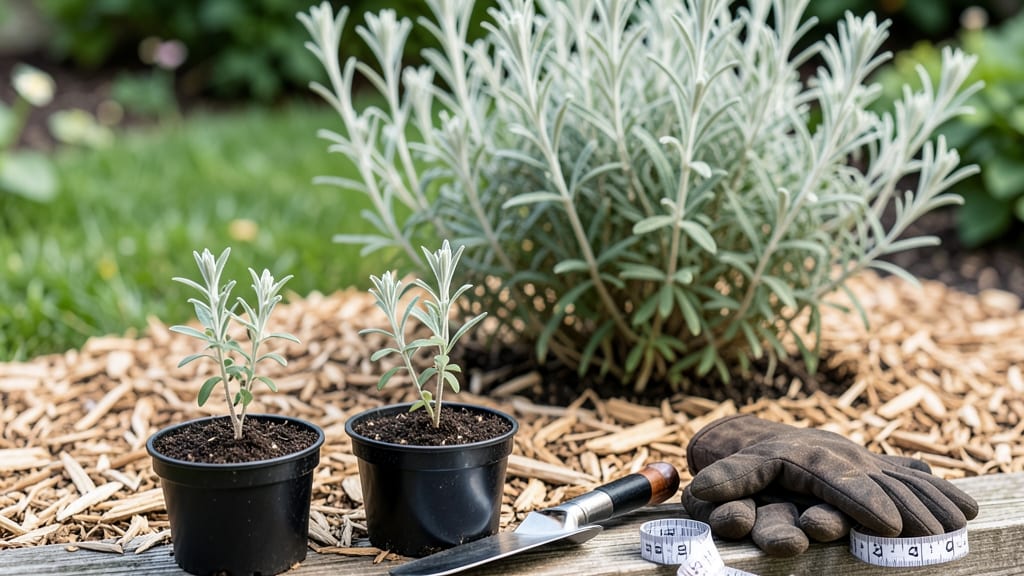
To plant Russian Sage 🌸 the right distance apart ensures full, fragrant borders that thrive for years—not just a few seasons.
Struggling to create a lush, fragrant border with Russian Sage? The secret isn’t just in the soil—it’s in the spacing! Get it wrong, and your plants will compete for sunlight and nutrients, leaving you with sparse, underwhelming results.
But once you nail the spacing, you’ll get vibrant blooms from spring to fall with almost no maintenance.
Russian Sage grows 3 to 5 feet tall and spreads 2 to 3 feet wide at maturity, so planting them 18 to 24 inches apart gives their roots room to breathe and their leaves room to catch sunlight.
Too close, and you’ll end up with leggy stems and fewer flowers—something no garden deserves.
Below, I’ll break down the exact spacing you need for different garden setups, how to adjust for containers or slopes, and which plants make the best neighbors for a fragrant, pollinator-friendly display. Let’s turn that garden vision into reality!

Optimal spacing for Russian sage: the science behind healthy growth
When planting Russian sage (Perovskia atriplicifolia), the 18-24 inch spacing isn't arbitrary—it's rooted in the plant's natural growth habits. This medium-height perennial (3-5 feet tall) needs room to develop its woody stems and spreading root system without competing for sunlight or nutrients.
Crowding leads to leggy growth, fewer flowers, and increased susceptibility to fungal diseases like powdery mildew.
Russian sage thrives in full sun conditions (6+ hours daily), and proper spacing ensures each plant gets its share of direct sunlight exposure. In tighter spaces, the central stems stretch upward while the lower branches remain sparse, creating an unattractive, open-grown appearance.
The ideal 2-foot spacing allows air to circulate freely, reducing humidity around the foliage and preventing foliar diseases.
Here's the science behind the numbers: Russian sage's root spread typically matches its mature height. A 3-foot tall plant will spread about 2-3 feet wide at maturity. Planting too closely forces roots to compete for moisture and nutrients in the same soil volume, stunting growth.
The 18-24 inch spacing gives each plant a personal soil volume of about 2 cubic feet, which is optimal for its drought-tolerant nature.
This spacing also accommodates the plant's vertical growth pattern. Russian sage develops multiple upright stems from the base, creating a natural clumping habit. With proper spacing, these stems don't lean or flop over neighboring plants, which is especially important in border plantings where visual impact matters.
The 24 inch maximum allows for slightly wider varieties while still maintaining good airflow.
For first-year plants, you can start with slightly closer spacing (12-18 inches) since they won't reach maturity immediately. However, plan to thin out to the 18-24 inch standard in their second year as they develop more robust root systems.
This approach gives you flexibility in smaller gardens while still allowing room for growth.
The 18-24 inch range also accounts for different Russian sage varieties. Smaller cultivars like 'Little Spire' (18-24 inches tall) thrive at the 18 inch minimum, while standard varieties need the full 24 inches.
Always check the specific variety's mature size before planting—some newer hybrids can reach 5 feet tall and need even more space.
Proper spacing also affects flowering performance. Russian sage produces its signature lavender-blue flower spikes on new wood (current year's growth). When plants are crowded, they allocate energy to vertical growth rather than flower production, resulting in fewer, smaller blooms.
The 18-24 inch spacing ensures each plant has the energy to produce 3-4 foot tall flower spikes that bloom from mid-summer to fall.
In container gardening, the same spacing principles apply but are adjusted for pot size. A 5-gallon container can comfortably hold one Russian sage plant with 18 inches of root space in each direction.
For larger containers (15+ gallons), you can fit 3 plants arranged in a triangle pattern, maintaining the 18-24 inch spacing between them.
Remember that Russian sage
Adjusting Russian sage spacing for different garden conditions
Russian sage thrives when given room to grow, but garden conditions often require adjustments to standard spacing. In containers, for example, you’ll need to plant just one or two plants per 12-inch pot to prevent root competition.
This compact approach works well for patios or small balconies, but always ensure the container has drainage holes to avoid soggy roots.
For border plantings, where visual impact matters, space plants 18–24 inches apart to create a lush, continuous display. If your border is narrow (under 3 feet wide), you can reduce spacing to 12–18 inches to encourage bushier growth.
Just be prepared to prune lightly in early spring to maintain shape and airflow.
On slopes or hillsides, wider spacing becomes critical. Plant Russian sage 3–4 feet apart to prevent erosion and allow roots to stabilize the soil. Pair it with ground covers like creeping thyme or sedum to fill gaps naturally while reducing water runoff.
⚠️ CALLOUT WARNING ⚠️
⚠️ Spacing Mistakes That Stunt Russian Sage
- Crowding: Planting too close (under 12 inches) causes root competition, leading to stunted growth and disease from poor airflow.
- Poor drainage: Russian sage hates soggy soil. If your garden holds water, raise beds or amend soil with gravel/sand.
- Ignoring mature size: Dwarf varieties (1–2 ft tall) need 12–18 inches of space, while standard types (3–5 ft) require 24–36 inches.
Fix it: Thin crowded plants immediately and mulch with gravel to improve drainage.
In high-traffic areas, like pathways or near patios, increase spacing to 3–4 feet to avoid damaging stems when walking by. If you’re using Russian sage as a privacy screen, plant it 3 feet apart in rows, but be patient—it may take 2–3 years to fill in completely.
For urban gardens with limited space, consider dwarf varieties like ‘Little Spire,’ which tops out at 1–2 feet and can be planted 10–12 inches apart. Pair it with low-growing perennials like creeping rosemary or ice plant to maximize vertical space without overcrowding.
Remember, air circulation is key to preventing powdery mildew, a common issue in dense plantings. If you notice white fungal growth on leaves, prune inner stems to improve airflow and avoid chemical treatments, which can harm beneficial insects.