
Planting
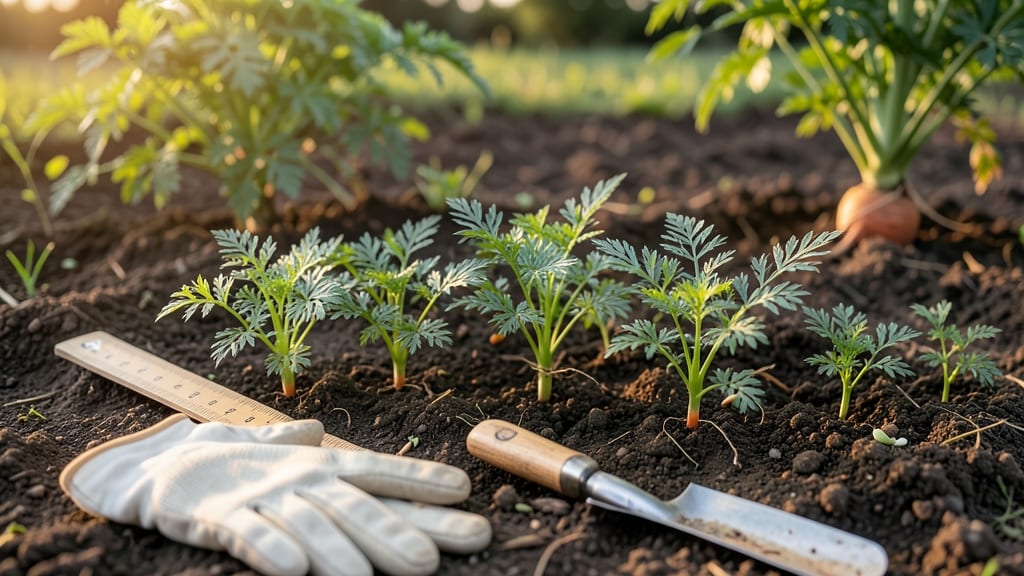
To thin carrots properly, space seedlings 2 to 3 inches apart once they reach 2 inches tall—this simple step prevents overcrowding and grows straight, thick roots.
Struggling with crooked, stunted carrots? The secret to perfect harvests lies in spacing, yet most gardeners get it wrong, wasting seeds and effort. Overcrowded seedlings compete for nutrients, leading to forked or stunted 🥕 instead of the crisp, straight roots you want.
Thinning early—when seedlings are young—gives each plant room to develop without disturbing roots. Use sharp scissors or your fingers to avoid damaging nearby plants, and you’ll see the difference in just a few weeks.
Below, I’ll walk you through the exact timing, tools, and spacing tricks to maximize your yield and ensure every carrot grows to its full potential.
Optimal carrot seedling spacing for straight, thick roots
Perfect carrot roots start with the right seedling spacing. Overcrowded plants fight for nutrients, leading to forked or stunted roots. But spacing too wide wastes seeds and garden space. The key? Understanding your carrot variety and soil conditions to determine the ideal distance.
Most gardeners thin carrots to 2-3 inches apart, but this varies by type. Short-rooted varieties like Paris Market need 1.5-2 inches of space, while long-rooted Danvers or Nantes varieties thrive with 3-4 inches. Soil type also plays a role—sandy soil requires wider spacing to prevent root competition.
Here’s the science: Carrots grow straight when they have room to expand without root interference. Crowding triggers lateral root growth, causing those dreaded forks. Proper spacing also improves air circulation, reducing disease risk and ensuring even maturation.
Loose, well-draining soil is ideal for carrots, but even in perfect conditions, spacing matters. For example, Chantenay varieties (medium-length roots) need 2.5-3 inches between plants. Always measure from the seedling’s center to avoid overcrowding as they mature.
| Carrot Variety | Root Length | Optimal Spacing (inches) | Soil Type Notes |
|---|---|---|---|
| Paris Market | Short (2-3") | 1.5-2 | Ideal for rocky soil |
| Danvers | Medium (4-6") | 2.5-3 | Best in loose soil |
| Nantes | Long (6-8") | 3-4 | Avoid clay soil |
| Chantenay | Medium (3-5") | 2.5-3 | Tolerates heavier soil |
| All Varieties | Rows | 12-18" | Prevents disease spread |
After sowing seeds, wait until seedlings reach 2 inches tall before thinning. This ensures roots have started developing but aren’t yet competing for space. Use a pencil or ruler to mark spacing lines in your garden bed for consistency.
Loose soil is critical—carrots need 6+ hours of sunlight and 1 inch of water weekly to grow straight. If your soil is compacted, amend it with compost or sand before planting. This prevents roots from twisting as they search for nutrients.
Pro tip: Thin on a cloudy day to reduce stress on seedlings. Use sharp scissors or your fingers to snip unwanted plants at soil level, leaving the taproot intact. Avoid pulling seedlings, which can damage nearby roots.
For container gardening, space carrots 3 inches apart in 6-inch-deep pots. Shallow containers restrict root growth, so choose deep planters for long varieties like Nantes. Always label your containers to track spacing and thinning dates.
Monitor your carrots weekly after thinning. If you notice yellowing leaves or stunted growth, adjust spacing immediately. Overcrowding is the #1 cause of forked roots, but proper thinning ensures harvest-ready carrots in 70-85 days.
Remember: The goal is straight, thick roots, not maximum yield. By following these spacing guidelines, you’ll enjoy perfectly shaped carrots every harvest—no more gnarled surprises! 🥕
Step-by-step carrot thinning process: when and how to do it right
Thinning carrots isn't just about removing extra seedlings—it's the secret weapon for growing straight, thick roots. When done correctly, thinning prevents overcrowding, which causes carrots to fork, twist, or stay stunted.
The key is timing: wait until seedlings are 2-3 inches tall with 2-3 true leaves, then space them properly for maximum yield.
Most gardeners rush thinning, but patience pays off. If you thin too early, fragile roots get damaged. If you wait too long, the seedlings compete aggressively, leading to misshapen harvests.
The ideal window is when seedlings are 3-4 weeks old, with tops reaching 1-2 inches. This ensures roots have started developing but aren’t yet intertwined.
How Far Apart to Thin Carrots: The Perfect Spacing Guide
- 🌱 Short varieties (e.g., 'Paris Market'): Thin to 1.5-2 inches apart—these compact roots need minimal space to grow straight.
- 🥕 Medium varieties (e.g., 'Nantes'): Space 2-3 inches apart—the sweet spot for balanced growth without overcrowding.
- 🌿 Long varieties (e.g., 'Danvers'): Thin to 3-4 inches apart—longer roots need room to extend deeply without bending.
- ⚠️ Loose soil? Increase spacing by 0.5 inches—roots grow straighter in fluffy soil but need extra room to avoid forking.
- 💧 Clay soil? Reduce spacing to 1.5-2 inches—compacted soil restricts root growth, so closer spacing prevents competition.
Pro Tip: Use a ruler or spacing tool to ensure uniformity—uneven gaps lead to inconsistent harvests.
For the actual thinning process, use sharp scissors or a small trowel to snip seedlings at soil level. Avoid pulling by hand—this can disrupt neighboring roots.
If your soil is rocky or hard-packed, consider thinning in stages: first remove 50% of seedlings, then thin again in 1-2 weeks for precision.
After thinning, water deeply to settle the soil around remaining plants. This reduces air pockets and helps roots establish faster. Mulch with straw or grass clippings to retain moisture and suppress weeds, which compete for nutrients. Within 4-6 weeks, you’ll see thicker, straighter carrots—the reward for your patience!
Don’t toss those thinned seedlings! Use them in pesto, salads, or stir-fries (yes, even tiny greens are edible). Every seed counts, and thinning efficiently means less waste and more harvests later in the season. With the right spacing, your carrots will grow long, sweet, and fork-free—worth the effort! 🥕