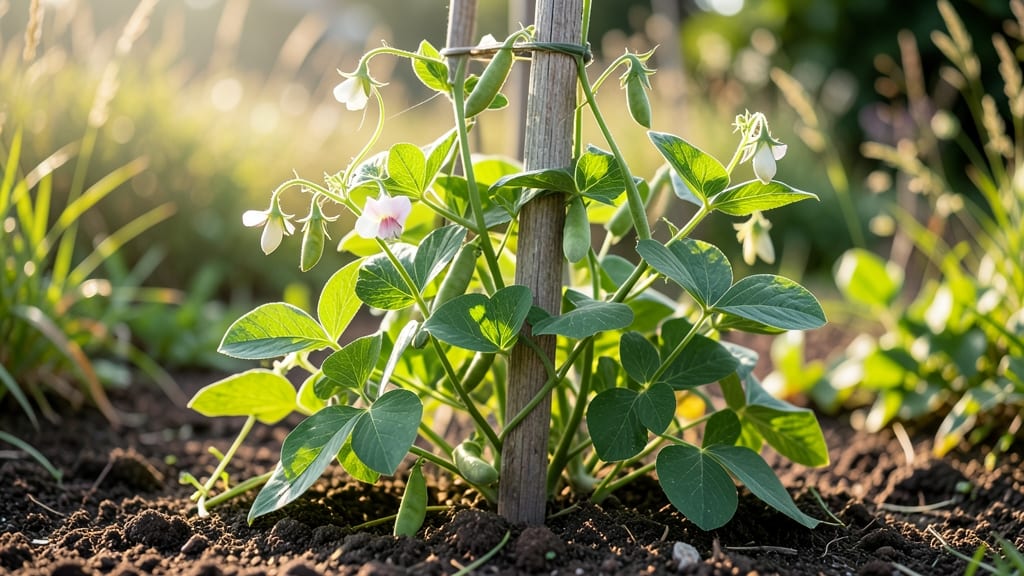
Pea plants grow surprisingly fast—some varieties reach harvestable pods in just 50 to 60 days from planting, making them one of the quickest vegetables to enjoy from seed.
Picture this: you tuck those tiny seeds into the soil in early spring, and by late May, you're snapping fresh pods straight from the vine.
But not all peas grow at the same speed—shelling peas like 'Sugar Snap' can take 60 days, while snow peas like 'Oregon Sugar Pod' might be ready in 55 days. The difference? Variety, soil warmth, and a little patience.
Fast growth isn’t just about speed—it’s about setting the stage right. Cool spring temperatures slow things down, while consistent moisture and full sun supercharge their development. Even a 5-degree difference in soil temp can shift your harvest timeline by a week.
That’s why knowing your local frost dates and choosing the right variety matters so much.
In this guide, I’ll break down the exact days to harvest for popular varieties, share the three biggest mistakes that stall growth, and give you a foolproof checklist to get from seed to table as fast as possible. Ready to turn those sprouts into a harvest in record time?
Pea plant growth timeline: days to harvest by variety type
Pea plants are one of the fastest-growing vegetables in your garden, with some varieties reaching harvestable pods in as few as 50 days.
The exact timeline depends on the pea variety—whether you're growing shelling peas, snow peas, or snap peas—and environmental factors like soil temperature and sunlight exposure. Understanding these differences helps you plan for a steady harvest or extend your growing season with successive plantings.
Most pea plants follow a similar growth pattern: germination (5-10 days), vegetative growth (2-3 weeks), flowering (1-2 weeks), and finally pod production. However, dwarf varieties like 'Sugar Sprint' mature faster than tall climbers like 'Mammoth Melting Sugar,' which can take 70+ days.
Let’s break down the exact timelines for popular varieties and how to optimize their growth.
| Variety Type |
Days to Maturity |
Sunlight Needs |
Soil Temp (°F) |
Height |
Best For |
| Shelling Peas |
55-65 days |
6+ hours |
50-70°F |
4-6 ft |
Fresh eating, freezing |
| 'Sugar Snap' |
60-65 days |
6+ hours |
50-75°F |
6-8 ft |
Crunchy pods, fresh |
| 'Oregon Sugar Pod' |
60-65 days |
6+ hours |
50-70°F |
6-8 ft |
Sweet pods, heirloom |
| Snow Peas |
50-60 days |
6+ hours |
55-70°F |
4-6 ft |
Flat pods, stir-fry |
| 'Oregon Sugar Pod II' |
55-60 days |
6+ hours |
50-70°F |
6-8 ft |
Disease-resistant |
| 'Sugar Sprint' |
50-55 days |
6+ hours |
55-75°F |
1-2 ft (dwarf) |
Containers, quick harvest |
| 'Mammoth Melting Sugar' |
70-75 days |
6+ hours |
50-70°F |
8-10 ft |
Large pods, sweet |
Factors that speed up or slow down pea plant growth
Pea plants grow surprisingly fast—sometimes in as few as 50 days—but their speed depends entirely on your growing conditions. Soil temperature, sunlight exposure, and even watering techniques can shave weeks off your harvest time or delay it by months.
I’ve learned this the hard way after watching impatient seedlings struggle in less-than-ideal conditions.
One of the biggest mistakes gardeners make is assuming peas thrive in any old spot. Cool soil temperatures (between 60-70°F) are ideal, while hotter or colder soil slows growth dramatically. Sunlight also plays a critical role—peas need at least 6 hours of direct sun daily, but too much heat can stress them.
Let’s break down the key factors that control your pea plant’s speed.
- Soil Temperature: 60-70°F is perfect for germination and growth. Cooler (50°F) slows sprouting, while hotter (80°F+) stunts plants.
- Sunlight: 6+ hours of full sun speeds growth, but afternoon shade in hot climates prevents wilting. Morning sun works best in extreme heat.
- Watering: Consistent moisture (1 inch per week) prevents stress. Drought or soggy soil both delay flowering and pod formation.
- Spacing: 2-3 inches apart for dwarf varieties, 4-6 inches for standard types. Overcrowding competes for nutrients, slowing growth.
- Fertilizer: High-phosphorus (5-10-10) at planting boosts root and vine development. Avoid nitrogen-heavy feeds—it promotes leaves over pods.
I’ve noticed that watering techniques make a huge difference. Peas hate soggy roots, so I always water at the base in the morning to avoid fungal diseases. Drip irrigation is perfect for this—it delivers water slowly and keeps foliage dry. Overhead watering can spread disease, especially in humid climates.
Another common mistake is planting too late in the season. Peas grow best in cool spring weather and bolt (flower prematurely) when temperatures rise above 75°F.
If you’re in a warm climate, opt for heat-tolerant varieties like ‘Oregon Sugar Pod’ or plant in late summer for a fall harvest.
Finally, soil quality can’t be overlooked. Amend your garden with compost or aged manure before planting to improve drainage and nutrient availability. Peas are legumes, so they fix their own nitrogen—but only if the soil has the right microbes.
A handful of inoculant powder at planting ensures they get a head start.
By tweaking just these few factors, I’ve seen peas go from seed to harvest in as little as 45 days—sometimes even faster with ideal conditions. The key is paying attention to the details, like soil temperature and watering consistency.
With the right approach, you’ll be snacking on fresh peas before you know it! 🌱
★★★★★4.5(7 reviews)