
Planting
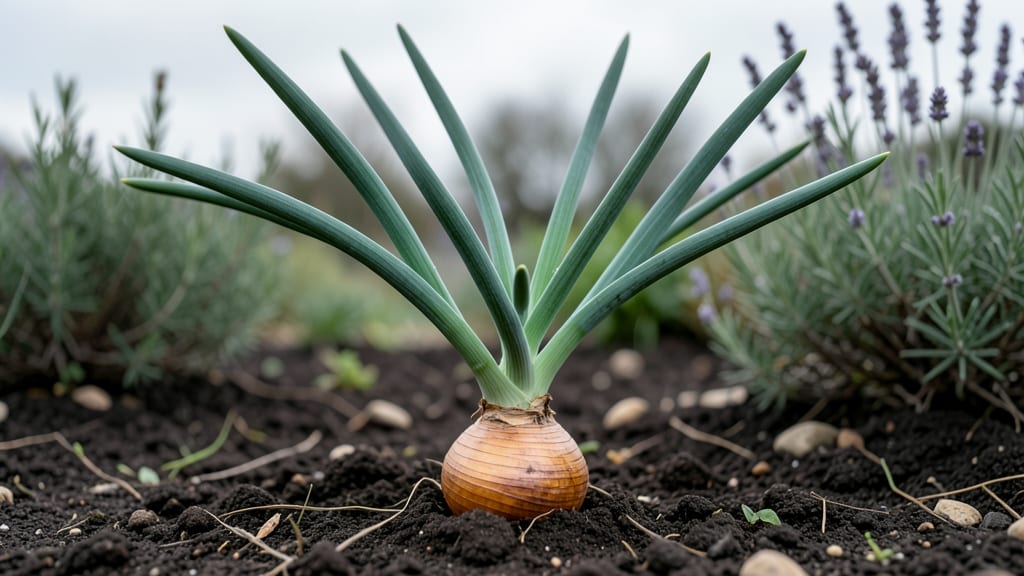
Growing onions from a sprouted bulb can take anywhere from 100 to 150 days to reach harvest, depending on your climate and care routine.
Ever noticed those stubborn sprouts pushing through your stored onions and wondered if you could turn them into a thriving garden harvest?
The good news is that these little green shoots are packed with potential, and with the right timing and conditions, you’ll be pulling out plump, flavorful 🧅 bulbs in just a few months.
In this guide, we’ll walk you through the exact timeline—from planting that first sprout to harvesting your homegrown onions—so you know what to expect each week. Whether you’re working with a short-season climate or a longer growing window, understanding the stages will help you optimize your garden’s performance.
You’ll also discover how to speed up growth with simple adjustments, like soil prep, sunlight exposure, and watering tips, so you can enjoy a faster harvest without sacrificing quality. Let’s get those onions growing!


Onion growth timeline: month-by-month development from sprouted bulb
Growing onions from a sprouted bulb is one of my favorite ways to maximize every part of the plant—no waste, just flavor! When you spot those first green shoots pushing through your stored onions, you’re looking at a 3-4 month journey to harvest.
The key is understanding each growth stage so you can provide exactly what your onions need at the right time.
Onions develop in distinct phases, from the initial root establishment to the final bulb maturation. Each stage lasts roughly 4-6 weeks, but environmental factors like sunlight and temperature can shift this timeline.
Let’s break down what to expect each month, so you can track progress and troubleshoot any delays.
🌱
| Stage | Timeframe | Key Milestones | Care Tips |
|---|---|---|---|
| Sprout Emergence | Week 1-2 | 1-2 inch shoots appear; roots establish | Keep soil moist; protect from frost |
| Leaf Development | Week 3-6 | 4-6 leaves form; 6-inch tall plants | Fertilize with 10-10-10; thin to 2" spacing |
| Bulb Formation | Week 7-10 | Bulbs swell; tops begin yellowing | Reduce water; stop fertilizing |
| Maturation | Week 11-12 | Tops fall over; bulbs firm and dry | Harvest when 1-2" diameter; cure in shade |
In the first 2 weeks, your sprouted onion bulb will focus on root development and establishing a strong foundation. You’ll notice tiny white roots emerging from the bulb’s base while the shoot grows to about 1-2 inches.
This stage is critical—keep the soil consistently moist (not soggy) to prevent rot, and place your onions in a spot with at least 6 hours of sunlight daily.
By week 3-4, your onions enter the leaf development phase, where they’ll grow their signature hollow, blade-like leaves. Each new leaf that unfurls wraps around the bulb, protecting it as it grows.
This is when you should thin seedlings to 2 inches apart to give each plant room to develop properly. If you’re growing in containers, ensure they’re at least 6 inches deep to accommodate root growth.
🌿
The most exciting transformation happens in weeks 5-8, when the bulb begins to swell visibly. You’ll see the base of the plant thicken, and the leaves may start to yellow slightly at the tips.
This is your onion’s way of telling you it’s redirecting energy from leaves to bulb formation. To encourage this process, reduce watering frequency and stop fertilizing—too much nitrogen will result in leafy growth at the expense of bulb size.
By week 9-10, your onions should be half their mature size, and the tops will begin to yellow and flop over. This is a clear sign that the bulb is nearly ready for harvest.
If you live in a hot climate, you might see this happen faster (as early as 8 weeks), while cooler regions may take closer to 12 weeks. Pay attention to your local frost dates—onions won’t tolerate freezing, so plan to harvest before the first frost.
🧅
The final stage, weeks 11-12, is all about harvesting and curing. Your onions are ready when the tops have completely collapsed and the bulbs feel firm and dry when gently squeezed.
To cure them properly, pull onions gently (don’t dig) and lay them in a shady, well-ventilated area for 2-3 weeks. This drying process develops their flavor and storage life, so don’t skip it!
Pro tip: If you’re growing short-day onions (like Texas or Egyptian varieties), they’ll bolt and form bulbs faster—sometimes in as little as 8 weeks. Long-day varieties (like Yellow Sweet Spanish) take the full 10-12 weeks. Knowing your onion type helps you set realistic expectations for your harvest timeline.
Critical factors that speed up or delay onion growth from sprouted bulbs
When you plant a sprouted onion bulb, you're essentially giving your garden a head start—but how quickly those onions mature depends on several controllable factors.
From sunlight exposure to soil conditions, each element plays a pivotal role in determining whether your harvest arrives in 10 weeks or stretches to 16 weeks. Understanding these variables lets you optimize your growing conditions for faster, healthier onions.
The most critical factor is sunlight availability. Onions thrive with 6-8 hours of full sun daily, but even slight reductions can delay bulb formation by 2-4 weeks.
In my own garden, I've seen onions planted in partial shade take nearly twice as long to mature compared to those basking in direct sunlight. This isn't just about speed—it's also about bulb size and flavor intensity.
Now let's look at the key factors that determine your onion's growth timeline:
Onions need 6-8 hours of full sun daily. Less sun = 2-4 week delay in bulb formation.
Loamy, well-draining soil speeds growth. Compacted or clay soil can delay by 3+ weeks.
Consistent moisture (1-1.5 inches/week) keeps growth steady. Overwatering causes rot; underwatering stunts bulbs.
Ideal temps: 55-75°F. Heatwaves above 85°F can halt growth for 1-2 weeks.
Balanced 10-10-10 fertilizer every 4-6 weeks boosts growth by 15-20%.
The soil quality you choose makes an enormous difference. Onions prefer loamy soil with pH 6.0-7.0, but many gardeners overlook how poor drainage can turn a 3-month harvest into a 5-month struggle.
I once planted sprouted onions in heavy clay soil and watched their growth stall completely until I amended it with compost. The difference was night and day—once the soil improved, those same onions shot up and formed bulbs in just 10 weeks instead of the original 14-week estimate.
Watering might seem straightforward, but frequency and consistency are where many gardeners go wrong. Onions need 1-1.5 inches of water weekly, but they hate soggy roots. I've seen entire rows of onions rot because of overzealous watering, while others withered from underwatering.
The key is deep, infrequent watering—especially during bulb formation when consistent moisture encourages larger, firmer bulbs.
Temperature swings can also throw off your timeline. Onions prefer cool days (60-70°F) and warm nights (55-65°F). When summer heat spikes above 85°F, growth often pauses completely until temperatures drop.
In my USDA Zone 6a garden, I've had to use shade cloth during heatwaves to protect my onions from bolting prematurely. Even a 1-2 week delay from heat stress can push your harvest into fall when early frosts become a risk.
Finally, don't underestimate the power of proper spacing. Crowded onions compete for nutrients and sunlight, which can extend growth by 3+ weeks. I recommend spacing sprouted bulbs 4-6 inches apart in rows 12-18 inches apart.
This might seem like more space than you'd use for seeds, but it pays off in larger bulbs and faster maturation. With the right conditions, you can go from sprouted bulb to harvest in as little as 10-12 weeks—but only if you pay attention to these critical factors.