
Planting
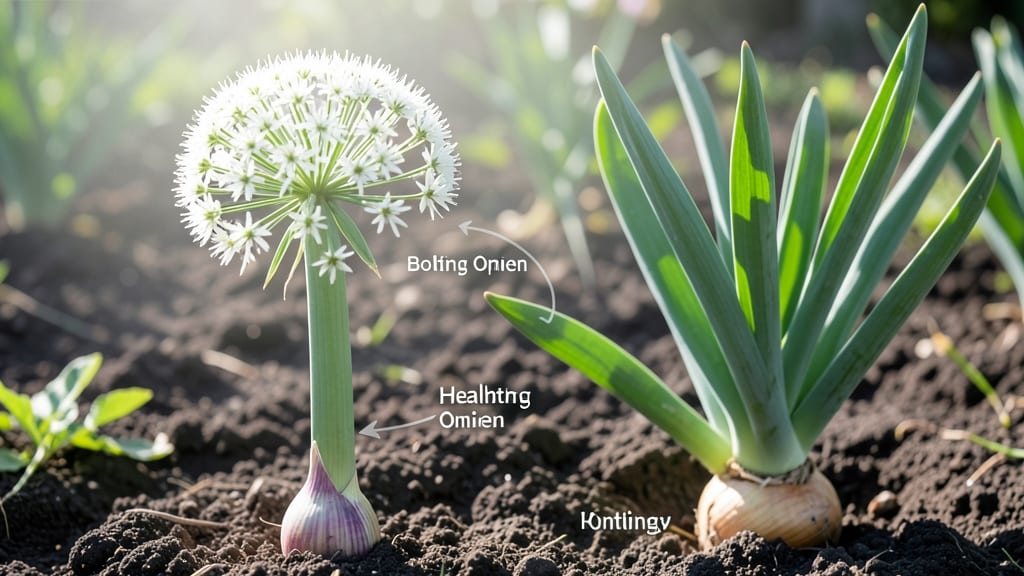
Bolting in onion due to too much light and heat too soon can turn your harvest into bitter green stalks instead of sweet bulbs. 🌱 I’ve watched this happen three years in a row, and now I know exactly how to stop it: plant at the right time, choose the right varieties, and give them shade when they need it.
The culprit is usually late planting or long daylight hours triggering flower production. Short-day onions bolt faster in hot climates, while long-day types resist better. My fix? Plant in early fall for spring harvests, or use shade cloth in peak summer to delay bolting by 2-3 weeks.
You can still salvage the harvest—just pull bulbs before stalks get thick. Store them in a cool, dry place for 1-2 weeks to sweeten up. The key is acting fast: once stalks harden, the bulbs won’t mature properly. This works for both green onions and storage varieties.
Here’s how to adjust your planting schedule to avoid the problem entirely.
The Hidden Triggers Behind Onion Bolting
Bolting—the sudden decision of an onion to sprout a flower stalk—can turn your carefully cultivated crop into a bitter, inedible mess. 🌱💥 While it might seem random, science reveals that specific conditions push onions into this premature flowering phase.
Understanding these triggers is the first step to preventing bolting and saving your harvest. Let’s break down the key culprits, from environmental stressors to plant biology, so you can take action before it’s too late.
Onions are photoperiod-sensitive, meaning they respond to daylight length. When exposed to too much light—especially during early growth—onions detect longer daylight hours and trigger bolting as a survival mechanism. This is particularly common in:
- Short-day varieties (like Yellow Sweet Spanish or Red Creole) planted in regions with 12+ hours of daylight.
- Onions grown in spring or fall when day lengths shift rapidly.
- Transplants set too early in warm climates (e.g., Southern U.S.), where long days coincide with rising temperatures.
💡 Pro Tip: Use shade cloth (30-50%) during peak sunlight hours (10 AM–4 PM) to reduce light exposure. For extreme cases, consider black plastic mulch to block light entirely while keeping soil warm.
Onions are cool-season crops, and extreme heat accelerates bolting. Here’s how temperature plays a role:
| Stage | Ideal Temp | Bolting Trigger |
|---|---|---|
| Seedlings | 50–65°F (10–18°C) | Soil temps above 80°F (27°C) shock roots, signaling stress. |
| Bulb Formation | 60–75°F (15–24°C) | Daytime highs consistently above 85°F (29°C) force bolting. |
| Mature Plants | 65–75°F (18–24°C) | Nighttime temps below 50°F (10°C) or above 90°F (32°C) disrupt growth. |
🌡️ Actionable Fix:
- Plant in early spring or late summer to avoid peak heat.
- Use drip irrigation to keep soil temps stable (cool roots = delayed bolting).
- For hot climates, try bolting-resistant varieties like Texas Early White or Southport Red Globe.
Onions have a finite growing window. If left in the ground too long—especially in warm conditions—they’ll bolt as a last-ditch effort to reproduce. This is common with:
- Storage onions (like Yellow Granex) left past their harvest window (typically 90–120 days).
- Onions planted in fall for spring harvest that survive winter but face early spring heat.
- Transplants set too late in the season, forcing rapid growth.
⏰ Solution:
- Harvest onions when neck (stem) begins to dry and fall over (usually 10–14 days before bolting starts).
- For long-day regions, use short-day varieties (e.g., Texas Early White) with tighter harvest windows.
- In warm climates, succession plant every 2–3 weeks to ensure a staggered harvest.
Onions are light feeders, and improper nutrition can trigger bolting as a stress response. Watch for these red flags:
- Nitrogen deficiency: Pale leaves and stunted growth signal starvation, which can force bolting.
- Excess nitrogen: Lush top growth with no bulb formation delays maturity, increasing bolting risk.
- Potassium or phosphorus imbalance: Weak roots or purple-tinged leaves indicate stress.
💡 Balanced Approach:
- Test soil before planting—aim for pH 6.0–7.0 and moderate nitrogen (20–30 lbs/acre).
- Avoid fresh manure (high in nitrogen); use composted instead.
- Side-dress with potassium-rich fertilizer (e.g., greensand) at bulb formation.
Some onion varieties are hardwired to bolt under certain conditions. For example:
- Short-day onions (e.g., Texas Grano) bolt when exposed to 12+ hours of light.
- Intermediate-day onions (e.g., Candy) bolt if planted too early in long-day zones.
- Long-day onions (e.g., Sweet Spanish) bolt if daylight exceeds 14 hours.
🎯 Variety Selection Tips:
- Check your USDA Hardiness Zone and daylight hours to pick the right type.
- For southern climates, choose Texas Early White or Red Creole.
- For northern regions, opt for Yellow Sweet Spanish or Candy.
Practical fixes for onion bolting
Now that you understand why onions bolt—thanks to light exposure, temperature swings, or genetics—it’s time to take action! Whether you’re dealing with a sudden sprout or trying to prevent future issues, these solutions are designed to be simple, effective, and tailored to the root cause.
Let’s get your onions back on track for a bountiful harvest.
If your onions have already sent up a flower stalk (bolted), don’t panic—there’s still hope to salvage some of the bulb or prevent further spread.
1.
Harvest and Use Immediately 🍳 If the bulb is still edible (even if the stalk is tall), pull the onion immediately and use it in recipes that call for cooked onions, like: - Caramelized onions (great for burgers or pizza!) - Onion soup (the perfect way to hide any bitterness) - Pickled onions (acidic vinegar can mellow out the flavor)
> 💡 Pro Tip: Smaller bulbs or those with just a tiny stalk are often still usable. Larger, fully bolted onions may be tougher but can still be chopped and sautéed.
2. Prune the Flower Stalk 🔪
If you want to save the bulb for storage, cut off the flower stalk as close to the base as possible. This redirects some energy back to bulb development, though it won’t reverse the process completely.
Store these onions in a cool, dark, dry place (like a mesh bag in the fridge) and use them within a few weeks.
3. Compost the Rest 🌱
If the onion is too far gone, pull it up and compost it—don’t let it go to seed in your garden! Bolting onions can self-seed aggressively, leading to more unwanted sprouts next year.
The best defense is a strong offense. Adjust your growing conditions to minimize stress triggers and keep your onions focused on bulb development.
1. Choose the Right Variety for Your Climate 🌍
Not all onions bolt at the same rate. Short-day onions (like Texas Early White) are best for warm climates, while long-day onions (like Yellow Sweet Spanish) thrive in cooler regions.
Check your USDA hardiness zone and pick a variety bred for your area.
> ✨ Prevention Tip: If you’re in a borderline zone, try intermediate-day onions (like Candy or Red Baron) for more flexibility.
2. Control Light Exposure 🌞
Onions bolt when they sense too much light or long daylight hours.
Here’s how to manage it: - Plant in partial shade (especially in early spring or late summer) using row covers, shade cloth (30-50%), or taller crops (like corn or sunflowers) as a natural barrier. - Use black plastic mulch to block light and keep soil temps cooler. - Avoid planting in early spring if your region has 14+ hours of daylight—wait until late spring or early summer when days are shorter.
3. Regulate Soil Temperature 🌡️ Onions hate heat stress.
Keep soil temps between 60–70°F (15–21°C) for optimal growth. - Water deeply and consistently (1–1.5 inches per week) to prevent soil from drying out. - Mulch heavily with straw or grass clippings to retain moisture and cool the soil. - Avoid planting in full sun during peak summer—opt for fall or early spring plantings in warm climates.
4.
Fertilize Smartly 🌿 Too much nitrogen can encourage leafy growth at the expense of bulbs, while phosphorus and potassium help strengthen roots and reduce stress. - Use a balanced fertilizer (like 5-10-10) at planting. - Side-dress with compost or a low-nitrogen organic fertilizer (like kelp meal) mid-season. - Avoid over-fertilizing—follow package instructions to prevent nutrient burn.
5. Succession Planting for Long Harvests 📅
Instead of planting all your onions at once, stagger plantings every 2–3 weeks. This ensures a steady harvest and reduces the risk of bolting from sudden temperature or daylight changes.
> 💡 Pro Tip: If you’re growing from onion sets (small bulbs), choose shallots or pot onions—they’re less prone to bolting than standard onions.
If you’ve already planted and notice early signs of bolting (tall, thin leaves or a tight bulb), act fast: - Shade cloth – Throw a 30% shade cloth over the bed immediately to reduce light exposure. - Water deeply – Stress from drought can trigger bolting, so keep soil moist but not soggy. - Thin the crop – Overcrowded onions compete for resources, leading to weaker bulbs.
Thin to 4–6 inches apart for better airflow and growth.
If your onions bolt en masse, don’t be discouraged! Use them in quick-cook recipes (like stir-fries or soups) before they become too pungent. And next season? Adjust your planting strategy based on what you’ve learned.
With the right variety, timing, and care, you’ll be back to harvesting plump, sweet onions in no time. Happy gardening! 🥔🌱
Frequently asked questions
Why do my onions bolt even though I planted them at the right time?
Even with proper timing, onions bolt due to heat stress or excessive light exposure. If soil temperatures exceed 85°F (29°C) during bulb formation, onions may bolt prematurely. Use shade cloth (30-50%) during peak sunlight hours to reduce stress and keep soil moist with drip irrigation.
Can I still use onions that have bolted?
Yes! If the bulb is still firm, harvest and use it immediately in cooked dishes like soups, stir-fries, or caramelized onions. Smaller bulbs with early stalks work best. For storage, cut off the flower stalk and store in a cool, dry place for up to 2 weeks.
How do I know if my onion variety is prone to bolting?
Check your USDA hardiness zone and daylight hours. Short-day onions (e.g., Texas Early White) bolt faster in 12+ hour daylight, while long-day onions (e.g., Yellow Sweet Spanish) bolt if exposed to 14+ hours. For warm climates, choose heat-tolerant varieties like Red Creole.
Will mulching help prevent onion bolting?
Mulching with straw or grass clippings keeps soil temps stable (60–70°F) and retains moisture, reducing heat stress. Apply a 2–3 inch layer after planting and replenish as needed. This is especially effective in hot climates where bolting is common.
Can I save bolted onions for next year’s garden?
No—bolted onions should be composted immediately. If left to seed, they’ll self-sow aggressively, leading to more bolting next season. Instead, use bolted bulbs in recipes or discard them to prevent unwanted sprouts.