
Planting
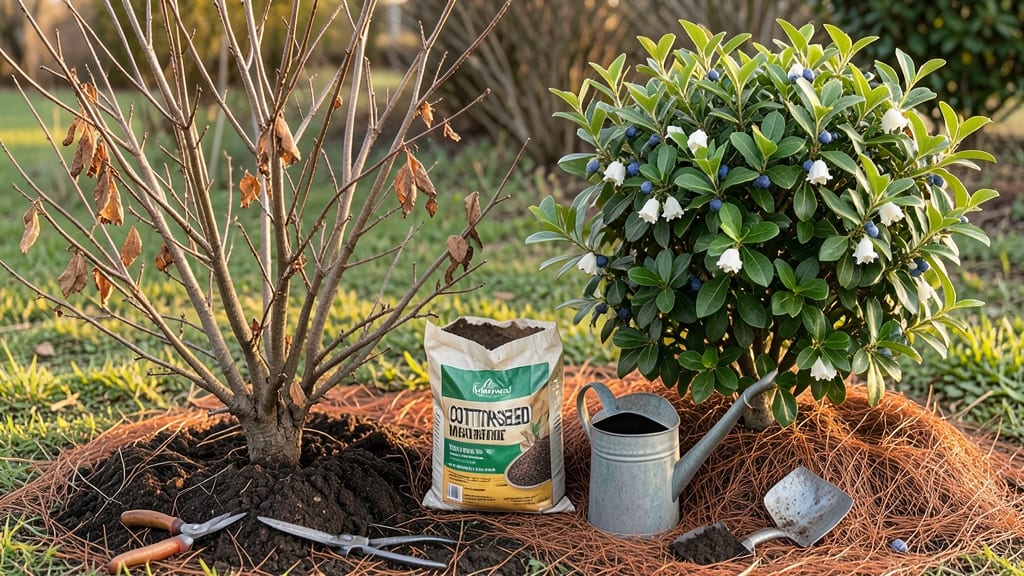
Bringing back a dead blueberry plant starts with one critical check: the roots. 🌱 I’ve nursed more "dead" blueberries back to life than I’d like to admit—most of them just needed the right mix of moisture, soil acidity, and a little pruning know-how.
The key is diagnosing whether your plant is suffering from overwatering, nutrient starvation, or something else entirely.
Blueberries hate soggy roots, but they also can’t survive in alkaline soil. Grab a pH test kit—your plant’s revival depends on soil between 4.5 and 5.5.
If the roots smell rotten or look mushy, you’re dealing with root rot, which means cutting back dead stems and amending the soil with sulfur or peat moss to acidify it properly. Most gardeners skip this step and wonder why their plants stay limp.
Once the soil’s right, focus on watering consistency—blueberries need moisture but can’t sit in wet soil. Prune any dead branches (they’re just stealing energy), then fertilize with an acid-loving plant food every 4-6 weeks.
Within 4-6 weeks, you’ll see new green shoots if the roots are still alive. It’s not magic—just fixing what went wrong.
Prevention is easier: mulch with pine needles, water deeply but infrequently, and test your soil every spring. My revived plants now produce more berries than ever—proof that even "dead" blueberries can bounce back with the right care. Let’s get yours thriving again.
Root Causes of Blueberry Decline
Blueberries are tough little plants, but even the hardiest can succumb to stress—especially when their acidic soil needs or environmental conditions go unmet. Understanding why your plant looks "dead" (or dormant) is the first step to revival.
Below, we break down the real culprits behind blueberry decline, backed by science and actionable insights.
Blueberries are acid-loving (ericaceous) plants, thriving in soil with a pH between 4.5 and 5.5. When soil pH strays too high (alkaline) or too low (extremely acidic), nutrient availability plummets, leading to:
- Nutrient Lockout: High pH (>6.0) binds essential nutrients like iron, manganese, and zinc into forms roots can’t absorb. Symptoms? Yellowing leaves (chlorosis) and stunted growth.
- Toxic Buildup: Low pH (<4.0) increases aluminum and manganese toxicity, damaging roots and leaves. Look for brown, crispy edges on foliage.
- Root Suffocation: Overly acidic soil (pH <3.5) can disrupt beneficial soil microbes, weakening the plant’s ability to uptake water and nutrients.
Pro Tip: Test your soil with a home pH kit (or send a sample to a lab). If pH is off, amend with elemental sulfur (to lower pH) or lime (to raise pH)—but never use both at once!
Blueberries hate soggy feet and thirsty roots. Water stress triggers dormancy-like symptoms, making plants appear "dead" when they’re just conserving energy:
- Overwatering: Poor drainage or compacted soil leads to root rot (caused by Phytophthora or Pythium fungi). Roots turn black/mushy, and the plant wilts despite wet soil.
- Underwatering: Blueberries need 1–1.5 inches of water per week (more in heat). Drought stress causes leaves to curl, drop, or turn brown at the edges.
- Inconsistent Moisture: Fluctuating water levels confuse roots, leading to osmotic stress—a condition where cells lose turgor pressure, mimicking death.
Fix It: Improve drainage by amending soil with peat moss or pine bark fines, and water at the base (not overhead) to prevent fungal splash.
Blueberries need full sun (6–8 hours/day) but can’t handle intense heat or freezing temps without protection:
- Heat Shock: Temps above 90°F (32°C) cause leaf scorch (brown, papery edges) or sunburn on young shoots. Evergreen varieties suffer more.
- Winter Burn: Sudden cold snaps (<20°F/-7°C) can damage leaves, but the plant often recovers. Prolonged freezing may kill buds or roots if not mulched.
- Shade Stress: Too little light reduces photosynthesis, leading to weak, pale growth and fewer berries. Plants may drop leaves to conserve energy.
Solution: Plant in morning sun/afternoon shade in hot climates, and mulch with pine needles or straw to insulate roots in winter.
Hidden invaders can drain a blueberry plant’s vitality until it looks lifeless. Common culprits:
| Pest/Disease | Symptoms | Why It Kills |
|---|---|---|
| Blueberry Maggot (Rhagoletis mendax) | Worms in berries; premature fruit drop | Larvae feed on fruit, starving the plant of energy reserves. |
| Root Weevils (Otiorhynchus spp.) | Chewed leaves (notched edges); wilting | Adults skeletonize foliage; larvae devour roots. |
| Fungal Leaf Spot (Mycosphaerella) | Dark spots with yellow halos; defoliation | Blocks sunlight, reducing photosynthesis and stressing the plant. |
| Verticillium Wilt (Verticillium fungus) | Yellowing leaves, vascular discoloration (brown streaks in stems) | Clogs xylem vessels, preventing water/nutrient transport. |
Defense: Use neem oil for pests, copper fungicides for leaf spot, and remove infected debris to prevent spread.
Blueberries are light feeders but need specific nutrients in acidic conditions:
- Nitrogen (N) Deficiency: Pale yellow leaves (oldest first) signal poor growth. Too much nitrogen? Dark green, sparse foliage with few berries.
- Phosphorus (P) Deficiency: Purple-tinged leaves or stems—critical for root and flower development.
- Potassium (K) Deficiency: Weak stems, yellowing leaf edges, and poor cold hardiness.
- Micronutrients (Iron, Zinc, Manganese):
- Iron: Interveinal chlorosis (yellow leaves with green veins). - Zinc: Stunted growth, small leaves ("little leaf" syndrome). - Manganese: Brown spots between veins (common in alkaline soil).
Action: Use an ericaceous fertilizer (like Osmocote Blueberry) or soil amendments like cottonseed meal for nitrogen.
Revive Your Blueberry Bush Now
Your blueberry plant might be struggling, but don’t give up just yet! With the right steps, you can nurse it back to health—even if it looks like it’s gone.
Below, we’ve mapped out practical fixes based on the most common causes of decline, along with prevention tips to keep your plant thriving long-term.
If your blueberry bush is drowning in soggy soil, its roots suffocate and rot. Act fast to save it!
How to Fix It: 🔥 Stop watering immediately—let the soil dry out slightly before assessing. 🍳 Check the roots—gently dig around the base (1–2 inches deep). If they’re mushy or black, they’re rotting. 👨🍳 Repot or improve drainage—if in a container, switch to a pot with drainage holes and fresh, well-draining soil. For in-ground plants, amend the soil with compost, perlite, or sand to loosen it up. 🥘 Adjust watering habits—blueberries hate "wet feet." Water deeply 1–2 times per week (more in extreme heat) and ensure the top 2–3 inches of soil dry out between waterings. ⏰ Trim dead branches—prune any blackened or mushy stems to prevent further spread.
💡 Pro Tip: Mulch with pine needles or wood chips (2–3 inches thick) to retain moisture without suffocating roots.
Blueberries are acid-loving divas—they thrive in pH 4.5–5.5. If your soil is too alkaline (high pH), they can’t absorb nutrients, leading to yellow leaves and weak growth.
How to Fix It: 🔥 Test your soil—use a home pH kit (available at garden centers) or send a sample to a local extension office for accuracy. 🍳 Lower pH with sulfur or peat moss—if pH is above 6.0, mix 1–2 lbs of elemental sulfur per 100 sq ft into the top 6 inches of soil. For containers, use sphagnum peat moss in your potting mix. 👨🍳 Add organic matter—work in composted pine bark, coffee grounds, or leaf mold to naturally acidify the soil over time. 🥘 Use acid-forming fertilizers—switch to a blueberry-specific fertilizer (like cottonseed meal or iron sulfate) to keep pH in check. ⏰ Monitor and retest—soil pH changes slowly. Retest in 3–6 months and adjust as needed.
💡 Pro Tip: Coffee grounds are a free, easy way to lower pH—just sprinkle them around the base (but don’t overdo it, as they can compact soil).
Blueberries are tough, but late frosts or sudden cold snaps can kill buds, leaves, or even the entire plant. If your bush looks blackened, crispy, or devoid of leaves, it might be frost damage.
How to Fix It: 🔥 Prune damaged areas—cut back any black, mushy, or hollow stems with clean pruners. Healthy wood is green or brown inside. 🍳 Protect from future cold—if your area gets hard frosts, plant in a sheltered spot (like near a south-facing wall) or use burlap wraps in winter. 👨🍳 Fertilize for recovery—give your plant a balanced, acid-loving fertilizer (like 10-10-10) to boost new growth. 🥘 Water deeply after frost—helps the plant recover by keeping roots hydrated. ⏰ Wait for new growth—if the crown (base) is still firm, the plant may regrow. If it’s soft or smelly, it’s likely dead.
💡 Pro Tip: Mulch heavily in winter (4–6 inches) with straw or leaves to insulate roots from freezing temps.
Powdery mildew, root rot, or blueberry maggots can silently drain your plant’s energy. Look for white powder, holes in berries, or wilting despite good care.
How to Fix It: 🔥 Identify the problem—check for:
- Powdery mildew (white fuzzy coating on leaves)
- Root rot (mushy stems, foul smell)
- Maggot infestation (tiny white larvae in berries)
🍳 Treat fungal issues—spray with neem oil or copper fungicide (follow label instructions). For maggots, handpick affected berries and cover plants with fine netting to block flies. 👨🍳 Improve airflow—thin out dense branches to reduce humidity (fungi love damp, crowded spaces). 🥘 Remove infected parts—prune and dispose of diseased leaves/berries (don’t compost them!). ⏰ Prevent recurrence—rotate crops if possible (though blueberries are perennial) and sterilize pruners with rubbing alcohol between cuts.
💡 Pro Tip: Baking soda spray (1 tsp baking soda + 1 quart water + a drop of dish soap) can help prevent powdery mildew naturally.
Even in acidic soil, blueberries need specific nutrients (like nitrogen, phosphorus, and micronutrients). Yellow leaves, stunted growth, or small, tasteless berries can signal a deficiency.
How to Fix It: 🔥 Test soil nutrients—a simple soil test kit checks for nitrogen (N), phosphorus (P), and potassium (K). 🍳 Fertilize properly—use a slow-release, acid-loving fertilizer (like cottonseed meal or fish emulsion) in early spring and after harvest. 👨🍳 Add micronutrients—if leaves are purple (phosphorus deficiency), try bone meal. For yellowing between veins (iron deficiency), use iron sulfate. 🥘 Feed lightly but often—blueberries prefer small, frequent meals over heavy doses. Avoid high-nitrogen fertilizers late in the season (they promote leafy growth over fruit). ⏰ Mulch with nitrogen-rich materials—composted manure or leaf mold feeds roots slowly.
💡 Pro Tip: Epsom salt (magnesium sulfate) can help with yellowing leaves—dissolve 1 tbsp per gallon of water and spray foliage monthly.
Once your blueberry bush is back on track, keep it happy long-term with these habits: ✅ Monitor soil pH every 6–12 months. ✅ Water deeply but infrequently—avoid soggy soil. ✅ Prune in late winter/early spring to improve airflow. ✅ Fertilize twice a year (spring and post-harvest). ✅ Protect from pests with netting or organic sprays. ✅ Mulch with acidic materials (pine needles, peat).
Remember: Revival takes patience. Some plants bounce back in a season, while others need a full year to recover. But with these steps, your blueberry bush could be bursting with berries before you know it! 🫐💚
Frequently asked questions
How do I know if my blueberry plant is truly dead or just dormant?
Check the crown (where stems meet the soil). If it feels firm and smells fresh, the plant may still be alive. Gently scratch the bark—if green underneath, roots are likely still active. If the crown is soft, black, or smells rotten, it’s probably dead. Dormancy usually happens in winter or extreme drought.
Can I save a blueberry plant with root rot? What should I do first?
Yes, but act fast! First, stop watering immediately and let the soil dry out. Then, carefully dig around the roots—if they’re mushy or black, trim away the rotten parts with clean pruners. Repot in fresh, well-draining soil with sand or perlite to prevent future rot. Mulch with pine needles to keep moisture consistent.
Will adjusting soil pH really bring my blueberry plant back to life?
Blueberries need acidic soil (pH 4.5–5.5). If your soil is too alkaline, nutrients like iron and manganese become unavailable, causing yellow leaves. Test your soil first, then amend with elemental sulfur (to lower pH) or peat moss (for containers). Results may take 3–6 months, but new growth will appear once roots can absorb nutrients again.
My blueberry plant looks dead after frost—can I still save it?
Possibly! If only the leaves or buds are damaged (blackened but stems still firm), prune the dead parts and fertilize with an acid-loving plant food. If the crown is soft or hollow, it’s likely dead. Mulch heavily in winter to protect roots from future cold. New growth should appear by spring if the roots survived.
How long does it take to revive a \"dead\" blueberry plant?
Recovery time varies! With the right care, you might see new green shoots in 4–6 weeks if roots are healthy. Severe cases (like root rot or extreme nutrient deficiency) may take 6–12 months. Patience is key—focus on consistent watering, proper pH, and pruning dead growth while waiting for signs of life.