
Planting
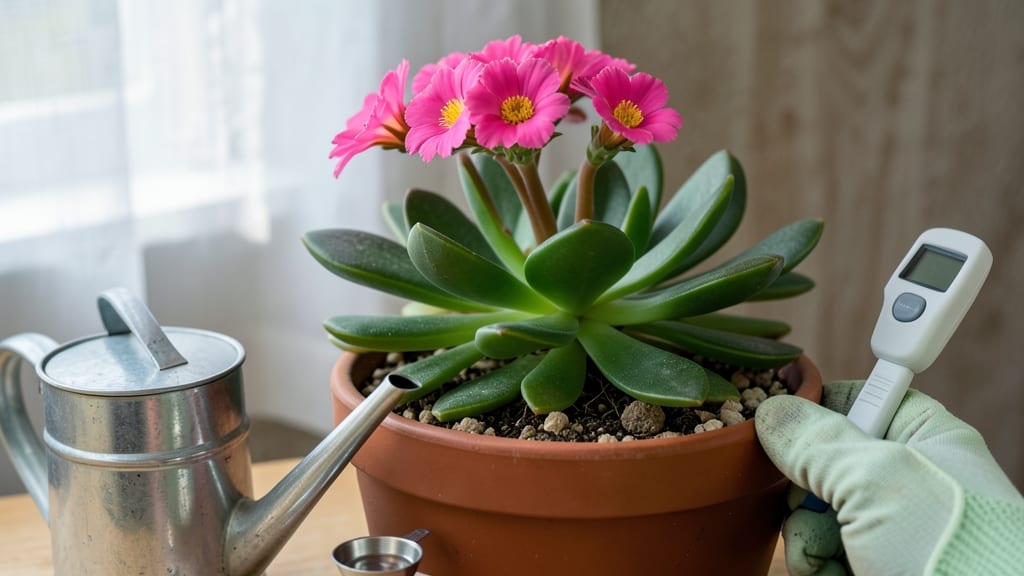
Caring for a kalanchoe plant indoors with the right watering routine is the key to keeping its leaves plump and flowers blooming 🌸.
Struggling to keep yours alive? Most people water too much, turning their thriving kalanchoe into a sad, droopy mess. The trick is letting the soil dry out completely between waterings—and I’ll show you exactly how to do it without guessing.
This drought-tolerant beauty doesn’t need much, but getting the balance wrong can mean root rot or stunted growth. Below, I’ll break down the exact watering schedule, how to check soil moisture like a pro, and the simple adjustments that keep your kalanchoe happy year-round.
Ready to transform your plant care game? You’ll learn when to water, how much to give, and the one mistake that kills more kalanchoes than anything else.

The perfect kalanchoe watering schedule: when, how much, and what to avoid
Mastering the kalanchoe watering schedule is the secret to keeping your succulent thriving indoors. Unlike thirsty houseplants, kalanchoes store water in their leaves, making them drought-tolerant but dangerously susceptible to root rot when overwatered.
I’ve learned through trial and error that consistency—paired with the right techniques—is key to preventing those sad, mushy stems.
Your goal is to mimic their natural arid habitat while accounting for indoor humidity and seasonal changes. The soil moisture test becomes your best friend here: stick your finger 1-2 inches deep, and if it feels dry, it’s time to water.
If it’s still damp, wait another week. This simple check prevents 90% of watering mistakes I see in beginner plant parents.
Here’s the science-backed breakdown of what works—and what doesn’t—for your kalanchoe’s watering needs year-round:
The water amount might seem small, but it’s intentional. Kalanchoes have shallow roots, so they only need enough to hydrate the top layer of soil. Pour water slowly until you see it dripping from the bottom, then empty the saucer within 10 minutes to prevent soggy roots.
I’ve seen too many kalanchoes drowned because owners assumed "more water = happier plant."
Timing matters just as much as how much you water. Always water in the morning (between 9 AM and 11 AM) to allow excess moisture to evaporate during the day. Nighttime watering traps humidity around the leaves, creating the perfect conditions for fungal infections.
I learned this the hard way when my kalanchoe developed black spots after a late-night watering session.
Watch for these warning signs of watering gone wrong: yellowing leaves signal overwatering, while wrinkled, dry leaves mean it’s thirsty. Drooping that doesn’t bounce back after a drink?
That’s often a sign of root stress. Let the soil dry completely between waterings—your kalanchoe’s thick leaves are designed to store moisture, not act as a sponge.
One common mistake I see is using tap water with high mineral content. If your water tastes hard or leaves white residue, opt for filtered or distilled water. The buildup of minerals in the soil can clog pores and prevent proper water absorption.
I switched to rainwater for my kalanchoes, and the difference in leaf health was noticeable within weeks.
For blooming kalanchoes, adjust your watering slightly during their flowering phase (usually winter). Reduce frequency to every 4-6 weeks and cut water by 30% to encourage longer bloom times. The stress of slight drought triggers their natural flowering cycle—a trick I picked up from a local succulent grower.
If you’re unsure whether to water, err on the side of drought. Kalanchoes are survivors and will bounce back from a missed watering, but they rarely recover from root rot.
Keep a small notepad by your plant to track your last watering date—this simple habit saved my last kalanchoe from a waterlogging disaster.
Your kalanchoe’s watering schedule is more about observation than rigid rules. Pay attention to its leaves, soil, and environment. With these science-backed techniques, you’ll keep your plant lush, blooming, and root-rot-free for years to come. 🌸
Kalanchoe watering mistakes that cause root rot (and how to fix them)
Even experienced plant parents make watering mistakes with kalanchoe plants that lead to root rot. The most common culprits? Bottom-watering without drainage and ignoring seasonal water needs. I’ve revived multiple wilting kalanchoes by fixing these simple but critical errors—let me show you how.
Your kalanchoe’s roots need air circulation almost as much as water. When soil stays soggy for too long, beneficial microbes suffocate, and fungal infections take hold. The worst offenders?
Using tap water with chlorine or fluoride, which builds up in the soil over time, and plastic pots without drainage holes that trap excess moisture.
✅ DO: Water only when top 1-2 inches of soil are bone-dry. Use room-temperature rainwater or distilled water to avoid chemical buildup.
❌ DON'T: Let your plant sit in saucers of water—drainage holes are non-negotiable. If your pot lacks them, repot immediately.
🔍 Check for: Yellowing leaves (overwatering), mushy stems (root rot), or crispy edges (underwatering).
Here’s how to fix overwatered kalanchoes before it’s too late. First, remove the plant from its pot and gently shake off excess soil to inspect the roots. Healthy roots are firm and white, while rotten roots are mushy and brown.
Trim away the bad ones with sterilized scissors, then repot in fresh, well-draining cactus mix with perlite or sand.
Seasonal adjustments are key—winter watering should be half as frequent as summer. I cut mine back to every 6-8 weeks when indoor humidity drops, and my plants reward me with longer blooming cycles.
Pro tip: Group your kalanchoes with other succulents to create a microclimate that stays consistently dry.
If your plant’s leaves start drooping but the soil feels dry, it’s a sign of transpiration shock—not thirst. Move it to bright indirect light immediately and avoid watering for 5-7 days.
This gives the roots time to recover without drowning. Patience is critical; kalanchoes bounce back faster from underwatering than overwatering.
For prevention, I swear by the finger test: Stick your finger 1-2 inches into the soil. If it feels damp, wait another week. If it’s dry, water thoroughly until it drains from the bottom. Consistency is your best friend—kalanchoes thrive on predictable neglect more than frequent attention.