
Planting
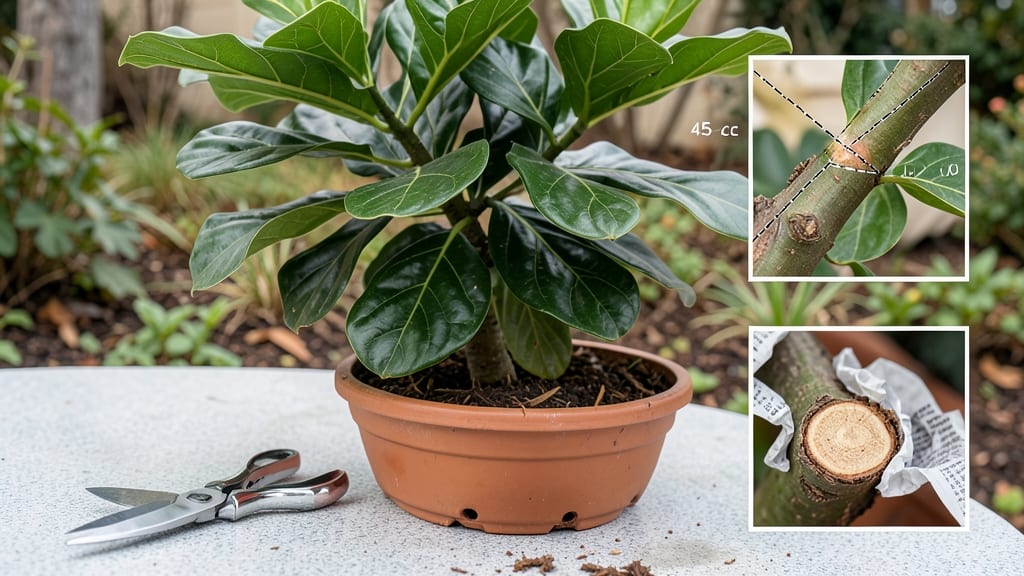
Cutting a fiddle leaf fig isn’t just about trimming—it’s about unlocking a bushier, fuller plant that steals the show. ✂️ I’ve turned leggy, sad-looking figs into thriving, multi-stemmed giants with just a few strategic cuts, and you can too.
The secret lies in where you slice and what you do with those cuttings.
You’ll need sharp pruners, rubbing alcohol for sterilization, and a little patience—no fancy tools required. The best time to prune is spring or early summer, when the plant is actively growing. Look for stems that are at least 12 inches tall and have multiple leaves; these are your growth opportunities.
Just avoid cutting too close to the base, or you’ll shock the plant.
After trimming, you’ll see new shoots emerge within weeks, creating a fuller, more vibrant plant. The cuttings you take root easily in water or soil, giving you free plants to share or expand your collection.
Just keep the pruned fig in bright, indirect light and water lightly until new growth appears.
Even if you’ve killed a fiddle leaf fig before, this method works—it’s all about the right cuts at the right time. Let’s get those shears ready and transform that single-stemmed plant into a lush, multi-branched beauty.
Root Causes of Overgrowth
Fiddle leaf figs (Ficus lyrata) are stunning houseplants, but their rapid growth can lead to leggy stems, sparse foliage, or unruly branches—all signals it’s time for a strategic trim.
Understanding why these issues occur helps you prune with purpose. Let’s break down the science behind why your fiddle leaf fig might need a haircut.
Fiddle leaf figs are tropical plants that crave bright, indirect light (think 6+ hours of filtered sunlight daily). When they don’t get enough, they stretch their stems toward any available light source—a phenomenon called etiolation. This causes:
- Long, weak stems: Cells elongate rapidly to reach light, but the plant can’t support the extra weight.
- Small, pale leaves: Chlorophyll production drops, leading to weak photosynthesis.
- Leaf drop: The plant prioritizes stem growth over leaf health, shedding older leaves to conserve energy.
Actionable fix: Move your plant to a south- or west-facing window or use a grow light (12–14 hours/day). If relocating isn’t an option, prune the leggy stems to encourage bushier, sturdier growth from lower nodes.
Fiddle leaf figs are susceptible to root rot when overwatered, which directly impacts how (and why) they grow. Here’s how excess moisture plays havoc:
- Oxygen deprivation: Waterlogged soil displaces air in the root zone, suffocating roots and halting nutrient uptake.
- Fungal/bacterial infections: Pathogens like Phytophthora thrive in soggy conditions, rotting roots and starving the plant.
- Weak structural support: Roots can’t anchor the plant properly, leading to floppy stems or sudden leaf drop.
Scientific note: Roots need 10–30% oxygen to function. Overwatering drops this to near 0%, triggering a survival response—shedding leaves to reduce water loss.
Actionable fix:
- Let the top 2–3 inches of soil dry out between waterings (stick your finger in—if it’s damp, wait!).
- Use a well-draining mix (60% potting soil, 30% perlite/pumice, 10% orchid bark).
- Prune any blackened or mushy stems (signs of rot) at a 45° angle, ½ inch above a leaf node.
Fiddle leaf figs are heavy feeders but suffer when nutrients are too low or unbalanced. Here’s how deficiencies manifest:
| Nutrient Deficiency | Visual Clues | Why It Happens |
|---|---|---|
| Nitrogen (N) | Yellowing leaves (older first), stunted growth | Nitrogen fuels leaf and stem growth. Without it, the plant redirects energy to survival, slowing expansion. |
| Potassium (K) | Brown leaf edges, weak stems | Potassium regulates water and enzyme activity. A deficiency weakens cell walls, making stems brittle and leaves prone to damage. |
| Magnesium (Mg) | Interveinal yellowing (between veins), slow growth | Magnesium is central to chlorophyll production. Without it, leaves can’t photosynthesize efficiently, leading to chlorosis. |
Actionable fix:
- Fertilize every 4–6 weeks in spring/summer with a balanced liquid fertilizer (e.g., 20-20-20 or a slow-release granular).
- For deficiencies, use chelated micronutrients (e.g., Epsom salt for magnesium—1 tsp/gallon of water, monthly).
- Prune yellow or dead leaves to redirect energy to healthy growth.
Fiddle leaf figs thrive in 65–75°F (18–24°C) with 40–60% humidity. Extreme deviations stress the plant, triggering defensive growth patterns:
- Cold drafts (<50°F/10°C): Slows metabolism, causing leaf curl or drop as the plant conserves energy.
- Low humidity (<30%): Leaves lose moisture faster than roots can replace it, leading to crispy edges or leaf scorch.
- Heat stress (>85°F/30°C): Causes wilting or bleached leaf tips as proteins denature.
Why it matters: Stress hormones like abscisic acid signal the plant to shed leaves or halt growth until conditions improve. Pruning damaged leaves helps the plant focus on recovery.
Actionable fix:
- Avoid placing near AC vents, heaters, or drafty windows.
- Use a humidifier or pebble tray with water to boost humidity.
- Prune any leaves with brown tips or spots—these won’t recover.
Pro tip: 💡 If your fiddle leaf fig is overgrown but otherwise healthy, the issue is likely light or pruning habits. For chronic problems (e.g., yellowing, rot), dig deeper into watering, soil, or nutrients—pruning alone won’t fix systemic issues.
Fixing Fiddle Leaf Fig Problems
Now that you know the why behind your fiddle leaf fig’s struggles, let’s roll up our sleeves and tackle the how. Whether your plant is leggy, overgrown, or just not looking its best, these targeted fixes will help you trim with confidence—and keep your fig thriving.
Below, we’ve mapped common issues to step-by-step solutions, plus pro tips to prevent future headaches.
Fix it:
- 🔪 Trim the damage: Use sterilized scissors or pruning shears to snip off yellow or brown leaves at the base of the stem. Cut just above a leaf node (the bump where leaves grow) to encourage new growth.
- 🌱 Check the roots: Gently remove the plant from its pot and inspect the roots. Healthy roots are firm and white; mushy or black roots are rotten. Trim away the bad roots with clean shears.
- 💧 Repot with care: Place your fig in a clean pot with fresh, well-draining soil (a mix of potting soil and perlite works well). Avoid watering for 5–7 days to let roots recover.
Prevent it:
- ✨ Water only when the top 1–2 inches of soil are dry. Stick your finger in the soil—if it’s damp, wait!
- 🌡️ Use a pot with drainage holes (no exceptions!). Fiddle leaf figs hate soggy feet.
- 🎯 Consider a moisture meter to avoid guesswork.
Fix it:
- 🌞 Move it to brighter light: Fiddle leaf figs crave bright, indirect light (think near a window but not in direct sun). If your plant is stretching toward the light, it’s begging for more.
- 🍳 Prune strategically: Cut back leggy stems by 1/3 to 1/2 their length, just above a leaf node. This encourages bushier growth and thicker foliage.
- 🌱 Propagate the cuttings: Place trimmings in water or moist soil to grow new plants! (More on propagation below.)
Prevent it:
- 💡 Rotate your plant every few weeks so all sides get even light.
- 🌿 Avoid heavy pruning in winter—figs grow slower then and may struggle to recover.
- 🎯 Fertilize lightly (every 4–6 weeks in spring/summer) with a balanced houseplant fertilizer to support growth.
Fix it:
- 💦 Hydrate properly: Water deeply until it drains from the bottom of the pot. Let excess water empty out completely.
- 🌿 Trim dead or crispy leaves: If leaves are dry and brittle, snip them off at the base. Avoid cutting into healthy tissue.
- 🌡️ Check humidity: Fiddle leaf figs love 40–50% humidity. Place the pot on a pebble tray with water or use a humidifier nearby.
Prevent it:
- 📊 Water on a schedule: Stick to a routine (e.g., every 7–10 days) but always check soil moisture first.
- 🌿 Mist leaves occasionally (but avoid soaking them—fungus loves damp foliage).
- 🎯 Avoid drafts from AC, heaters, or open windows, which can stress the plant.
Fix it:
- 🔪 Plan your cuts: Decide if you want to shape the plant (e.g., round it up) or encourage fuller growth (trim leggy stems). Use a sharp pair of shears for clean cuts.
- 🌱 Trim just above a leaf node: This is where new branches will sprout. Angle your cut slightly downward to prevent water from pooling.
- 🌿 Don’t go overboard: Remove no more than 1/3 of the plant’s foliage at once to avoid shocking it.
Pro tip:
- 💡 Use the trimmings! Propagate in water or soil to expand your fiddle leaf fig family.
- 🎯 Prune in spring or early summer when the plant is actively growing.
Fix it (aka grow more figs!):
- 🌿 Choose healthy stems: Select 4–6 inch cuttings with at least 2–3 leaves and a node.
- 💧 Root in water:
- Place the cutting in a jar of water, ensuring the node is submerged but leaves stay dry.
- Change the water every 3–5 days and wait for roots to grow (2–4 weeks).
- 🌱 Transfer to soil: Once roots are 1–2 inches long, plant in a small pot with well-draining soil.
Prevent propagation mishaps:
- 🌡️ Keep humidity high while roots establish (use a plastic bag or humidifier).
- 🎯 Avoid direct sunlight on new cuttings—they’re sensitive while adjusting.
Final Thought: Every snip is a chance to shape your plant’s future. With the right cuts and care, your fiddle leaf fig will bounce back stronger—and maybe even give you a few new babies to love. Happy trimming! 🌿✂️
Frequently asked questions
Can I cut my fiddle leaf fig in winter?
It's best to avoid heavy pruning during winter when your fiddle leaf fig is in its dormant phase. The plant grows slower and may struggle to recover from cuts. Wait until spring or early summer when active growth resumes. Light trimming to remove dead leaves is fine year-round.
How do I know if I'm cutting in the right place?
Look for leaf nodes—those small bumps on the stem where leaves grow. Always cut just above a node at a 45° angle. This encourages new growth from that spot. Avoid cutting too close to the base or you'll damage the plant's growth center.
What should I do with the cuttings after pruning?
You have two great options! Place stems with 2-3 leaves in water with just the node submerged, or plant directly in moist soil. Change water every 3-5 days if rooting in water. Roots typically appear in 2-4 weeks. Keep humidity high while they establish.
Will pruning make my fiddle leaf fig grow faster?
Not directly, but it encourages bushier, fuller growth by stimulating new branches from leaf nodes. Proper pruning redirects energy to create multiple stems rather than one tall, leggy one. For faster growth, focus on improving light conditions and proper care after pruning.
How much can I trim at once without harming my plant?
Never remove more than 1/3 of the plant's foliage in one session. This prevents shock and allows your fiddle leaf fig to recover. For large plants, consider gradual pruning over several weeks. Always use clean, sharp tools to make precise cuts.