
Planting
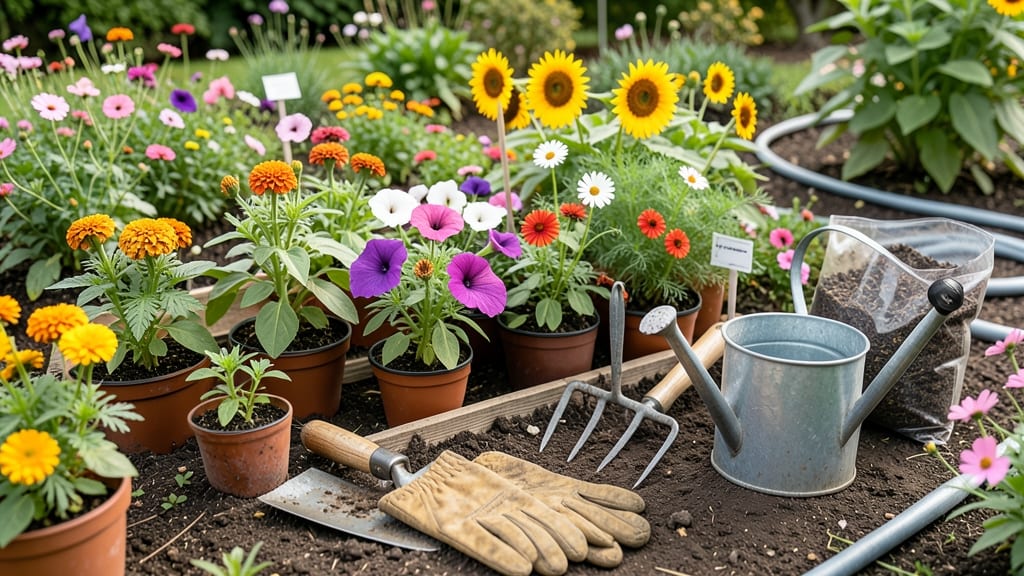
Planting a flower garden for dummies starts with a simple truth: you don’t need a green thumb—just a willingness to learn. 🌸 I’ve seen beginners create stunning gardens by focusing on three key things: the right soil, the right plants, and the right patience.
The first mistake most new gardeners make is rushing in without preparing the ground properly, which leads to weak plants and disappointing blooms.
You’ll need basic supplies: a shovel, gloves, mulch, and a watering can (or hose). Pick easy-to-grow flowers like marigolds, zinnias, or petunias—they forgive mistakes and bloom prolifically.
Dig holes twice as wide as the plant’s root ball, space them according to the tag’s instructions, and water them deeply right after planting. Most beginners overwater at first, thinking more is better, but roots need air too.
Within weeks, you’ll see signs of success: fresh green leaves, new buds, and maybe even the first blooms. The key is observing your garden daily—check for wilting, pests, or uneven watering. A little effort now means a garden that thrives all season long, not one that fades by summer’s end.
This method works for small windowsill gardens or large backyard plots. Start small, keep it simple, and enjoy the process—your first garden will be your most rewarding. Let’s get those flowers growing!
📚 In This Guide
- What you need
- Instructions
- Tips and common mistakes
- Wrapping up and next steps
What you need
- ● Flower seeds or seedlings: Choose beginner-friendly varieties like marigolds, sunflowers, or petunias (1–2 packs or 5–10 seedlings per plant type).
- ● Potting soil or garden soil: A 40-lb bag of high-quality potting mix (or compost-amended garden soil if planting in the ground).
- ● Compost or fertilizer: A 10–20 lb bag of organic compost or a balanced 10-10-10 fertilizer to boost growth.
- ○ Mulch (optional but helpful): Shredded bark or straw (1–2 bags) to retain moisture and suppress weeds.
- ● Garden trowel or hand shovel: For digging small holes (6–12 inches deep).
- ● Gloves: A pair of gardening gloves to protect your hands.
- ● Watering can or hose with a gentle spray nozzle: A 1–2 gallon watering can works for small gardens.
- ○ Pruners (optional): Small bypass pruners for trimming dead foliage.
- ● Measuring tape or ruler: To ensure proper spacing between plants.
- ● A sunny or partially shaded spot (check your flower types’ sunlight needs!).
- ● Access to water (a nearby hose or water source).
- ● Time to commit to regular watering (especially in the first few weeks).
Step-by-step instructions for planting a beginner flower garden
Here's the simple, stress-free way to create a vibrant flower garden that thrives from day one.
🌱 Step 1: Choose the Perfect Location and Sunlight
Most flowers need at least 6 hours of sunlight daily—check your yard by observing where sunlight hits between 10 AM and 4 PM. South or west-facing spots are ideal for sun-loving flowers like marigolds, zinnias, and petunias. Shadier areas work for impatiens, ferns, and hostas.
Mark the spot with stakes to visualize your garden shape. A 4-foot by 4-foot area is perfect for beginners. Avoid low spots where water pools—flowers hate soggy roots. If your soil feels hard when pressed, you’ll need to improve drainage later.
🪴 Step 2: Clear and Prepare the Soil
Remove grass, weeds, or debris from your marked area using a garden fork or shovel. Dig down 6-8 inches to loosen the soil—this helps roots grow deeper. If the soil is heavy clay or sandy, mix in 2-3 inches of compost (available at garden centers) to improve texture and nutrients.
Rake the area smooth to create a level surface. You’ll know it’s ready when the soil looks dark, crumbly, and smells earthy—not musty or compacted. Skip this step, and your flowers will struggle to establish strong roots.
☀️ Step 3: Plan Your Flower Layout
Group flowers by their height and sunlight needs—tall flowers (like sunflowers) go in the back, medium-height (like salvia) in the middle, and short flowers (like pansies) in front. For a 4-foot garden, aim for 9-12 plants total, spacing them 12-18 inches apart to allow airflow and growth.
Check plant tags for spacing guidelines—crowding leads to weak stems and more pests. I like to sketch a quick map on paper first. If you’re unsure, start with 4-6 easy annuals (like petunias or zinnias) and fill gaps with perennials (like coneflowers) later.
💧 Step 4: Plant Your Flowers
Dig a hole twice as wide as the root ball but no deeper—burying too far suffocates roots. Gently remove the plant from its pot and tease apart any circling roots with your fingers. Place it in the hole, then backfill with soil, pressing lightly to eliminate air pockets.
Water deeply right after planting—stick your finger 2 inches into the soil to check moisture. It should feel damp but not wet. Mulch with 1-2 inches of shredded bark or straw to retain moisture and block weeds. Avoid mulching too close to stems to prevent rot.
⏰ Step 5: Water and Maintain for First Growth
Water every 2-3 days until new leaves appear, keeping soil consistently moist but not soggy. After that, water deeply 1-2 times per week, depending on rainfall. You’ll know it’s enough when water drains through to 4-6 inches below the surface.
Watch for yellowing leaves—this usually means overwatering or poor drainage. If flowers wilt in the heat, water in the early morning to give them time to recover. Fertilize lightly with a balanced 10-10-10 formula every 4-6 weeks during the growing season.
Tips & tricks for planting a beginner flower garden
Here's what I wish I knew before starting my first garden—these tricks save time and frustration.
Sunlight Secret: Use a simple app like Sun Surveyor to track sunlight patterns in your yard for a full week. This helps you pinpoint the exact spot that gets those crucial 6 hours of sunlight between 10 AM and 4 PM. I planted my first garden in what I thought was full sun, but it turned out to be only partial shade—my flowers struggled until I moved them to the right location.
Soil Test Trick: Before digging, do a quick soil test by squeezing a handful of moist soil—if it forms a tight ball that doesn't crumble, you've got heavy clay. If it falls apart like sand, you're dealing with sandy soil. Both extremes need 2-3 inches of compost mixed in to create that perfect crumbly texture. I learned this the hard way after my first attempt with pure clay soil.
Planting Layout Hack: Use a grid system with garden flags or even colored chalk to mark where each plant will go. This helps visualize spacing before you dig. For your 4-foot garden, place your 9-12 plants in a 3x4 grid pattern—it creates a balanced look and makes maintenance easier. I sketch my layout on graph paper first to plan the height progression from back to front.
Watering Wisdom: Install a simple rain gauge near your garden to track rainfall. This helps you adjust your 1-2 times per week watering schedule based on actual rainfall rather than guessing. I overwatered my first garden because I didn't account for summer rains—now I check the gauge before watering to avoid soggy roots.
Pro Tips for Plant A Flower Garden For Dummies
- Here's what I wish I knew before starting my first garden—these tricks save time and frustration.
- Sunlight Secret: Use a simple app like Sun Surveyor to track sunlight patterns in your yard for a full week. This hel...
- Soil Test Trick: Before digging, do a quick soil test by squeezing a handful of moist soil—if it forms a tight ball t...
Frequently asked questions
Got questions?
Starting a flower garden is exciting, but it’s normal to feel unsure—especially as a beginner! Here are answers to the most common questions to help you grow with confidence.
When is the best time to plant a flower garden?
The ideal time depends on your climate and flower types. In most regions, spring (after the last frost) and early fall are the best times. Cool-season flowers (like pansies) can handle light frosts, while warm-season blooms (like marigolds) thrive when soil is warm. Check your local frost dates for a safe window!
How often should I water my new flower garden?
Newly planted flowers need consistent moisture—water deeply every 2-3 days for the first 2 weeks to help roots establish. After that, most flowers prefer 1 inch of water per week. Early morning watering reduces evaporation and fungal risks. Pro tip: Use mulch to retain moisture!
What do I do if pests or diseases show up?
Don’t panic! Start with prevention: healthy soil, proper spacing, and regular checks. For pests, try neem oil or insecticidal soap. Fungal issues? Improve airflow and avoid overhead watering. If problems persist, identify the issue (check leaves/stems) and research organic solutions—many garden centers offer quick fixes!
Can I plant flowers in containers instead of a ground garden?
Containers are perfect for small spaces, renters, or tricky soil. Use pots with drainage holes and well-draining potting mix. Just ensure containers are large enough (at least 6 inches deep for most flowers) and place them where they get the right sunlight. Herbs, petunias, and geraniums thrive in pots!
How much sun do flowers really need?
Most flowers need at least 6 hours of sunlight daily, but some (like impatiens) tolerate shade. Check seed packets for specific needs—full sun (6+ hours) is best for vibrant blooms. If your yard is shady, opt for shade-loving varieties like ferns, hostas, or astilbes.
What’s the easiest flower to grow for beginners?
Start with low-maintenance winners like marigolds, zinnias, or sunflowers—they’re hardy, fast-growing, and pest-resistant. Snapdragons and pansies are also forgiving. Avoid fussy flowers (like orchids) until you gain confidence!
Wrapping up and next steps
You’ve got everything you need to start your flower garden journey—no green thumb required! 🌸 Remember, the key is to start small, choose the right plants, and keep it simple.
Even a few well-placed blooms can transform your space into a vibrant oasis. Don’t let perfectionism hold you back; every gardener begins somewhere.
Now that you’re ready, take the next step! Grab your tools, pick your favorite flowers, and get planting. Before you know it, you’ll be enjoying the fruits (or rather, blooms) of your labor. Happy gardening! 🌱