
Planting
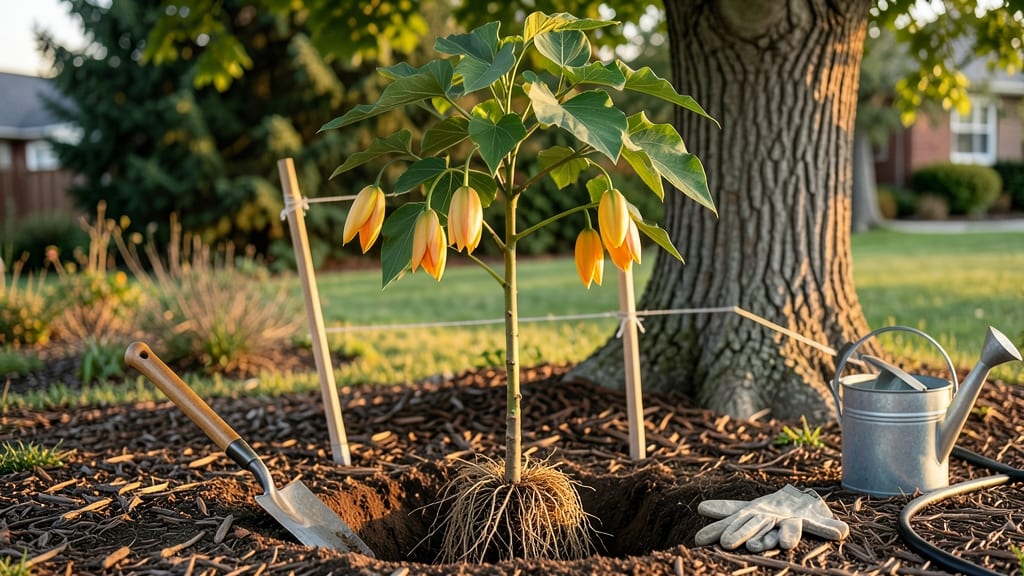
Planting a tulip tree means adding a 50-foot shade giant that thrives with almost no fuss once established. 🌳 The key is starting right—whether you're dropping a 5-gallon sapling into your yard or planting a bare-root specimen in early spring.
These trees grow fast (up to 3 feet per year) but need the right soil and sunlight to avoid common pitfalls like poor root establishment or stunted growth.
First, pick a spot with full sun to partial shade and well-draining soil—tulip trees hate soggy roots. Amend heavy clay with compost or sand if your soil feels dense. Dig a hole twice as wide as the root ball but no deeper, then loosen the sides to encourage root spread.
Water deeply before planting to settle the soil and reduce transplant shock.
After planting, mulch around the base (but not touching the trunk) with 2-3 inches of organic mulch to retain moisture and block weeds. Water once a week for the first month, then taper to every 2-3 weeks once established.
The first few years are critical—avoid over-pruning (they handle it poorly) and protect young trees from lawnmowers or string trimmers.
In just 5 years, you'll have a towering tree with golden tulip-shaped flowers in spring and vibrant fall foliage. The best part? Once mature, these trees need almost no maintenance—just occasional watering during droughts. Here's how to set yours up for long-term success.
📚 In This Guide
- What you need
- Instructions
- Tips and common mistakes
- Wrapping up and next steps
What you need
- ● Tulip tree: Choose between: 1 bare-root sapling (6–12" tall, best for spring planting)
- ● 1 container-grown sapling (3–5 gallons, ideal for year-round planting)
- ● Seeds (if starting from scratch—note: germination takes 2+ years!)
- ● Planting site: Full sun to partial shade (6+ hours of sunlight daily)
- ● Well-draining soil (sandy loam or clay-loam mix; avoid waterlogged areas)
- ● Space: 40–50 feet apart (mature trees can reach 70–90 feet tall!)
- ● 1 shovel (for digging holes)
- ● 1 garden trowel (for delicate root adjustments)
- ● 1 wheelbarrow or bucket (for mixing soil amendments)
- ● 1 measuring tape (to ensure proper spacing)
- ● 1 garden hose or watering can (with a slow-release nozzle)
- ○ Optional (but helpful): Mulch (2–4" of wood chips or pine straw)
- ● Soil pH tester (ideal range: 5.0–7.0)
- ● Root stimulator (for bare-root saplings)
- ● Best planting time: Bare-root saplings: Late fall or early spring (before buds swell)
- ● Container-grown saplings: Year-round (avoid extreme heat/cold)
- ● Soil prep: Amend heavy clay with compost or peat moss (1 part amendment to 3 parts soil).
- ● Weather check: Plant on a cloudy day or water thoroughly if planting in direct sun.
Step-by-step guide to planting a tulip tree for long-term growth
Here’s the method I’ve used to establish healthy, thriving tulip trees with minimal fuss.
🌱 Step 1: Choose the Right Location and Prepare the Soil
Tulip trees (Liriodendron tulipifera) thrive in full sun to partial shade with at least 6 hours of direct sunlight daily. Avoid low-lying areas where cold air pools—these trees hate soggy roots. I always test the soil pH first (aim for 6.0–7.0) and amend with 2–3 inches of compost if the native soil is heavy or clay-heavy.
Dig a hole twice as wide as the root ball but no deeper—planting too deep suffocates the roots and causes stress. Loosen the sides of the hole with a shovel to encourage root spread. If your soil drains poorly, mix in a 50/50 blend of native soil and coarse sand to improve aeration. This prevents root rot, which is the #1 killer of young tulip trees.
🪴 Step 2: Plant the Tree at the Correct Depth and Stake for Support
Remove the tree from its container and gently tease the roots outward if they’re circling. Place it in the hole so the top of the root ball sits 1–2 inches above ground level—this prevents settling and potential girdling as the soil compacts. Backfill with the amended soil, tamping lightly every 4–6 inches to eliminate air pockets.
Water deeply to settle the soil, then install a 4–5 foot tall stake on the side opposite the tree’s strongest branch. Use two 1-inch wide tree ties (not wire) to secure the trunk, leaving 1–2 inches of wiggle room for growth. Over-tightening strangles the trunk as it thickens. Here’s the thing—mulch immediately after planting with 3–4 inches of wood chips, keeping it 6 inches away from the trunk to prevent rot.
☀️ Step 3: Water Deeply and Establish a Consistent Care Routine
Water once a week for the first month, then taper to every 10–14 days once new growth appears—unless your area experiences a drought or heatwave over 90°F, then increase to twice weekly. Tulip trees are drought-tolerant once established, but young trees need 1–1.5 inches of water per week to develop strong roots. You’ll know you’re watering right when the top 2–3 inches of soil feel moist but not soggy.
Fertilize only in the first spring after planting with a balanced 10-10-10 fertilizer (1/4 cup per tree). Skip fertilizer in subsequent years—tulip trees grow quickly and compete well in average soil. Real talk: Over-fertilizing leads to weak wood and attracts pests. Prune only to remove dead, crossing, or low-hanging branches in late winter, never more than 10–15% of the canopy at a time.
⏰ Step 4: Monitor Growth and Adjust Care as the Tree Matures
After 2–3 years, your tulip tree should reach 10–15 feet tall with a spread of 6–8 feet. At this stage, reduce watering to once every 3–4 weeks unless drought conditions persist. Mature trees handle light pruning in late winter (before buds swell) to shape the canopy, but avoid heavy cuts—these trees respond poorly to aggressive pruning and may produce fewer flowers.
Watch for yellowing leaves in late summer—this is normal as the tree prepares for dormancy. If leaves yellow before fall, it’s often a sign of overwatering or poor drainage. Tulip trees are generally pest-free, but aphids or spider mites may appear on new growth. Spray with neem oil if you spot them, but most trees handle pests without intervention. Here’s the moment that matters: By year 5, your tree will start producing those iconic yellow tulip-shaped flowers—worth every step!
Tips & tricks for planting a thriving tulip tree
Here's what I've learned after years of planting these majestic trees—and the little details that make all the difference.
Soil Preparation Secret: When amending heavy clay soil with the 50/50 blend of native soil and coarse sand, I recommend adding a handful of perlite to the mix. This improves drainage even further and prevents that dreaded root rot. The key is creating a loose, well-aerated environment where roots can spread freely. I've seen trees planted in unamended clay struggle even with regular watering.
Planting Depth Matters: That 1-2 inch elevation above ground level for the root ball isn't just about settling—it's about preventing girdling. When soil compacts, the root flare can get buried and strangle the tree. I always check this by measuring from the top of the root ball to the finished soil line with a ruler immediately after planting. This one detail prevents years of stress for your young tree.
Watering Wisdom: For the first month's weekly watering, I use a soaker hose placed at the tree's drip line rather than watering at the trunk. This encourages deep root development rather than shallow surface roots. The goal is to wet the soil to 12-18 inches deep—you can check this by inserting a screwdriver into the soil. This creates a strong root system that can support the tree's rapid growth.
Staking Strategy: The 4-5 foot stake should be installed at a 30-degree angle away from the tree's strongest branch, not straight up. This provides better support against wind while allowing natural movement that strengthens the trunk. I also recommend using tree-specific ties that won't cut into the bark as the trunk thickens. These ties should be checked every 6-8 weeks to ensure they're not too tight.
Pro Tips for Plant A Tulip Tree
- Here's what I've learned after years of planting these majestic trees—and the little details that make all the differ...
- Soil Preparation Secret: When amending heavy clay soil with the 50/50 blend of native soil and coarse sand, I recomme...
- Planting Depth Matters: That 1-2 inch elevation above ground level for the root ball isn't just about settling—it's a...
Frequently asked questions
Got questions about planting your tulip tree? You’re not alone—this majestic tree can seem tricky at first glance! Below, we’ve rounded up the most common questions (and answers) to help you plant with confidence and avoid pitfalls.
When is the best time to plant a tulip tree?
The ideal window is early spring or fall when temperatures are mild (50–70°F). Planting in spring lets roots establish before summer heat, while fall gives them time to settle before winter dormancy. Avoid extreme cold or drought-prone months—your tree’s survival depends on it!
How deep and wide should I plant the hole?
The hole should be twice as wide as the root ball but only as deep as the container or root system. Tulip trees hate soggy roots, so avoid burying the trunk too deep. Loosen the soil at the bottom of the hole to encourage root spread—think of it as giving your tree’s feet a cozy, airy bed!
What if my tulip tree isn’t growing after planting?
Patience is key! Slow growth in the first year is normal, but check for these red flags: yellowing leaves (overwatering), wilted foliage (underwatering), or no new leaves (poor soil or transplant shock). If the soil is compacted or nutrient-poor, amend it with compost and mulch—your tree will thank you.
Can I plant a tulip tree in a small yard or container?
Tulip trees need space to stretch their legs—they mature at 50–70 feet tall! For small yards, choose a dwarf variety (like ‘Little Volunteer’) or plant near property lines. Containers? Not ideal—they’re heavy and root-bound. If you’re set on a container, opt for a shallow, wide pot and replant every 2–3 years.
Are tulip trees prone to pests or diseases?
Generally hardy, but watch for Japanese beetles (skeletonized leaves) or anthracnose fungus (dark spots). Prune affected branches promptly and keep the area mulched but not waterlogged. A yearly fungicide spray in spring can prevent issues—think of it as armor for your tree!
How often should I water a newly planted tulip tree?
Water deeply 2–3 times per week for the first month, then taper to once a week (adjust for drought). After a year, they’re drought-tolerant—but young trees need consistent moisture to thrive. Stick your finger in the soil: if it’s dry 2 inches down, it’s time to water!
Wrapping up and next steps
Planting a tulip tree is a rewarding experience—whether you're adding shade, beauty, or wildlife value to your yard! With the right location, well-drained soil, and minimal pruning, these fast-growing trees thrive for decades. Remember: patience is key, as they grow tall but reward you with stunning blooms and fall color.
Now that you’re ready to plant, why not take the next step? Research companion plants to pair with your tulip tree, or explore local nurseries for young saplings. Happy planting—your future shade canopy awaits! 🌱🌳