
Planting
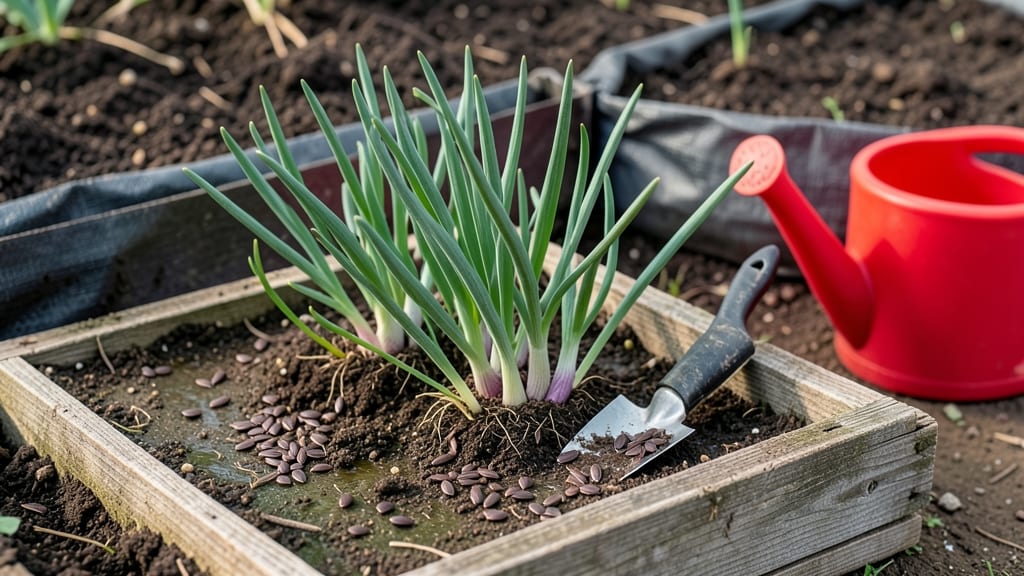
To plant bunching onion seeds 🧅 for fast, straight greens, start with a shallow trench just ¼–½ inch deep—too deep and they’ll bolt, too shallow and they’ll dry out.
Struggling to grow bunching onions that produce straight, lush greens instead of leggy, scattered plants? The secret lies in precise planting techniques that most gardeners overlook—from seed depth to spacing tricks that boost yield and speed up harvests.
Bunching onions thrive in cool spring soil (USDA Zone 6a) when sown in March–April, but the real game-changer is spacing. Crowd them too close, and you’ll end up with weak stems; space them too far, and you waste garden real estate.
Below, I’ll walk you through the exact depth, spacing, and soil prep to get your bunching onions off to a fast start—plus how to avoid the three mistakes that stunt growth before harvest season even begins.

Perfect bunching onion seed depth and spacing for thick, straight greens
Bunching onions, also called green onions or scallions, thrive when planted at the right depth and spacing. Too shallow or crowded, and you’ll end up with leggy, weak stems that flop over. Too deep or spaced too far apart, and you waste garden space.
The key? Planting seeds ¼–½ inch deep and 2–4 inches apart in loose, fertile soil. This ensures strong roots, straight growth, and a continuous harvest of crisp, flavorful greens.
Most gardeners make one of two mistakes: planting too deep (which stunts germination) or too shallow (leading to weak seedlings). The ¼-inch depth is ideal for most soil types, but sandy soils may need a slightly deeper planting (½ inch) to retain moisture.
Meanwhile, clay-heavy soils benefit from a shallower depth (¼ inch) to prevent waterlogging, which can cause rot.
Spacing is equally critical. Planting 2–4 inches apart gives each seedling enough room to develop without competing for nutrients. This spacing also makes thinning easier later on, reducing the risk of damaging delicate roots.
If you’re growing bunching onions in containers or raised beds, reduce spacing to 1–2 inches apart to maximize yield in limited space.
Here’s the science behind it: Bunching onions have shallow root systems that spread horizontally. Planting too deep forces them to grow upward quickly, creating weak stems. Meanwhile, proper spacing ensures even sunlight exposure, preventing the bolting (premature flowering) that turns your greens bitter.
| Soil Type | Ideal Depth | Spacing (inches) | Adjustments |
|---|---|---|---|
| Loamy Soil | ¼ inch | 2–3 inches | Best for beginners; retains moisture well |
| Sandy Soil | ½ inch | 3–4 inches | Add compost to improve water retention |
| Clay Soil | ¼ inch | 1–2 inches | Avoid compacting soil; mix in perlite |
| Containers | ¼ inch | 1–2 inches | Use well-draining potting mix |
To plant, start by preparing your soil with a light application of compost (1–2 inches mixed into the top 6 inches). This improves drainage and provides nutrients. Use a seed spacing tool or a ruler to mark rows 12–18 inches apart for in-ground planting.
For containers, plant seeds in a single row or staggered pattern to save space.
After sowing, gently press the soil over the seeds to ensure good seed-to-soil contact, which is crucial for germination. Water lightly with a spray bottle or fine mist to avoid displacing seeds.
Keep the soil consistently moist (not soggy) until seedlings emerge, which typically takes 7–14 days depending on temperature.
Once seedlings reach 2 inches tall, thin them to your desired spacing. Use sharp scissors to snip unwanted seedlings at soil level, leaving the strongest ones. This reduces transplant shock and ensures even growth.
If you’re growing for cut-and-come-again harvests, you can leave seedlings slightly closer together (1–2 inches apart) and harvest outer stems to encourage regrowth.
For succession planting, sow new seeds every 2–3 weeks after the first planting. This extends your harvest window and ensures a steady supply of fresh greens. Bunching onions are cold-hardy, so you can even plant them in early spring or late summer for fall harvests.
Pro tip: If your soil is heavy or compacted, consider planting bunching onions in raised beds or straw bales. These methods improve drainage and give you more control over soil conditions, leading to straighter, healthier greens.
With the right depth and spacing, your bunching onions will grow tall, straight, and lush, ready for harvest in as little as 60 days. Avoid the common pitfalls of overcrowding or improper depth, and you’ll enjoy a bountiful, continuous harvest all season long. 🌱
Step-by-step planting process: from seed to harvest-ready greens
Growing bunching onions from seed is simpler than you think, but the key to straight, lush greens lies in the details. Unlike larger onion varieties, bunching onions thrive when planted at the right depth and spacing, which prevents overcrowding and bolting.
I’ve learned that even a ¼-inch miscalculation in seed depth can lead to weak stems or leggy growth—so let’s fix that together.
Start with well-draining soil that has a pH between 6.0 and 7.0. If your soil is heavy clay or sandy, amend it with compost or aged manure to improve texture and fertility.
Bunching onions are forgiving but reward precise care, so take your time prepping the bed or container. This step alone cuts down on transplant shock and speeds up germination.
How to Plant Bunching Onion Seeds
-
1. Test and prep soil
Use a soil pH test kit to confirm the range is 6.0–7.0. Loosen soil to 6 inches deep with a garden fork, removing rocks or debris. For containers, use a lightweight potting mix with perlite for drainage. -
2. Sow seeds at the right depth
Plant seeds ¼–½ inch deep, pressing lightly into soil. Deeper planting causes bolting, while shallower seeds may dry out. Use a seed spacing tool or ruler to mark rows 12–18 inches apart. -
3. Space seeds for airflow
Place seeds 2–4 inches apart in rows. Overcrowding leads to thin, weak stems. For containers, sow 3–4 seeds per 6-inch pot, thinning later to the strongest sprout. -
4. Water gently after planting
Mist soil with a spray bottle or water lightly with a hose nozzle. Avoid soaking the seeds, which can cause rot. Keep soil consistently moist (not soggy) until germination, typically in 7–14 days. -
5. Thin seedlings carefully
Once seedlings reach 2 inches tall, thin to 2–3 inches apart using scissors to snip at soil level. Avoid pulling to prevent root damage. Use thinned seedlings in salads or compost! -
6. Mulch to retain moisture
Apply 1–2 inches of straw or shredded leaves around plants. Mulch keeps soil cool, reduces weeds, and maintains even moisture—critical for fast, straight growth.
One common mistake I see is skipping the thinning step. Many gardeners assume more plants mean a bigger harvest, but overcrowded bunching onions compete for nutrients, resulting in pale, spindly greens. Thin early and often to give each plant room to grow thick, crisp stalks.
Another pitfall? Planting too early in cold soil, which delays germination. Wait until soil temps reach at least 50°F for best results.
After thinning, focus on consistent watering. Bunching onions need 1 inch of water per week, delivered in the morning to prevent fungal diseases. Use a drip irrigation system or watering can to avoid wetting the leaves, which can cause onion smut.
Within 60–75 days, you’ll harvest bright green, bunching onions ready for salads, stir-fries, or fresh eating.
Pro tip: Mark your planting rows with bamboo stakes to avoid disturbing seedlings when weeding. Bunching onions are shallow-rooted, so gentle care ensures straight, harvest-ready greens every time. With these steps, you’ll go from seed to homegrown bunching onions faster than you’d expect—no leggy failures here! 🌱