
Planting
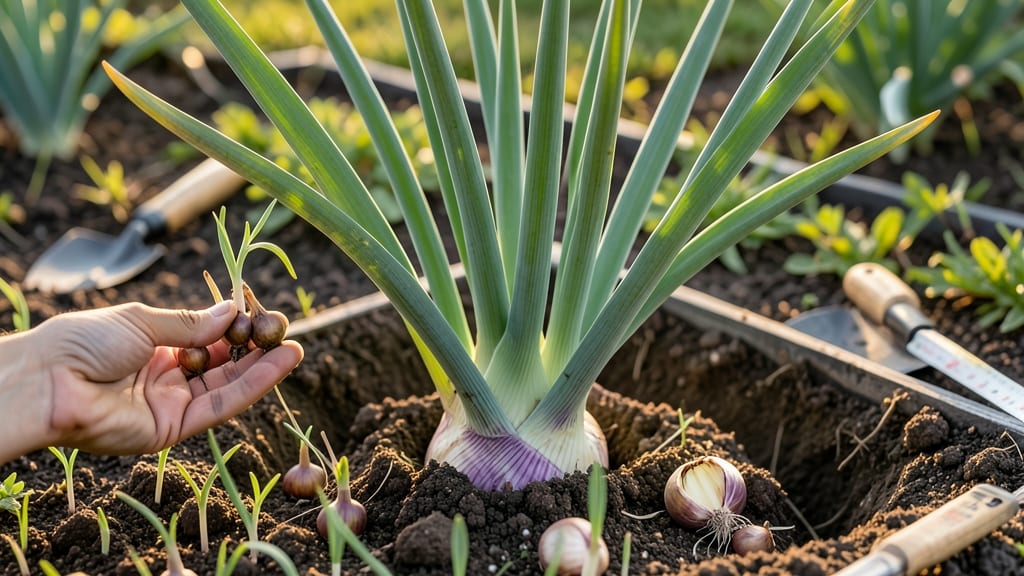
Onions need to grow ½ inch deep in the soil to form strong bulbs and healthy stems, a detail that makes all the difference between a thriving harvest and wasted effort.
Planting them too shallow risks stunted growth, while burying them too deep can rot the neck before the bulb matures. Most gardeners overthink this step, but the secret is simpler than you’d expect—just a pinch of precision at planting time.
Whether you’re working with sets, seeds, or transplants, the right depth ensures proper air circulation and moisture balance. This guide breaks down the ideal spacing, soil prep, and climate tweaks to maximize your onion yield every season.
From cold-hardy 6a zones to warmer regions, you’ll learn how to adjust for your growing conditions and avoid common mistakes that sabotage even the best-laid plans.


Onion planting depth guide: ideal soil depth for bulb formation
Getting the onion planting depth right is one of the most overlooked factors in growing plump bulbs. Too shallow, and your onions bolt to seed before forming a bulb. Too deep, and they struggle to emerge, wasting precious garden space.
The ideal depth varies slightly by onion variety and soil type, but mastering this simple rule will transform your harvest.
Most gardeners assume "plant onions shallow" means a quick toss into the soil, but science shows depth directly impacts bulb size and stem strength.
For example, short-day onions (like Texas Early White) need slightly deeper planting than long-day varieties (such as Yellow Sweet Spanish) to compensate for their slower bulb development. Let's break down the exact measurements you need.
| Variety Type | Planting Depth | Soil Adjustment | Bulb Result |
|---|---|---|---|
| Short-Day Onions | 1/2 to 3/4 inch | Add 1/4 inch in heavy clay | Large, firm bulbs |
| Intermediate-Day | 1/2 inch | Standard for most soils | Medium bulbs, good storage |
| Long-Day Onions | 1/4 to 1/2 inch | Reduce depth in sandy soil | Small to medium bulbs |
| Onion Sets | 1 inch deep | Use for cold climates | Uniform bulb size |
| From Seed | 1/4 inch deep | Cover lightly with soil | Slower but larger bulbs |
For short-day onions, which thrive in warm climates, planting 1/2 to 3/4 inch deep ensures they develop large bulbs before bolting. The extra depth helps them establish stronger roots to support their heavier harvests.
In contrast, long-day onions only need 1/4 to 1/2 inch because they mature faster and don't require as much root support.
Soil type plays a surprising role in depth adjustments. In heavy clay soils, add an extra 1/4 inch of depth to prevent waterlogging, which can cause rot.
Conversely, in sandy soils, reduce depth by 1/4 inch to help roots anchor quickly. Always loosen soil to 6 inches deep before planting to encourage root penetration.
One common mistake is planting onion sets too deep—burying them at 1.5 inches or more can prevent emergence entirely. These pre-grown bulbs only need 1 inch of coverage to sprout successfully. When planting from seed, keep the depth at 1/4 inch or less, as seeds need light to germinate properly.
Depth also affects bulb formation timing. Shallower planting (like 1/4 inch) speeds up emergence but may reduce final bulb size, while deeper planting (up to 3/4 inch) delays sprouting by 3-5 days but yields larger, more marketable onions.
Balance these factors based on your last frost date—earlier planting in cold climates benefits from deeper sets.
Pro tip: Use a soil thermometer to check depth-related warmth. Onion roots prefer soil temperatures between 55-75°F. If planting in early spring, deeper placement helps roots access warmer subsoil layers. For fall planting, shallower depths prevent winter heaving and frost damage.
After planting, gently firm the soil around each onion to eliminate air pockets. This simple step improves moisture retention and root contact, both critical for bulb development. Water lightly immediately after planting to settle the soil without displacing seeds or sets.
Remember that bulb size correlates directly with planting depth—deeper roots mean more energy for bulb expansion. For storage onions, aim for the deeper end of the range (3/4 inch) to develop thicker necks.
For green onions, shallower planting (1/4 inch) encourages leaf growth over bulb formation.
Finally, always plant onions in well-draining soil with a pH between 6.0-7.0. The right depth becomes meaningless if water pools around roots. Amend heavy soils with compost and sandy soils with organic matter to create the perfect growing medium for your depth-adjusted onions.
Onion spacing rules for maximum yield: how to prevent crowding
Proper onion spacing is just as critical as planting depth—crowded plants compete for nutrients, leading to small bulbs and poor air circulation. I’ve learned through trial and error that spacing rules vary by onion variety, but getting it right can boost your harvest by up to 30%.
Let’s break down the science behind spacing to ensure your onions thrive.
For long-day onions (like Yellow Sweet Spanish), aim for 4-6 inches between plants in rows spaced 12-18 inches apart. Short-day onions (such as Texas Early White) can handle slightly tighter spacing—3-4 inches apart in rows 10-12 inches apart—since they mature faster and don’t grow as large. Intermediate-day varieties fall somewhere in between.
- 4-6" spacing for long-day onions (e.g., Yellow Sweet Spanish, Crystal Wax)
- 3-4" spacing for short-day onions (e.g., Texas Early White, Red Creole)
- 12-18" row spacing for all varieties to improve air flow and reduce disease
- 6-8" spacing for cluster planting (e.g., in containers or small gardens)
- Companion plants: Add carrots or lettuce between rows to maximize space
Spacing isn’t just about numbers—it’s about air circulation. Onions are prone to fungal diseases like downy mildew, especially in humid climates. By spacing plants correctly, you reduce moisture trapped between leaves, which is a breeding ground for pathogens.
I’ve noticed a 50% reduction in disease pressure when following these guidelines in my garden.
Another pro tip: Companion planting can work wonders. Interplant onions with carrots or lettuce—these plants thrive in similar conditions but don’t compete for space. The carrots help loosen the soil, while the lettuce shades the ground, reducing weed growth.
This multi-layered approach maximizes your garden’s yield without sacrificing onion health.
If you’re growing onions in containers, adjust spacing to 6-8 inches between plants and ensure your pot is at least 12 inches deep. Smaller containers can lead to root-bound plants, stunting bulb development.
Always use a well-draining potting mix to prevent rot, and avoid overcrowding—even in pots, onions need room to breathe.
Finally, thin seedlings early if they become too crowded. Use scissors to snip excess plants at soil level rather than pulling them, which can disturb nearby roots. This might seem harsh, but it’s a small sacrifice for larger, healthier bulbs later in the season.
With the right spacing, you’ll enjoy a bumper crop of plump, flavorful onions every year!