
Planting
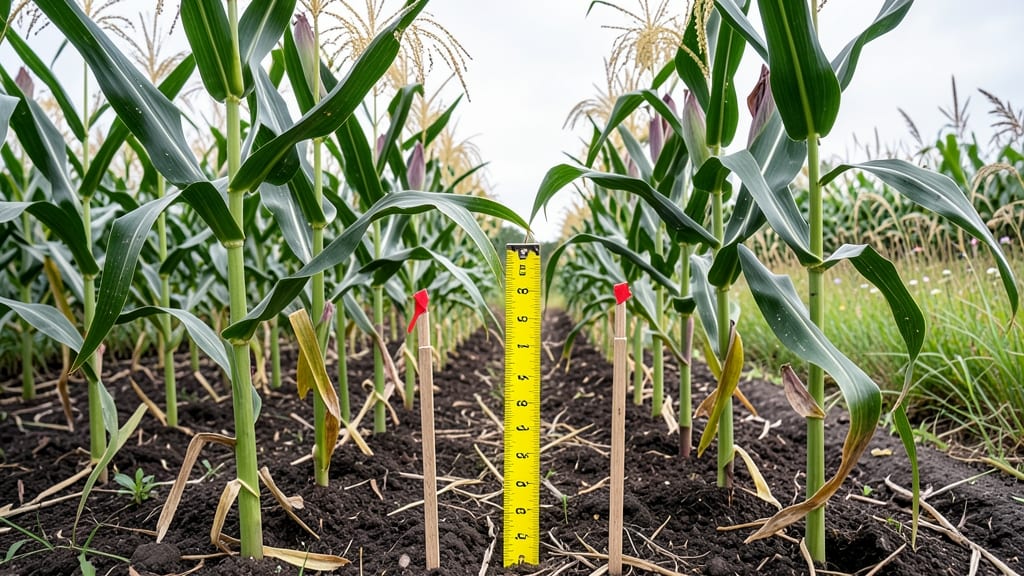
Getting the distance between corn rows right is the difference between a thriving crop and one that struggles with disease, poor pollination, and wasted space.
Picture this: your 🌽 corn plants are tall and lush, but the ears are small, or worse, the stalks are weak and prone to snapping. That’s often a sign your rows are too close—or too far apart.
The right spacing isn’t just about fitting more plants; it’s about airflow, sunlight, and even how easily you can harvest without trampling the soil.
In Zone 6a, where spring planting kicks off in April, the ideal row spacing can vary from 15 inches for small gardens to 36 inches for commercial fields. But why? Tighter rows might seem efficient, but they can lead to shady stalks and higher humidity, inviting fungal diseases.
Meanwhile, wider rows improve airflow and make it easier to spot weeds before they take over.
In this guide, I’ll break down the science behind spacing—how to adjust for your soil type, corn variety, and even your tools. You’ll learn how to measure rows like a pro, avoid common mistakes, and maximize your harvest without sacrificing plant health.
Optimal corn row spacing by variety and soil type
Getting the distance between corn rows right is one of the most impactful decisions for your harvest. Too close, and your stalks will compete for nutrients, leading to weak ears. Too wide, and you’ll waste precious garden space.
The ideal spacing depends on your corn variety—whether it’s sweet corn, dent corn, or flint corn—as well as your soil type and local climate.
For example, sweet corn thrives with tighter rows (15–24 inches) to ensure quick pollination, while dent corn often benefits from wider spacing (30–36 inches) for better airflow and stalk strength.
Your soil fertility also plays a critical role. Rich, well-draining soil can support closer rows because nutrients are abundant, but clay-heavy or poor-quality soil requires wider spacing to prevent overcrowding.
In my Zone 6a garden, I’ve found that sandy loam allows for tighter rows (20 inches) compared to clay soil, where I space rows 30 inches apart to avoid waterlogging and fungal issues.
Even a 10-inch difference in row spacing can mean the difference between a bountiful harvest and stunted plants.
Let’s break down the ideal row spacing for each corn type and soil condition, so you can tailor your planting plan for maximum yield and healthy stalks. The key is balancing plant density, sunlight exposure, and disease prevention—and I’ll share my proven spacing strategies below.
For sweet corn, tighter rows (15–24 inches) are standard because these varieties rely on cross-pollination between nearby plants. If you’re growing ‘Silver Queen’ or ‘Golden Bantam’, I recommend spacing rows 18 inches apart with 8–10 inches between plants in well-drained soil.
This setup ensures that tassels can easily transfer pollen to silks, preventing blank ears. In my experience, overcrowding sweet corn leads to fewer ears per stalk, so don’t be tempted to squeeze in extra plants just to fill space.
When it comes to dent corn, which is often grown for grain, wider rows (24–36 inches) are ideal. Varieties like ‘Black Mexican’ or ‘Country Gentleman’ benefit from this spacing because they develop thicker stalks and require more room to avoid lodging (when stalks fall over).
In sandy soil, I’ve found that 30-inch rows with 18-inch plant spacing produce the sturdiest stalks and highest grain yields. The extra space also improves air circulation, reducing the risk of corn earworm and fungal diseases.
If you’re growing flint corn, which is prized for its hard kernels and drought tolerance
How row spacing affects airflow, disease risk, and harvest efficiency
The distance between corn rows isn’t just about fitting more plants—it’s a critical factor in your corn’s health and productivity. When rows are too close, airflow suffers, creating the perfect humid environment for fungal diseases like corn smut and leaf blight.
But spacing rows too far apart can reduce yield by limiting pollination and shading benefits. The balance is key to healthier stalks and bigger ears.
Wider row spacing—typically 30–36 inches—improves air circulation, helping leaves dry faster after rain or irrigation. This reduces the risk of fungal spores spreading, which is especially important in humid climates or during prolonged rainy seasons.
Poor airflow also weakens stalks, making them more susceptible to lodging (falling over) under heavy ears.
⚠️ WARNING: Crowded Corn Rows = Disease Hotspots Too little space between rows (under 18 inches) traps moisture and heat, creating ideal conditions for corn smut and gray leaf spot. These diseases thrive in stagnant air and damp foliage.
Even if your corn looks healthy early on, overcrowding stresses plants, leading to stunted growth and reduced kernel fill. Pro Tip: Space rows wider in high-humidity zones or use drip irrigation to keep leaves dry.
On the flip side, tighter row spacing (12–18 inches) can boost shade tolerance in hot climates, protecting young plants from heat stress and sun scald. This method also maximizes ground coverage, suppressing weeds naturally.
However, it requires thinning seedlings early to prevent competition for nutrients. For home gardens, 18-inch rows often strike the best balance between airflow and yield.
Pollination is another critical factor tied to row spacing. Corn relies on wind to transfer pollen from tassels to silks, and wider rows (over 30 inches) can improve cross-pollination between plants.
In tight rows, pollen may not travel as far, leading to poor ear development or uneven kernel fill. If you’re growing sweet corn varieties, consider planting in blocks (not single rows) to enhance pollination success.
Harvest efficiency also depends on row spacing. Wider rows make it easier to navigate between plants with tools like harvest knives or mechanical pickers, reducing damage to stalks and ears. In contrast, tight rows can lead to lost ears during harvest if plants are too dense.
For small gardens, 12-inch rows work well with hand-picking, while 30-inch rows are ideal for larger plots or mechanical harvesting.
To optimize airflow and disease prevention, mulch between rows with straw or grass clippings. This improves soil moisture retention while keeping leaves off damp soil. If you notice yellowing leaves or blackened kernels, reassess your row spacing—it might be time to thin or widen.
With the right balance, you’ll grow healthier corn with fewer pests and higher yields. 🌽