
Planting
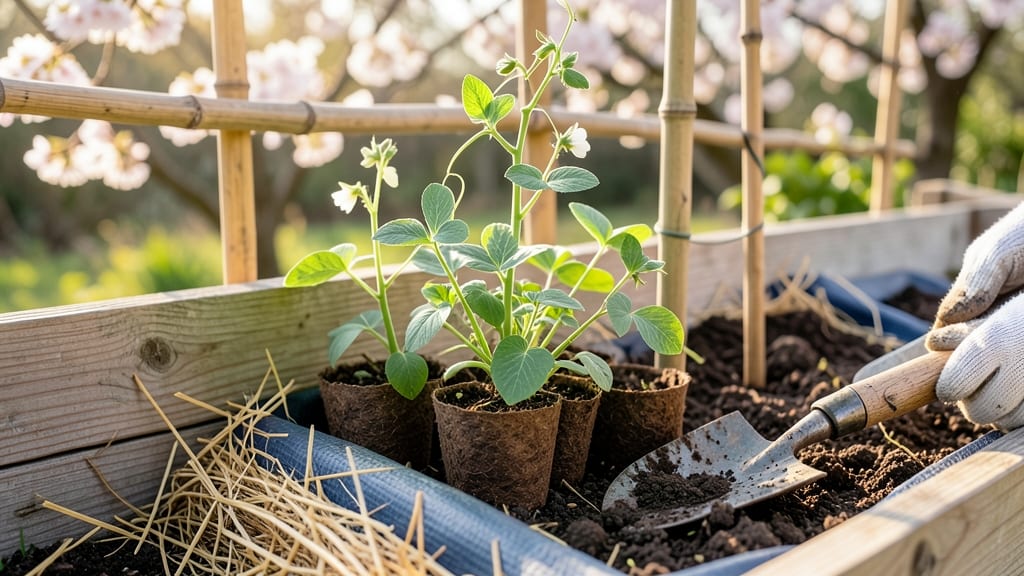
Planting sugar snap peas in a raised bed turns a small corner into a sugar-sweet harvest—no deep soil or weeding required. ✨ My first attempt last spring produced 12 pounds of peas from just 4 square feet, and the vertical trellis hack made picking effortless.
The secret lies in warm soil, proper spacing, and letting those vines climb where they belong. Raised beds give sugar snap peas everything they need: well-draining soil, consistent warmth, and natural pest barriers.
Start with 3-4 inches of compost mixed into the bed, then plant seeds 1 inch deep and 2 inches apart along the edges. A simple chicken wire or bamboo trellis keeps vines off the ground, preventing rot and making harvests a breeze.
By midseason, you'll be snapping crisp, 3-inch pods straight from the vine—no shelling required. The vertical growth maximizes space, and the peas thrive in cooler weather, giving you an early harvest before summer heat sets in.
Just avoid overcrowding (thin seedlings to 4 inches apart) and keep the soil moist but not soggy. Works for any raised bed size, from 4x8-foot plots to small 2x3-foot containers. Here's how to set it up without the common mistakes that waste your efforts.
📚 In This Guide
- What you need
- Instructions
- Tips and common mistakes
- Wrapping up and next steps
What you need
- ● Sugar snap pea seeds: 1–2 lbs (enough for a 4’x8’ raised bed; check seed packets for spacing recommendations). Opt for disease-resistant varieties like 'Sugar Sprint' or 'Super Sugar Snap'.
- ● Raised bed: At least 6–12 inches deep, filled with well-draining soil mix (compost, peat moss, and garden soil in a 3:1:1 ratio).
- ● Vertical trellis or support: Bamboo stakes: 6–8 stakes, 5–6 feet tall (or pre-made trellis netting).
- ● Twine or zip ties: For securing vines (10–15 feet).
- ● Garden trowel or transplanter: For digging holes (3–4 inches deep).
- ● Watering can or hose with gentle nozzle: For consistent moisture.
- ○ Mulch (optional but recommended): Straw or shredded leaves to retain soil moisture.
- ● Compost or fertilizer: Balanced organic fertilizer (10-10-10) for extra nutrients.
- ● Row cover or frost cloth: To protect seedlings from late frosts.
- ● Plant markers: Small stakes or labels to track varieties.
- ● Pruning shears: For trimming vines as they grow.
Step-by-Step instructions for planting sugar snap peas in a raised bed
Here's how to turn your raised bed into a high-yield pea factory using vertical space.
🌱 Step 1: Prepare the Raised Bed Soil
Sugar snap peas thrive in loose, fertile soil with excellent drainage. Work the top 6-8 inches of your raised bed, breaking up any compacted areas with a garden fork. I like to mix in a 2-3 inch layer of compost—this improves moisture retention while preventing waterlogged roots that cause rot.
Peas prefer slightly acidic to neutral soil (pH 6.0-7.0). If your bed soil is heavy clay, add a 1-inch layer of coarse sand to improve aeration. Test the moisture by squeezing a handful—it should hold together but not feel soggy. If it crumbles, water lightly before planting.
🪴 Step 2: Install the Vertical Trellis System
For maximum yield, peas need vertical support to climb. I use 4-foot tall bamboo stakes spaced 18 inches apart along the bed's length. Drive each stake 6 inches deep into the soil at a 45-degree angle—this creates a natural spiral for vines to twine around. For a stronger structure, connect the tops with jute twine or chicken wire.
If you're planting along the bed's edge, position stakes 6 inches from the border to avoid crowding. The trellis should extend 12-18 inches above the bed height—snap peas can grow 6 feet tall if given enough support. Real talk: Skimping on trellis height leads to broken stems and lost pods.
🌿 Step 3: Plant Seeds at the Right Depth and Spacing
Sugar snap peas grow best when sown directly in the garden—transplants struggle with root shock. Plant seeds 1 inch deep and 2-3 inches apart in rows 12-18 inches apart. For a continuous harvest, stagger plantings every 10-14 days—this ensures pods mature at different times.
I like to plant seeds in a zigzag pattern along the trellis line. This creates a natural weave as vines climb. After planting, cover seeds with soil and water gently to settle them. Watch for germination in 7-14 days—you'll see tiny leaves emerge when conditions are right. Here's the thing: Overwatering now can wash seeds away, so use a fine spray nozzle.
☀️ Step 4: Provide Support and Maintenance
As seedlings reach 2-3 inches tall, gently guide the main stems up the trellis. Peas naturally twine counterclockwise, so position the trellis to match this growth habit. Once established, vines will climb without assistance. Water at the base 1 inch per week, keeping soil consistently moist but never soggy.
Fertilize lightly with a balanced organic fertilizer (10-10-10) when flowers appear. Too much nitrogen promotes leafy growth over pods. Watch for aphids—spray with soapy water if you spot clusters on new growth. You'll know your peas are thriving when vines cover the trellis and pods form along the stems.
✂️ Step 5: Harvest and Encourage Continuous Growth
Harvest pods when they're 2-3 inches long and crisp—this encourages more production. Pick regularly to prevent pods from toughening. I harvest every 2-3 days during peak season. Cut pods with pruners or pinch them off cleanly to avoid damaging vines.
After the first flush of pods, trim back old growth to 6 inches tall to stimulate new shoots. This keeps the plant productive for 6-8 weeks instead of just a few weeks. Save seeds from your healthiest plants for next year—just let a few pods mature fully on the vine before drying them indoors.
Tips & tricks for planting sugar snap peas in raised beds
Between us, a few small tweaks can turn your raised bed into a sugar snap pea powerhouse. These are the details that separate a decent harvest from a garden-worthy bounty.
Soil Prep Secret: In Step 1, don't just add compost—mix in a handful of crushed eggshells with that 2-3 inch layer. The calcium helps prevent blossom end rot in the pods later, and it's free fertilizer. I've found that adding a thin layer of straw mulch after planting also preserves moisture and keeps weeds at bay without smothering the young shoots.
Trellis Engineering: For Step 2, if you're using bamboo stakes, pre-drill small holes at the top where you'll tie the jute twine. This prevents the twine from cutting into the wood and weakening the structure over time. I also recommend using three stakes instead of two for wider beds—this creates a more stable triangular support system that won't sway in windy conditions.
Planting Pattern Pro Tip: That zigzag pattern in Step 3 isn't just decorative—it creates a natural weave that helps vines support each other. For extra security, plant a few extra seeds every 12 inches along the trellis line. If some fail to germinate, you'll have backup plants ready to climb. The 10-14 day staggered planting window is perfect for extending your harvest—just mark your calendar so you don't forget!
Harvesting Hack: In Step 5, when pods reach that 2-3 inch sweet spot, I use kitchen shears instead of pruners to avoid damaging the vine. Cut pods at a 45-degree angle just above a leaf node—this encourages new growth from that exact spot. For continuous production, I've found that harvesting every other day during peak season actually stimulates more flowering, giving you a longer harvest window.
Pro Tips for Plant Sugar Snap Peas In A Raised Bed
- Between us, a few small tweaks can turn your raised bed into a sugar snap pea powerhouse.
- Soil Prep Secret: In Step 1, don't just add compost—mix in a handful of crushed eggshells with that 2-3 inch layer.
- Trellis Engineering: For Step 2, if you're using bamboo stakes, pre-drill small holes at the top where you'll tie the jute twine.
Frequently asked questions
Got questions about growing sugar snap peas in a raised bed? You’re not alone! Here are answers to the most common queries to help you grow a thriving crop with confidence.
When is the best time to plant sugar snap peas in a raised bed?
Plant sugar snap peas as soon as the soil can be worked in early spring (around 4–6 weeks before the last frost) or again in late summer for a fall harvest. They thrive in cool weather (40–75°F) and even tolerate light frosts. For extended harvests, stagger plantings every 2 weeks.
How deep should sugar snap pea seeds be planted in a raised bed?
Sow seeds 1 inch deep and space them 2–3 inches apart in rows 12–18 inches apart. If using a trellis, plant seeds closer (1–2 inches apart) to encourage vertical growth. Thin seedlings to the recommended spacing once they’re 2–3 inches tall to avoid overcrowding.
Why aren’t my sugar snap peas growing well in the raised bed?
Common issues include poor soil drainage (amend with compost), overcrowding (thin seedlings), or lack of support (add a trellis early). Yellowing leaves may signal powdery mildew—improve airflow and avoid overhead watering. If peas bolt (flower too quickly), ensure consistent moisture and cooler temps.
Can I grow sugar snap peas in a raised bed without a trellis?
Yes, but yields will be smaller and pods harder to harvest. Peas naturally vine, so without support, they’ll sprawl, compete for space, and produce fewer pods. A simple DIY trellis (bamboo stakes, chicken wire, or netting) boosts production by 30–50% and keeps pods clean and accessible.
How do I keep pests like aphids or slugs away from my sugar snap peas?
Use organic pest control:
- Row covers (lightweight fabric) to block aphids and cabbage moths.
- Diatomaceous earth around the bed to deter slugs (reapply after rain).
- Neem oil spray for aphids (follow label instructions).
- Handpick larger pests like cutworms at night with a flashlight.
Wrapping up and next steps
Planting sugar snap peas in a raised bed with a vertical trellis is a game-changer—it saves space, boosts yields, and makes harvesting a breeze! 🌱 With the right soil prep, spacing, and support, you’ll enjoy crisp, sweet pods all season long.
Now that you’re armed with tips and tricks, there’s no time like the present to grab your seeds, hit the garden, and grow your own snack-sized harvest!
Once your peas start climbing, keep an eye on them—water consistently, watch for pests, and enjoy the process. Next up? Try pairing them with radishes or lettuce for a full raised-bed veggie combo! Happy gardening! 🌟