
Planting
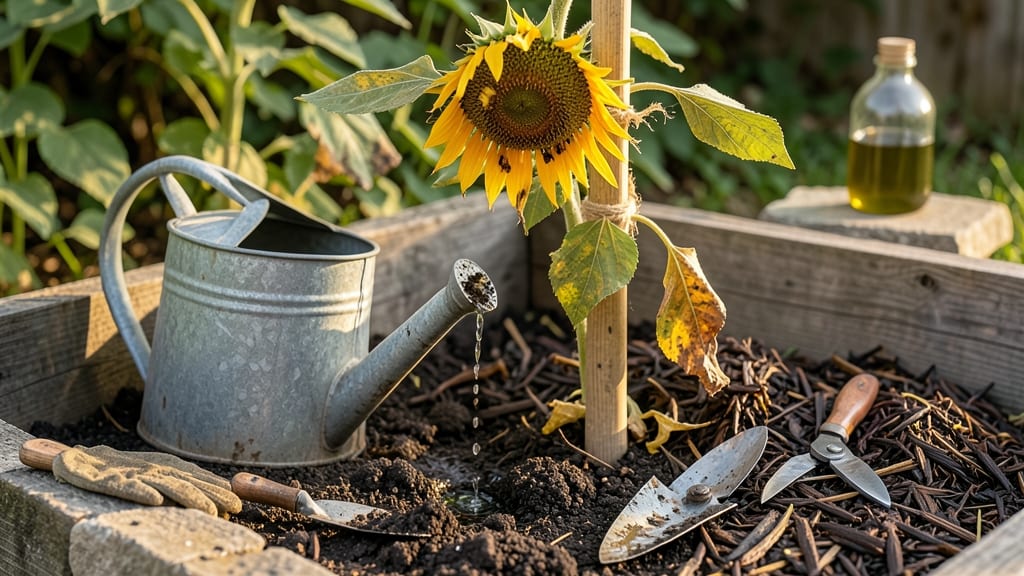
Reviving a dying sunflower plant starts with a quick check of its roots and leaves—often, it’s not too late to save it. 🌻 I’ve brought back more sunflowers than I’d like to admit by addressing the real culprits: soggy roots, pest invasions, or sheer neglect.
The key is acting fast before the stem collapses completely. Most sunflowers decline from overwatering (roots rot in 24 hours) or underwatering (leaves crisp like parchment). Check the soil—if it smells like a swamp or feels like a sponge, you’ve got a drainage problem.
Pests like aphids or spider mites also drain energy, leaving stems weak and leaves yellowing. A simple spray of soapy water or neem oil can turn the tide. Within 3-5 days of fixing the issue, you’ll see new growth pushing through.
Prune dead leaves, give it bright light, and water only when the top inch of soil feels dry. The plant might not reach its full height, but you’ll still get those iconic blooms—just a little later in the season.
This works for all sunflower varieties, from towering giants to compact dwarfs. The secret? Pay attention to the plant’s signals before it’s too late. Let’s get that stem standing tall again!
Root Causes of Sunflower Decline
Sunflowers are resilient giants, but even they can wilt when their basic needs aren’t met. Understanding why your sunflower is struggling is the first step to bringing it back to life. Below, we break down the most common culprits—backed by science—and what they’re really doing to your plant.
Sunflowers thrive on consistency, and watering irregularities are a top reason they decline. Here’s the science:
- Underwatering: Sunflowers have deep taproots that can extend 6+ feet into the soil. When soil dries out, roots shrink and can’t absorb nutrients or water efficiently. This triggers wilting, yellowing leaves (chlorosis), and stunted growth. Pro tip: Stick your finger 2–3 inches into the soil—if it’s dry, it’s time to water.
- Overwatering: Sunflowers hate soggy roots. Excess water displaces oxygen in the soil, leading to root rot (a fungal infection that decays roots). Signs include black, mushy stems at the base, wilting despite moist soil, and a foul odor. Pro tip: Ensure pots have drainage holes, and let the top 1–2 inches of soil dry between waterings.
- Uneven watering: Inconsistent moisture causes osmotic stress, where cells struggle to maintain balance. This leads to droopy leaves, even if the soil seems damp. Pro tip: Water deeply 2–3 times per week (or daily in extreme heat) rather than shallow sprinkles.
Sunflowers love warmth but can’t handle extreme temperatures or sudden changes. Here’s how climate affects them:
- Heat stress: Temperatures above 90°F (32°C) for prolonged periods cause protein denaturation in leaves, leading to browning edges (scorch) and wilting. Sunflowers also transpire (lose water) faster in heat, drying out soil quickly. Pro tip: Provide afternoon shade in scorching climates or mulch to retain moisture.
- Cold damage: Young sunflowers are sensitive to frost (below 50°F/10°C). Cold slows metabolic processes, causing leaves to turn yellow or black and stems to soften. Pro tip: Plant after the last frost date in your zone, or use row covers for early starts.
- Windburn: Strong winds dry out leaves faster than roots can replace moisture, leading to crispy, brown edges. Pro tip: Plant sunflowers in sheltered spots or stake tall varieties to prevent snapping.
Sunflowers are heavy feeders, and poor soil nutrition leads to visible decline. Here’s what’s missing and how to spot it:
| Deficiency | Symptoms | Why It Happens | Quick Fix |
|---|---|---|---|
| Nitrogen (N) | Pale yellow leaves (starting with older ones), stunted growth | Nitrogen is crucial for chlorophyll and leaf growth. Poor soil or overwatering (which leaches N) causes this. | Apply a balanced fertilizer (10-10-10) or compost tea. |
| Phosphorus (P) | Purple or dark red stems/leaves, slow root development | Phosphorus aids energy transfer in plants. Cold or compacted soil locks it out. | Use bone meal or rock phosphate in early planting. |
| Potassium (K) | Brown leaf edges (like scorch), weak stems, poor flower development | Potassium regulates water and disease resistance. Overwatering or sandy soil washes it away. | Add wood ash or a potassium-rich fertilizer (like greensand). |
| Magnesium (Mg) | Interveinal chlorosis (yellow between leaf veins), crispy edges | Magnesium is central to chlorophyll. Over-fertilizing with nitrogen (without Mg) causes this. | Apply Epsom salt (1 tbsp/gallon of water) as a foliar spray. |
💡 Pro tip: Test your soil with a DIY kit or send a sample to a local extension office. Sunflowers prefer pH 6.0–7.5—adjust with lime (to raise pH) or sulfur (to lower it) if needed.
Sunflowers attract pests and pathogens that drain their energy. Here’s how to ID the culprits:
- Sunflower Moths & Beetles: Larvae bore into stems, causing wilting, stunted growth, or hollow stems. Adult beetles chew leaves, leaving jagged holes. Pro tip: Handpick larvae or use neem oil as a natural repellent.
- Powdery Mildew: A fungal infection that coats leaves in white powder, blocking sunlight and causing yellowing. It thrives in humid, shady conditions. Pro tip: Space plants for airflow and spray with baking soda solution (1 tsp baking soda + 1 quart water + a drop of soap).
- Root Rot (Fusarium/Pythium): Caused by overwatering, this fungus turns roots black and mushy. Leaves wilt even when soil is wet. Pro tip: Improve drainage and remove infected plants immediately.
- Aphids/Spider Mites: Tiny pests that suck sap, causing curled leaves, sticky residue (honeydew), and weakened stems. Pro tip: Blast off with water or introduce ladybugs (natural predators).
Most of these issues are preventable with proactive care. Once you’ve pinpointed the cause, the next step is revival—stay tuned for actionable fixes!
Revive Your Sunflower Now
Your sunflower isn’t beyond saving—it just needs a little TLC to bounce back to its towering, golden glory. 🌻✨ Below, we break down the most common reasons your plant is struggling and the practical, step-by-step fixes to get it thriving again.
Plus, we’ll share prevention tips to keep your sunflowers healthy long-term.
Sunflowers hate soggy roots but also can’t survive drought. Here’s how to strike the perfect balance:
🔥 Fix Overwatering (Mushy Stems, Yellow Leaves)
- 👨🍳 Step 1: Check the Soil – Stick your finger 2 inches into the soil. If it’s damp, hold off on watering.
- 🥘 Step 2: Improve Drainage – Mix in perlite or coarse sand to aerate the soil. If in a pot, add holes if missing.
- 🔪 Step 3: Trim Damaged Foliage – Snip yellow or mushy leaves with clean scissors to redirect energy.
- ⏰ Step 4: Water Less Frequently – Wait until the top inch of soil is dry before watering again.
🌡️ Fix Underwatering (Wilted, Crispy Leaves)
- 💡 Pro Tip: Water deeply but only when the soil is dry—sunflowers store moisture in their stems!
- 📊 Step 1: Soak the Roots – Water until it drains from the bottom (30+ minutes for large plants).
- 🥗 Step 2: Mulch to Retain Moisture – Spread 2–3 inches of straw or wood chips around the base (but not touching the stem).
- 🎯 Step 3: Adjust Your Schedule – Water early morning to reduce evaporation.
💡 Prevention: Use a moisture meter or your finger to test soil daily in extreme heat.
Sunflowers love light—but too much or too little can stress them out.
🔥 Fix Sunburn (Brown, Crispy Spots on Leaves)
- 👨🍳 Step 1: Move Indoors or Shade – If potted, relocate to a spot with 6+ hours of indirect light. Use a sheer curtain if outdoors.
- 🥘 Step 2: Hydrate & Fertilize – Water thoroughly and feed with a balanced liquid fertilizer (10-10-10) to boost recovery.
- ⏰ Step 3: Gradually Reintroduce Sun – After a week, move back to partial sun for a few hours daily.
🌡️ Fix Leggy, Weak Growth (Stretching Toward Light)
- 💡 Pro Tip: Sunflowers need full sun (6–8 hours daily). If indoors, supplement with a grow light 12 inches away for 14 hours/day.
- 📊 Step 1: Rotate the Plant – Turn the pot daily so all sides get even light.
- 🥗 Step 2: Prune Leggy Stems – Trim back over-extended stems to encourage bushier growth.
💡 Prevention: Plant sunflowers in south-facing beds or use reflective surfaces (white walls, mirrors) to maximize light.
Compacted soil, pests, or disease can strangle roots. Here’s how to rescue them:
🔥 Fix Compacted Soil (Slow Growth, Wilting)
- 👨🍳 Step 1: Loosen the Soil – Gently dig around the roots with a fork or trowel, breaking up hard clumps.
- 🥘 Step 2: Amend the Soil – Mix in compost or aged manure to improve aeration and nutrients.
- 🔪 Step 3: Support the Stem – If the plant is top-heavy, stake it to prevent bending.
🌡️ Fix Root Rot or Pests (Mushy Roots, Chewed Stems)
- 💡 Pro Tip: If roots smell foul or are black/mushy, repot immediately in fresh, sterile soil.
- 📊 Step 1: Prune Infested Roots – Snip away any mushy or bug-ridden roots with sterilized scissors.
- 🥗 Step 2: Treat with Neem Oil – Spray roots and soil with neem oil (1 tbsp per gallon of water) to kill pests/fungi.
- 🎯 Step 3: Quarantine the Plant – Keep it separate from other plants for 2 weeks to prevent spread.
💡 Prevention: Use well-draining soil and avoid overcrowding plants.
Yellow leaves, stunted growth, or weak stems? It’s time to feed your plant!
🔥 Fix Nitrogen Deficiency (Pale Yellow Leaves)
- 👨🍳 Step 1: Apply a Nitrogen Boost – Use fish emulsion (5-1-1) or blood meal (1 tbsp per plant).
- 🥘 Step 2: Water Deeply After – Helps nutrients absorb into the soil.
- ⏰ Step 3: Repeat Every 4–6 Weeks – Sunflowers are heavy feeders!
🌡️ Fix Phosphorus or Potassium Lack (Purple Stems, Weak Flowers)
- 💡 Pro Tip: Use a balanced fertilizer (10-10-10) or a tomato-specific feed (5-10-10) for a phosphorus/potassium kick.
- 📊 Step 1: Mix Fertilizer into Soil – Follow package instructions for dosage.
- 🥗 Step 2: Water Well – Ensures nutrients reach the roots.
💡 Prevention: Test soil annually and amend with compost before planting.
Remember: Sunflowers are resilient! With the right care, your plant can recover in 2–4 weeks. Monitor progress and adjust as needed. Happy reviving! 🌻💪
Frequently asked questions
Can I save a sunflower with completely blackened stems?
Unfortunately, if the stem is fully blackened and mushy, the plant is likely beyond saving due to advanced root rot. However, if only the base shows early signs of rot, trim away the damaged section with sterilized scissors and repot in fresh, well-draining soil immediately.
How often should I water a revived sunflower?
Water deeply 2-3 times per week in warm weather, allowing the top 1-2 inches of soil to dry between waterings. In cooler months, reduce to once weekly. Always check soil moisture with your finger before watering—sunflowers store moisture in their stems!
Will pruning help a wilting sunflower recover faster?
Yes! Prune 1/3 of the yellow or damaged leaves to redirect energy to healthy growth. Use clean scissors and cut at a 45-degree angle just above a leaf node. Avoid over-pruning—never remove more than 30% of the foliage at once.
Can I use coffee grounds to revive my sunflower?
Coffee grounds add nitrogen and improve soil structure. Mix 1 cup of used grounds into the top 2 inches of soil around the base, then water well. For a quick boost, spray diluted coffee grounds (1:10 ratio) on the leaves as a foliar feed.
How do I know if my sunflower's roots are healthy?
Healthy roots should be white or light tan, firm to the touch, and free of black/mushy spots. Gently pull back the soil—if you see fewer than 3-4 healthy roots or a foul smell, your plant needs immediate repotting in fresh soil.